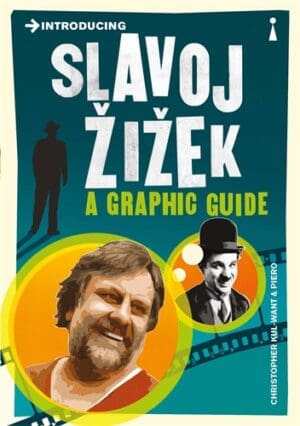
Charting his meteoric rise in popularity, Christopher Kul-Want and Piero explore Zizek's timely analyses of today's global crises concerning ecology, mounting poverty, war, civil unrest and revolution.
Covering topics from philosophy and ethics, politics and ideology, religion and art, to literature, cinema, corporate marketing, quantum physics and virtual reality, Introducing Slavoj Zizek deftly explains Zizek's virtuoso ability to transform apparently outworn ideologies – Communism, Marxism and psychoanalysis – into a new theory of freedom and enjoyment.

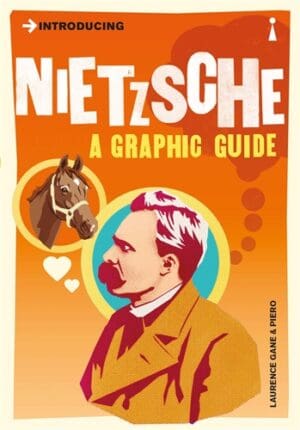
Why must we believe that God is dead? Can we accept that traditional morality is just a 'useful mistake'? Did the principle of 'the will to power' lead to the Holocaust? What are the limitations of scientific knowledge? Is human evolution complete or only beginning? It is difficult to overestimate the importance of Friedrich Nietzsche for our present epoch. His extraordinary insights into human psychology, morality, religion and power seem quite clairvoyant today: existentialism, psychoanalysis, semiotics and postmodernism are plainly anticipated in his writings – which are famously enigmatic and often contradictory."Introducing Nietzsche" is the perfect guide to this exhilarating and oft-misunderstood philosopher.
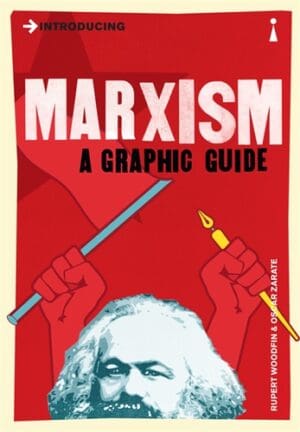
Was Marx himself a 'Marxist'? Was his visionary promise of socialism betrayed by Marxist dictatorship? Is Marxism inevitably totalitarian? What did Marx really say? "Introducing Marxism" provides a fundamental account of Karl Marx's original philosophy, its roots in 19th century European ideology, his radical economic and social criticism of capitalism that inspired vast 20th century revolutions. It assesses Marxism's Russian disciples, Lenin, Trotsky and Stalin who forged a ruthless dogmatic Communism. The book examines the alternative Marxist approaches of Gramsci, the Frankfurt School of critical theory and the structuralist Marxism of Althusser in the 1960s. It marshals postmodern interpretations of Marxism and raises the spectre of 'post-Marxism' in Derrida's confrontation with Fukuyama's 'end of history' doctrine.
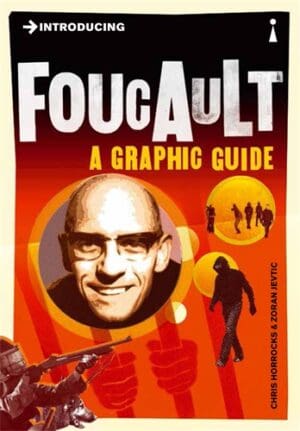
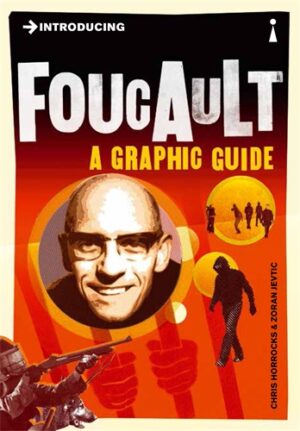
Michel Foucault's work was described at his death as 'the most important event of thought in our century'. As a philosopher, historian and political activist, he certainly left behind an enduring and influential body of work, but is this acclaim justified? "Introducing Foucault" places his work in its turbulent philosophical and political context, and critically explores his mission to expose the links between knowledge and power in the human sciences, their discourses and institutions. This book explains how Foucault overturned our assumptions about the experience and perception of madness, sexuality and criminality, and the often brutal social practices of confinement, confession and discipline. It also describes Foucault's engagement with psychiatry and clinical medicine, his political activism and the transgressive aspects of pleasure and desire that he promoted in his writing.
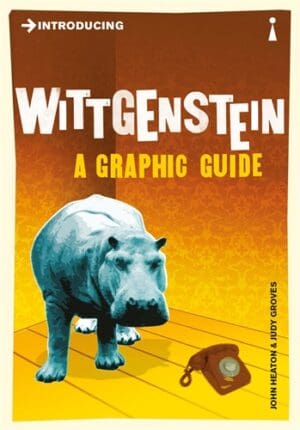
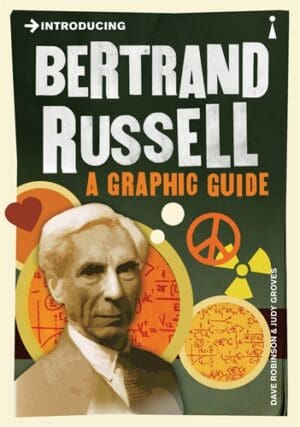
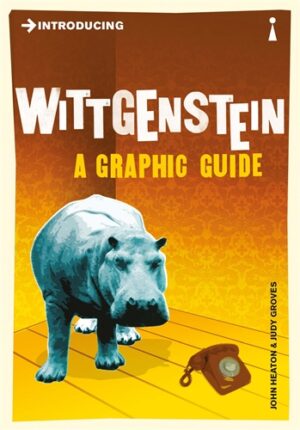
This is a superlative graphic guide described as 'warm, witty and wise' by Jonathan Ree to an enigmatic master of twentieth-century philosophy.
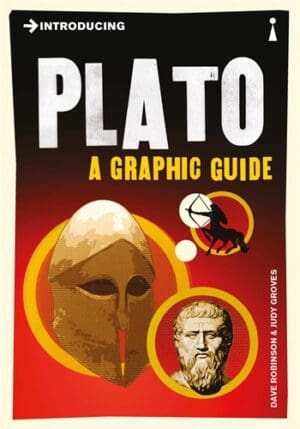
"Introducing Plato" begins by explaining how philosophers like Socrates and Pythagoras influenced Plato's thought. It provides a clear account of Plato's puzzling theory of knowledge, and explains how this theory then directed his provocative views on politics, ethics and individual liberty. It offers detailed critical commentaries on all of the key doctrines of Platonism, especially the very odd theory of Forms, and concludes by revealing how Plato's philosophy stimulated the work of important modern thinkers such as Karl Popper, Martha Nussbaum, and Jacques Derrida.
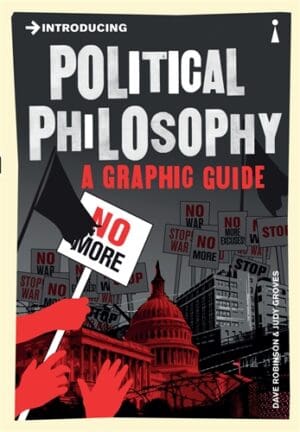
Essential illustrated guide to key ideas of political thought. Philosophers have always asked fundamental and disturbing questions about politics. Plato and Aristotle debated the merits of democracy. The origins of society, the state and government authority were issues addressed by Hobbes, Rousseau, Hegel, Marx and many other philosophers. Introducing Political Philosophy explains the central concepts of this intriguing branch of philosophy and presents the major political theorists from Plato to Foucault. How did governments get started? Why should they be obeyed? Could we live without them? How much power should they have? Is freedom a right? Which is the best form of government? In the wake of consumerism and postmodernism, our need for a better grasp of political ideas is greater than ever. Dave Robinson's account of this complex subject is always clear, informative and accompanied by the entertainingly inventive illustrations of Judy Groves.
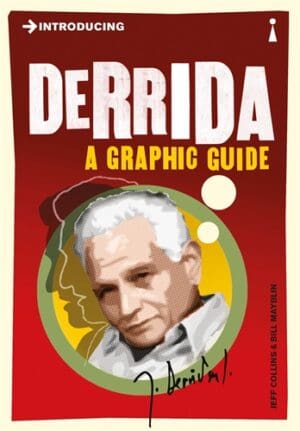
Brilliant illustrated guide to the best-known and most controversial continental philosopher of the latter 20th century. Jacques Derrida is the most famous philosopher of the late 20th century. Yet Derrida has undermined the rules of philosophy, rejected its methods, broken its procedures and contaminated it with literary styles of writing. Derrida's philosophy is a puzzling array of oblique, deviant and yet rigorous tactics for destabilizing texts, meanings and identities. 'Deconstruction', as these strategies have been called, is reviled and celebrated in equal measure. Introducing Derrida introduces and explains his work, taking us on an intellectual adventure that disturbs some of our most comfortable habits of thought.
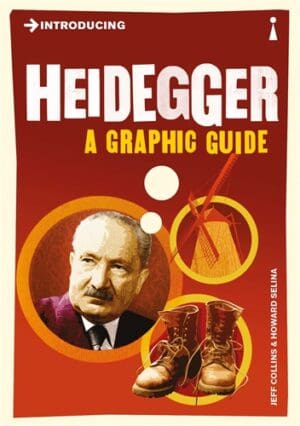
Martin Heidegger – philosophy's 'hidden king', or leading exponent of a dangerously misguided secular mysticism. Heidegger has been acclaimed as the most powerfully original philosopher of the twentieth century. This title provides an introduction to his notoriously abstruse thinking, mapping out its historical contexts.
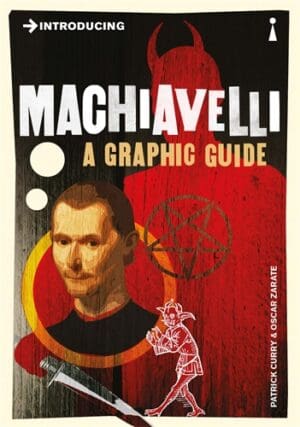
Illustrated guide to the crucial Italian philosopher and author of The Prince. 'Machiavellian' is a popular byword for treachery and opportunism. Machiavelli's classic book on statecraft, The Prince, published over 400 years ago, remains controversial to this day because of its electrifying frankness as a practical guide to power. Is it a how-to manual for dictators, a cynical philosophy of 'the end justifies the means', or a more complex and subtle analysis of successful government? Machiavelli was a loyal servant of the Florentine republic. His opposition to Medici despotism led him to torture on the rack and exile, and yet he chose as his model for the Prince the most notorious tyrant, Cesare Borgia. Introducing Machiavelli traces the colourful life of this paradoxical realist whose clear-sighted patriotism made him the first truly modern political scientist. Machiavelli is seen as central to the postmodern debate on Civil Society. This book brings the creative turbulence of Renaissance Italy to life, and presents a compelling portrait of a key figure of European political history.
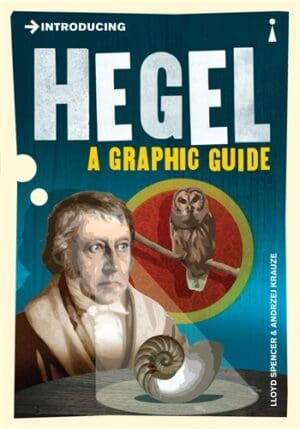
INTRODUCING guide to the hugely influential German thinker. Georg Wilhelm Friedrich Hegel is one of the greatest thinkers of all time. No other philosopher has had such a profound impact on the ideas and political events of the 20th century. Hegel's influential writings on philosophy, politics, history and art are parts of a larger systematic whole. They are also among the most difficult in the entire literature of philosophy. Introducing Hegel guides us through a spectacular system of thought which aimed to make sense of history. The book also provides new perspectives on contemporary postmodern debates about 'metanarratives' (Lyotard) and the 'end of history' (Fukuyama). It is an ideal introduction to this crucial figure in the history of philosophy, and is indispensable for anyone trying to understand such key modern thinkers as Marx, Lacan, Satre and Adorno.
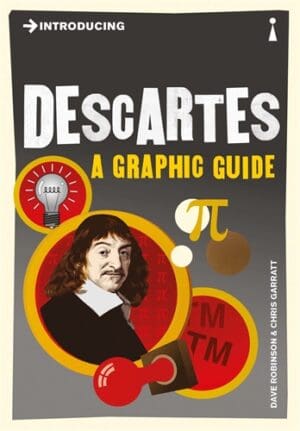
René Descartes is famous as the philosopher who was prepared to doubt everything- even his own physical existence. Most people know that he said 'I think, therefore I am', even if they are not always sure what he really meant by it.
Introducing Descartes explains what Descartes doubted, and why he is usually called the father of modern philosophy. It is a clear and accessible guide to all the puzzling questions he asked about human beings and their place in the world. Dave Robinson and Chris Garratt give a lucid account of Descartes' contributions to modern science, mathematics, and the philosophy of mind- and also reveal why he liked to do all of his serious thinking in bed.
Illustrated guide to the controversial sociologist Jean Baudrillard, who died in 2007. Did the Gulf War take place? Is it possible to fake a bank robbery? Was sexual liberation a disaster? Jean Baudrillard has been hailed as one of France's most subtle and powerful theorists. But his provocative style and assaults on sociology, feminism and Marxism have exposed him to accusations of promoting a dangerous new orthodoxy – of being the 'pimp' of postmodernism. Introducing Baudrillard cuts beneath the controversy of this misunderstood intellectual to present his radical claims that reality has been replaced by a simulated world of images and events ranging from TV news to Disneyland. It provides a clear account of Baudrillard's work on obesity, pornography and terrorism and traces his development from critic of mass consumption to prophet of the apocalypse. Chris Horrocks' text and Zoran Jevtic?s artwork invite us to decide whether Baudrillard was a cure for the vertigo of contemporary culture – or one of its symptoms
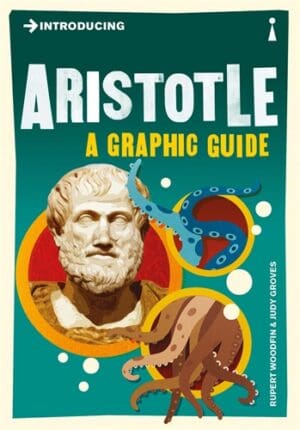
"Introducing Aristotle" guides the reader through an explosion of theories, from the establishment of systematic logic to the earliest rules of science. Aristotle's authority extended beyond his own lifetime to influence fundamentally Islamic philosophy and medieval scholasticism. For fifteen centuries, he remained the paradigm of knowledge itself. But can Aristotelian realism still be used to underpin our conception of the world today?
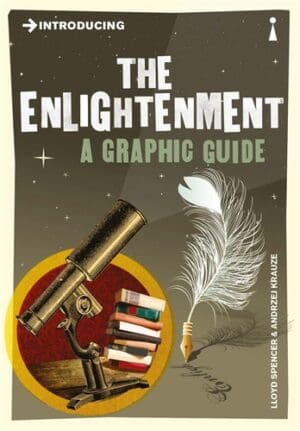
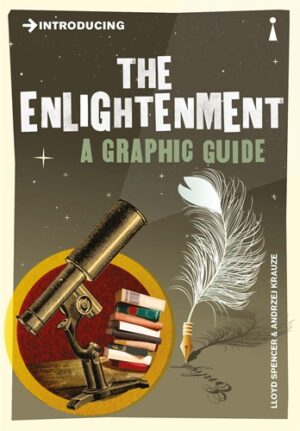
The Enlightenment of the 18th century was a crucial time in human history – a vast moral, scientific and political movement, the work of intellectuals across Europe and the New World, who began to free themselves from despotism, bigotry and superstition and tried to change the world. This title offers a guide to the giants of the Enlightenment.
Unique graphic introductions to big ideas and thinkers, written by experts in the field.
Unique graphic introductions to big ideas and thinkers, written by experts in the field.
Michel Foucault's work was described at his death as 'the most important event of thought in our century'. As a philosopher, historian and political activist, he certainly left behind an enduring and influential body of work, but is this acclaim justified? "Introducing Foucault" places his work in its turbulent philosophical and political context, and critically explores his mission to expose the links between knowledge and power in the human sciences, their discourses and institutions. This book explains how Foucault overturned our assumptions about the experience and perception of madness, sexuality and criminality, and the often brutal social practices of confinement, confession and discipline. It also describes Foucault's engagement with psychiatry and clinical medicine, his political activism and the transgressive aspects of pleasure and desire that he promoted in his writing.
This is a superlative graphic guide described as 'warm, witty and wise' by Jonathan Ree to an enigmatic master of twentieth-century philosophy.
The Enlightenment of the 18th century was a crucial time in human history – a vast moral, scientific and political movement, the work of intellectuals across Europe and the New World, who began to free themselves from despotism, bigotry and superstition and tried to change the world. This title offers a guide to the giants of the Enlightenment.