Author: Steve

Win copies of You Are the Music by Victoria Williamson, out next month

You Are the Music Victoria Williamson’s You Are the Music is published on 6th March and to celebrate, there are copies available to win via Caboodle (National Book Tokens) and Goodreads.

Do babies remember music from the womb? Can classical music increase your child’s IQ? Is music good for productivity? Can it aid recovery from illness and injury? And what is going on in your brain when Ultravox’s ‘Vienna’, Schoenberg’s Verklärte Nacht or Dizzee Rascal’s ‘Bonkers’ transports you back to teenage years?

In a brilliant new work that will delight music lovers of every persuasion, music psychologist Victoria Williamson examines our relationship with music across the whole of a lifetime. Along the way she reveals the amazing ways in which music can physically reshape our brains, explores how ‘smart music listening’ can improve cognitive performance, and considers the perennial puzzle of what causes ‘earworms’.

Requiring no specialist musical or scientific knowledge, You Are the Music reveals as never before the extent of the universal language of music that lives deep inside us all.

Head over to Caboodle to enter to win one of 15 signed copies and Goodreads to win one of five copies (only one week left to enter!). Follow Vicky on Twitter @DrVickyW and find out more about the book here.

New Books Published in February: Dice World, July 1914 & The Nature Magpie, now available in paperback

We published three brilliant paperbacks this week! Take a look below to read more about them.

Dice World jacket coverDice World: Science and Life in a Random Universe, Brian Clegg
As troubling as we pattern-seeking humans may find it, modern science has repeatedly shown us that randomness is the underlying heartbeat of nature.

In Dice World, acclaimed science writer Brian Clegg takes readers on an incredible trip around our random universe, uncovering the truths and lies behind probability and statistics, explaining how chaotic intervention is behind every great success in business, and demonstrating the possibilities quantum mechanics has given us for creating unbreakable ciphers and undergoing teleportation.

Read an extract and find out more about the book.

July 1914 jacket cover


 July 1914: Countdown to War, Sean McMeekin

The outbreak of the First World War was ‘a drama never surpassed’.

One hundred years later, the characters still seem larger than life: Archduke Franz Ferdinand, brooding heir to the Habsburg throne; the fanatical Bosnian Serb assassins who plot to murder him; Conrad and Berchtold, the Austrians who exploit the outrage; Kaiser Wilhelm and Bethmann Hollweg, backing up the Austrians; Sazonov, Russian Foreign Minister, trying to live down a reputation for cowardice; Poincaré and Paléologue, two French statesmen who urge on the Russians; and not least Winston Churchill, who, alone among Cabinet officials in London, perceives the seriousness of the situation in time to take action.

July 1914 tells the story of Europe’s countdown to war through the eyes of these men, between the bloody opening act on 28 June 1914 and Britain’s final plunge on 4 August, which turned a European conflict into a world war.

Read an extract and find out more about the book.

The Nature Magpie jacket coverThe Nature Magpie: A Cornucopia of Facts, Anecdotes, Folklore and Literature from the Natural World, by Daniel Allen

A collection of anecdotes, facts, figures, folklore and literature, The Nature Magpie is a veritable treasure trove of humanity’s thoughts and feelings about nature. With acclaimed nature writer Daniel Allen as your guide, join naturalists, novelists and poets as they explore the most isolated parts of the planet, choose your side – pineapple or durian – in the great ‘king of fruits’ debate and discover which plants can be used to predict the weather.

Meet the roadkill connoisseurs, learn to dance the Hippopotamus Polka, find out the likelihood of sharing your name with a hurricane – and much more

Find out more about the book.

Under Fire, Allum’s Almanac 2015 and Rock ‘N’ Roll Soccer to be published this year!

Rock 'n' Roll SoccerWe are excited to announce that Icon Books has acquired three new books, to be published later this year!

Rock ‘n’ Rock Soccer: The Short Life and Fast Times of the North American Soccer League, to be published in September and written by acclaimed football writer and journalist Ian Plenderleith, reveals in all its glory the colour and chaos of the world’s first truly international league. Superstars, hype, cheerleaders, razzmatazz. The North American Soccer League – at its peak in the late 1970s – was the Premier League and the Champions League rolled into one. It was football as performance, played by men with a bent for flair, hair and glamour.

Under Fire: The Untold Story of the Attack in Benghazi, to be published in October, is currently being made into a film:

‘I’m thrilled and excited that my next movie for HBO after Behind the Candelabra will be Under Fire. It is the only place I can imagine this tragic and emotionally gripping story being told.’ Executive Producer Jerry Weintraub.

Written by counter-terrorism specialists Fred Burton and Samuel Katz, Under Fire is the account of the prolonged attack in Benghazi, Libya by a group of heavily armed Islamic terrorists a year on from 9/11, in which several high-ranking officials died. Under Fire has sold over 100,000 copies since its publication in the US.

And Allum’s Almanac 2015: An Annual Compendium of Stories and Facts From the World of Art and Antiques will be published in November. From BBC Antiques Roadshow specialist Marc Allum – and author of The Antiques Magpie – comes a new annual almanac that keeps you up-to-date with the stories, facts and often amusing idiosyncrasies of the ever-changing global art and antiques market, from the price paid to own a pair of the ‘Derby’ hats worn by a famous comic duo to how much the world’s most expensive printed book cost per word.

Read about the acquisitions in the Bookseller.

Read an extract from Luca Caioli’s biography on Ballon d’Or winner Cristiano Ronaldo!

Cristiano Ronaldo was last week crowned the 2013 Fifa Ballon d’Or winner. Check out this free extract from Luca Caioli’s bestselling biography!

When a young Portuguese player with sublime abilities arrived at Manchester United in 2003, Alex Ferguson put the no. 7 shirt – once worn by Best, Cantona and Beckham – on his back without hesitation. The expectation was clear, and Cristiano Ronaldo didn’t disappoint. Ronaldo won the FIFA World Footballer of the Year in 2008, the first Premier League player ever to do so. Since his record-breaking GBP80m move to Real Madrid, his goal-scoring flair has continued and made his on-going rivalry with Barcelona’s Lionel Messi even more intense. Luca Caioli tells the inside story of this global superstar both on and off the pitch, unveiling the life of one of modern football’s great players as never before.

Read BBC’s overview of Ronaldo’s ‘remarkable year‘. Luca Caioli is also the author of Messi and upcoming Messi, Neymar, Ronaldo.

A Letter from Harry by Second World War RAF veteran Harry Leslie Smith, to be published June 2014

We are excited to announce that we will be publishing A Letter from Harry: Why the world we built is falling down, and what we can do to save it, by Second World War RAF veteran Harry Leslie Smith, in June.

Harry Leslie Smith was born in 1923 in Barnsley. King George V was on the throne. Stanley Baldwin was Prime Minister. Eliot’s The Waste Land was picking up mixed reviews. There was no NHS, no welfare state. Those who could afford to took care of themselves; those who couldn’t, suffered.

And then out of the rubble of the Second World War Harry’s generation rebuilt the country. They wanted to build a better, fairer world for their children and grandchildren. And they succeeded.

But now Harry sees history repeating – from NHS cutbacks to immigration policies and everything in between. With a voice as angry as it is lyrical, Harry shows us what the world looks like to him and why we shouldn’t take it lying down.

A Letter from Harry is a searing modern polemic that shows, with the indisputable force of lived experience, why the past shouldn’t stay buried, and the future is ours for the taking.

Read the announcement about the acquisition in the Bookseller or Book Brunch and find out more about the book here.

Productivity Tips from the Icon Books Ninjas

Ninja_packshot

Graham Allcott’s How to Be a Productivity Ninja was published this week and to celebrate, we thought we’d share our own productivity tips with you! We’re getting in the New Year, New Ninja mood…

Kate (Commissioning Editor)
I ‘go dark’, to use the terminology in Graham Allcott’s How to be a Productivity Ninja. This means when I really need to focus I turn off my email and put my voicemail on for a few hours, so I can work uninterrupted.

Stacey (Sales and Marketing Executive)
I note down all the tasks I have to do and projects that need to be completed, plus little notes to myself and deadlines, on a to-do list in Excel. In How to Be a Productivity Ninja, this is what Graham Allcott calls our ‘second brain’. I don’t have to try and memorise every task, I can just get on and do them! I also keep a daily to-do list, so I always know what I need to prioritise.

Andrew (Sales and Marketing Director)
I regularly email myself ideas in the evening or at the weekend. It means I don’t forget them when I am at work but it also means I can forget them when I’m not!

Michael (Sales Executive)
With so much of my work based online it’s easy to get lost in spreadsheets and emails. I’ve found that retreating to the safety of ink and paper is often the best resort. Handwritten to-do lists, strategic print outs and a patchwork of post it notes help cut through the snow-blindness of pixelated-living. Plus, crossing out things on my to-do list in thick felt tip pen is incredibly satisfying.

Leena (Digital Sales Executive)
However many spreadsheets you make, sometimes having things existing ‘digitally’ just isn’t enough. And that’s coming from ‘the ebooks girl’ of the office! Get yourself some colourful Sharpies and colour-code those urgent problems in front of you, lay them out like puzzle pieces.
After all, for every job that must be done …

Graham Allcott does not endorse our productivity advice – we may be failing in our attempts to become a Productivity Ninja, but we are human (not superhero!) and will continue in our attempts to live the Ninja way!

How to be a Productivity Ninja is available now from all good bookshops and as an eBook. Follow Graham @grahamallcott.

How to Be a Productivity Ninja is published today!

How to Be a Productivity NinjaMove beyond time management, get your inbox to zero and learn to think like a Productivity Ninja! Get your hands on a copy of How to Be a Productivity Ninja by Graham Allcott, published today. It’s finally January, so it’s time for New Year, New Ninja!

In this age of information overload, traditional time-management techniques simply aren’t able to deal with overflowing inboxes, ever-expanding to-do lists and endless, pointless meetings that leave us all feeling panicked and overworked. The solution? Think like a Ninja!

With techniques from ruthlessness to stealth to mindfulness, you can get your inbox down to zero, make the most of your attention, avoid procrastination and learn to work smarter, not harder. Fun, accessible and practical, How to be a Productivity Ninja teaches you how to stay calm, cool and collected, get more done, and love your work again.

Watch Graham Allcott talk about 9 characteristics of the Productivity Ninja (and how he wrote the book in a beach hut in Sri Lanka!) in the video below:

How to Be a Productivity Ninja is available now from all good bookshops and as an eBook. Follow Graham on Twitter @grahamallcott.


Books We Read in 2013 (Part 3)

2014 is nearly upon us! This week, the Icon Books team will be sharing with you two books that we’ve each enjoyed reading in 2013, including one book of our own. Let us know which books you’ve enjoyed this year in the comments or @iconbooks!

Michael (Sales Executive)

bookswe-30elementsFar from a natural choice for me as someone who is still haunted by GCSE chemistry, 30-Second Elements, edited by Eric Scerri, made a previously intolerable subject appear interesting and, more impressively, relevant. I’d long felt that a bland curriculum had deprived me of some genuinely important knowledge and this book went a long way towards addressing that.

Aside from the beautiful illustrations and the brevity implied by the series title, two features stood out for me: the description of how individual elements came to be discovered and their early uses made it far easier to retain the knowledge because the elements ceased to be mere elements – much like those object-association techniques taught by memory experts, and each page comes with a related elements suggestion which directs you to two other similar pages, making sense of the practical relationships throughout the periodic table.

A fantastic read for novices and experts (I assume!) alike.


Books We Read

Where I Lived and What I Lived For by Henry David Thoreau was a book I’d been meaning to read for a long time and I’m so glad I finally did. Wilderness and travel writing have always appealed greatly to me, even more so in the past year as I’ve relocated to more urban surroundings. Naturally I’ve often come across Thoreau’s words in truncated form and with so many of my favourite authors finding value in his wisdom I thought it was high time I experienced it first-hand.

Where I Lived… is Thoreau’s account of how he came to live in his famous home beside Walden Pond, and the pains of societal living which moved him to do so. I’d argue that there is no place more fitting to read this book, lamenting the perils of urban living, than aboard a packed tube train. It’s almost as if Thoreau had anticipated the needling elbows in my back and the suitcase jutting into my shins as he wrote. He speaks with the authority and well-reasoned truths that leave you plotting what essentials to pack in your rucksack and Googling ‘cheap flights to Alaska’. Anyway, enough of that. Back to work…


Books We Read


Cracked by James Davies was the first book I worked on earlier this year and it was a jaw-dropping read to say the least. James Davies uses numerous studies and interviews with American and British leaders in the field to skilfully reveal the duplicitous and collusion of the Big Pharma, in the field of mental health. A MUST READ!


Books We Read

Goodbye to Berlin by Christopher Isherwood had been on my reading list for a long time and I finally was able to read it earlier this year. Published in 1939, it’s a collection of six overlapping short stories set against the backdrop of the rise of the Nazis in Germany. Using his own experiences in Berlin as a basis for this novel, Isherwood (also the name of the main character) is a struggling writer describing his meetings with decadent, often doomed eccentrics, bohemians, and showgirls around him.

Goodbye to Berlin is a grim world where the decaying past is about to be transformed into a horrible future. It’s a period of transition, of change, and yet few people seem to see it coming and fail to recognise the significance. The title refers not just to Isherwood’s departure from a city he clearly loved, but also to the sense that the Berlin of the early thirties was irrecoverably destroyed by the rise of the Nazis.

Books We Read in 2013 (Part 2)

2014 is nearly upon us! This week, the Icon Books team will be sharing with you two books that we’ve each enjoyed reading in 2013, including one book of our own. Let us know which books you’ve enjoyed this year in the comments or @iconbooks!

Kate (Commissioning Editor)

Books We ReadI joined Icon earlier this year, and one not insubstantial factor in that decision was how much I’d enjoyed Mark Forsyth’s previous books, The Etymologicon and The Horologicon. So getting to work on Mark Forsyth’s The Elements of Eloquence, about the elements of rhetoric, and how to write with style, was an absolute joy.

Having studied English literature at University, I’ve had parts of speech drummed into my head for years, but I had never encountered the Yoda-like calm of anadiplosis, the elusiveness of merism, the dreaminess of aposiopesis…

And if all this sounds complicated, never fear – Forsyth wears his learning incredibly lightly, and takes you through the elements of style with wit and verve. It really is that rare thing: a book that teaches you something, but makes you enjoy it.


Books We Read

Published in 1978, I somehow hadn’t encountered We Have Always Lived in the Castle by Shirley Jackson until this year, when it wormed its way forward from the depths of the communal bookshelf in my house. And I’m very glad it did.

Written in first person, it tells the story of Merricat Blackwood who lives in her old family home with just her Uncle Julian and her sister Constance for company. The other seven members of the Blackwood family were murdered years ago, when a fatal dose of arsenic found its way into the sugar bowl. Constance, who did the family’s cooking, is suspected, but something doesn’t quite add up…and when their cousin Charles arrives to disturb the family’s equilibrium, Merricat will do everything in her power to keep them safe.

A darkly gothic psychological horror story, We Have Always Lived in the Castle will send chills down your spine, and live with you long after you’ve turned the last page.


Leena (Digital and Export Sales & Marketing Executive)

Books We ReadIt has to be Introducing Marxism: A Graphic Guide by Rupert Woodfin & Oscar Zarate. I’ve read a lot of the Graphic Guides in the past from the Introducing series, but this one is closest to my heart. The illustrations sit perfectly on the fence between ‘informative’ and endearing satire – and the ideas within it explain so much of our world now and its making. Truly infectious ideas expressed with vigour and clarity. I am in love.


Books We Read

My favourite book by far for 2013 was Gossip from the Forest by Sara Maitland – a blindingly beautiful tribute to the ancient forests of England. Exploring everything from folklore to Monarchy, Maitland provides a mini essay-come-memoir about a walk she’s taken through each forest (usually accompanied by someone of interest – anyone from a fellow author to her grown-up son) and laces each essay with her own research and facts. In between each chapter she re-tells a popular fairy story that has links with the aforementioned forest, often twisting its narrative to reflect the topic she’s talked about in the previous chapter.

A startlingly brilliant concept, expertly executed and with such gentle beauty – she can turn any morning commute into a mental walk through the trees.

​I’m now on a mission to visit every forest in England and it’s all thanks to Sara Maitland. ​

We have four more books to share with you tomorrow!

Books We Read in 2013 (Part 1)

2014 is nearly upon us! This week, the Icon Books team will be sharing with you two books that we’ve each enjoyed reading in 2013, including one book of our own. Let us know which books you’ve enjoyed this year in the comments or @iconbooks!

Stacey (Sales and Marketing Executive)

Books We Read The Science Magpie by Simon Flynn was one of the first lead titles I got to work on here at Icon Books and it has been one of the most fun, from gifting our sales reps with magpie broaches to sending our in-house toy magpie to roam the Science Museum, and this year we published the paperback. I read The Science Magpie during my morning commute, engrossed in the wonderful collection of scientific facts, poems, anecdotes, stories and illustrations. I particularly loved the especially quirky titbits that I unfortunately didn’t get to learn in school, such as the geological time piece, real molecules with silly names (my favourite is Penguinone!) and Darwin’s list of the pros and cons of marriage. Whether you’re a science buff or just like to learn new facts, The Science Magpie will have something that’ll fascinate you.


Books We Read

I’d love to start reading more graphic novels and one that everyone told me I had to read was The Complete Maus by Art Spiegelman. Maus became the first graphic novel to win the Pulitzer Prize in 1992 and it’s not difficult to see why. Art Spiegelman pieces together the harrowing story of his father’s experience as a Polish Jew surviving Hitler’s Europe, with minimalistic illustrations that manage to capture the harshness and terror that the family experienced. Spiegelman depicts Jews as mice, non-Jewish Polish as pigs and Germans as cats. Maus doesn’t just serve to be a history book but is a memoir; a story of one couple not only experiencing torture and starvation at the hands of the Nazis but disbelief as they are betrayed by members of their own family. Art Spiegelman sensitively captures his father’s anger and bitterness and puts it into context to deliver this honest and moving graphic novel.


Andrew (Sales and Marketing Director)

bookswe-hess


It’s not often, even working for a publisher exclusively focused on upmarket non-fiction, that you get to work on a book which unearths some genuinely new information about a key moment in history. But Peter Padfield’s Hess, Hitler and Churchill does – the most exciting parts of it cover Rudolf Hess’ flight to Scotland in 1941. Along with most other people, I’d understood this to be the lone flight of someone disaffected by the horrors of war and possessed by the strange (given his personal biography) though understandable (for most humans) idea to sue for peace with Britain. What the book shows is incredible evidence that Hess was actually flying on Hitler’s orders, with a plan to exchange withdrawal from occupied Western Europe with peace with the UK – that’s pretty amazing, but even more so is the evidence that this was all covered up on Churchill’s orders. Had the Americans – at that point, before Pearl Harbour, just an onlooker – got wind of this proposed deal, they would never have risked American lives to help the UK out.

Peter Padfield tells us this with just the right balance of careful, well-balanced research and the sense of drama that it can’t help have. It’s well-worth reading even if, like me, you feel you’ve almost had your fill of WW2 history over the past few years.


Books We Read

This year I’ve really gotten back into reading fiction and I think first among many highlights – which have included Jeffrey Eugenides’ The Marriage Plot, Hilary Mantel’s Wolf Hall, Narcopolis by Jeet Thayil and The Letter Bearer by Robert Allison (forthcoming from Granta next year and my big tip for all the prizes) – is Leaving the Atocha Station by Ben Lerner.

It’s a pretty short novel following a disaffected, unsure-of-himself twenty-something aspiring poet and hash-smoker as he lollops around Madrid. Lerner’s language is generally quite simple and unshowy but the novel soon takes on a lyrical quality and is impossible to put down. Very little happens, really, until near the end, but you find yourself nostalgic for your lost youth, wishing that all you had to do was sleep in parks and drink beer in warm evenings and think about poetry.

The cover uses – obliquely – of of my favourite paintings too, The Garden of Earthly Delights which hangs in the Prado in Madrid. Perfect for a chilly evening in England!

Stay tuned tomorrow for more books from the team!

A vehement attack on the latest claims about the differences between the sexes

Delusions of Gender You will read a lot in the press today about the ‘hard-wired’ differences between male and female brains, so perhaps it’s time to check out Cordelia Fine’s Delusions of Gender: The Real Science Behind Sex Differences.
Gender inequalities are increasingly defended by citing hard-wired differences between the male and female brain. That’s why, we’re told, there are so few women in science, so few men in the laundry room – different brains are just suited to different things. Not so, argues cognitive neuroscientist Cordelia Fine.

As seen in the Independent today:

‘A pioneering study has shown for the first time that the brains of men and women are wired up differently which could explain some of the stereotypical differences in male and female behaviour, scientists have said.’

Cordelia Fine also responded to the new study over on The Conversation:

‘The continuing importance of this message is only reinforced by this latest case study in how easily scientific “neurosexism” can, with a little stereotype-inspired imagination, contribute to inaccurate and harmful lay misunderstanding of what neuroscience tells us about the sexes.’

Head over to here to find out more about the book. Delusions of Gender is available from all good bookshops and as an eBook – only £1.79 at the moment on Kindle!

Mark Forsyth on Tour

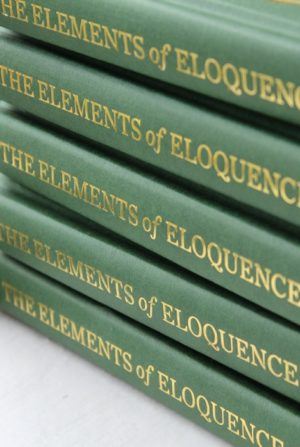
The Elements of EloquenceThe Elements of Eloquence: How to Turn the Perfect English Phrase is out in the world and Mark Forsyth is going on tour!

Mark Forsyth will be visiting the following bookshops through November and December so come along and see him talk about the figures of rhetoric and get your book signed.

Barter Books in Alnwick on 25th of November
The Edinburgh Bookshop on 26th of November
Rossiter Books in Ross-on-Wye on the 27th of November
Booka Bookshop in Oswestry on 28th of November
Winstones Books of Sherbourne on 4th December
Waterstones Piccadilly on 5th December (Christmas Evening)
Blackwells Oxford on 9th of December
Steyning Bookshop in West Sussex on 10th of December
Warwick Books on 11th of December
The Idler Academy in London on 12th of December


Head over to here to find out more about the book. If you’re a budding poet, we’re also running a competition over on the Mark Forsyth Tumblr, where you can win a signed copy of the book plus Shakespeare Fridge Poetry!

Listen to Mark Forsyth on BBC Radio 4’s Today Programme!

Mark Forsyth's on BBC Radio 4's Today programmeMark Forsyth, bestselling author of The Etymologicon and The Horologicon, appeared on BBC Radio 4’s Today programme, talking about the hidden formulas for making lines memorable.

In The Elements of Eloquence: How to Turn the Perfect English Phrase, Mark Forsyth explores the flowers of rhetoric, such as diacope (used in Shakespeare’s ‘O Romeo, Romeo, wherefore art thou Romeo?’ and ‘Love me love me, say that you love me’ by The Cardigans) and antithesis – the use of opposites in the same sentence, used by famous figures from Charles Dickens to Katy Perry.

The Elements of Eloquence can be purchased from the following online bookshops: Amazon UK, Hive, Waterstones, WHSmith, Book Depository, Foyles, Blackwell’s and Wordery, as well as many hundreds of offline ones too, including your local independent. It is is also available as an eBook.

Follow Mark on Twitter @inkyfool and for all things Mark Forsyth, follow the Tumblr.


The Elements of Eloquence by Mark Forsyth is out now!

The Elements of Eloquence: How to Turn the Perfect English Phrase, from bestselling author of The Etymologicon and The Horologicon, Mark Forsyth, is out today.

Watch the video below to find out more about The Elements of Eloquence, from Mark Forsyth himself.

The Elements of Eloquence is available from all good bookshops as and as an eBook. Go here to read more about the book.

Can you get to central London by 6:30pm on Tuesday 12th November? If so, you and a friend could be heading off to Mark Forsyth’s exclusive book launch, held in a fancy central London location on Tuesday 12th November (next week!).

Just enter below (and extra entries are available!):

a Rafflecopter giveaway

Follow Mark on Twitter @inkyfool and visit his Inky Fool blog here. We’ve also redesigned the Mark Forsyth Tumblr, so head over to that here.