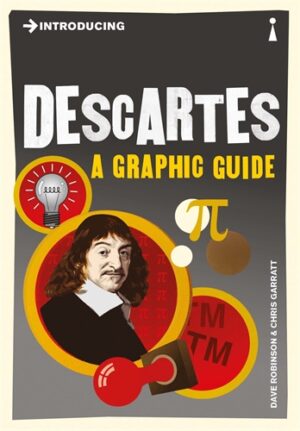
René Descartes is famous as the philosopher who was prepared to doubt everything- even his own physical existence. Most people know that he said 'I think, therefore I am', even if they are not always sure what he really meant by it.
Introducing Descartes explains what Descartes doubted, and why he is usually called the father of modern philosophy. It is a clear and accessible guide to all the puzzling questions he asked about human beings and their place in the world. Dave Robinson and Chris Garratt give a lucid account of Descartes' contributions to modern science, mathematics, and the philosophy of mind- and also reveal why he liked to do all of his serious thinking in bed.

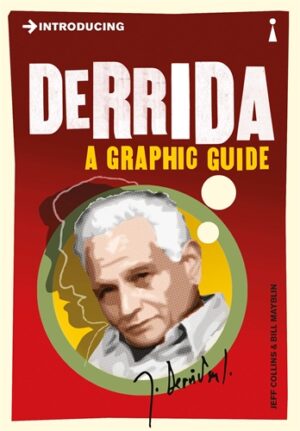
Brilliant illustrated guide to the best-known and most controversial continental philosopher of the latter 20th century. Jacques Derrida is the most famous philosopher of the late 20th century. Yet Derrida has undermined the rules of philosophy, rejected its methods, broken its procedures and contaminated it with literary styles of writing. Derrida's philosophy is a puzzling array of oblique, deviant and yet rigorous tactics for destabilizing texts, meanings and identities. 'Deconstruction', as these strategies have been called, is reviled and celebrated in equal measure. Introducing Derrida introduces and explains his work, taking us on an intellectual adventure that disturbs some of our most comfortable habits of thought.
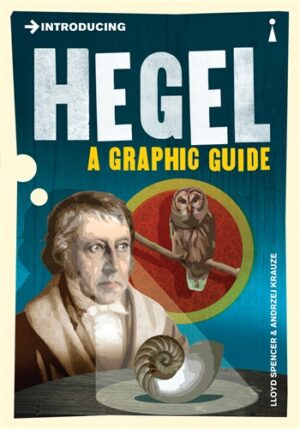
INTRODUCING guide to the hugely influential German thinker. Georg Wilhelm Friedrich Hegel is one of the greatest thinkers of all time. No other philosopher has had such a profound impact on the ideas and political events of the 20th century. Hegel's influential writings on philosophy, politics, history and art are parts of a larger systematic whole. They are also among the most difficult in the entire literature of philosophy. Introducing Hegel guides us through a spectacular system of thought which aimed to make sense of history. The book also provides new perspectives on contemporary postmodern debates about 'metanarratives' (Lyotard) and the 'end of history' (Fukuyama). It is an ideal introduction to this crucial figure in the history of philosophy, and is indispensable for anyone trying to understand such key modern thinkers as Marx, Lacan, Satre and Adorno.
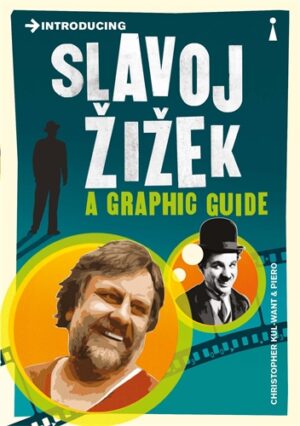
Charting his meteoric rise in popularity, Christopher Kul-Want and Piero explore Zizek's timely analyses of today's global crises concerning ecology, mounting poverty, war, civil unrest and revolution.
Covering topics from philosophy and ethics, politics and ideology, religion and art, to literature, cinema, corporate marketing, quantum physics and virtual reality, Introducing Slavoj Zizek deftly explains Zizek's virtuoso ability to transform apparently outworn ideologies – Communism, Marxism and psychoanalysis – into a new theory of freedom and enjoyment.
Unique graphic introductions to big ideas and thinkers, written by experts in the field.
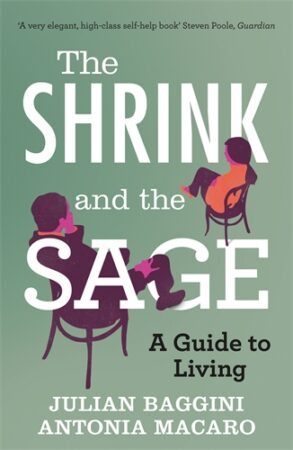
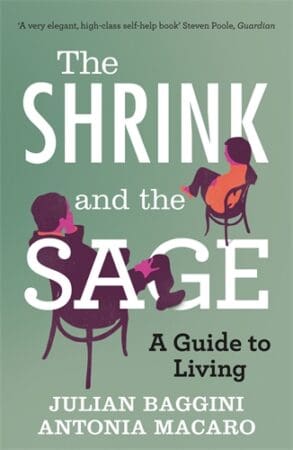
Based on their Financial Times Weekend column, philosopher Julian Baggini and his psychotherapist partner Antonia Macaro offer intriguing answers to life's questions. Can infidelity be good for you? What does it mean to stay true to yourself? Must we fulfil our potential? Self-help with a distinctly cerebral edge, the shrink and the sage – aka Julian Baggini and Antonia Macaro – have been dispensing advice through their FT column since October 2010. Combining practical advice on personal dilemmas with meditations on the meaning of concepts like free will, spirituality and independence, this book – their first together – expands on these columns and adds much more. Through questions of existential unease, metaphysical trauma and – for instance – how much we should care about our appearance, intellectual agony uncle and aunt team Baggini and Macaro begin to piece together the answer that we'd all like to hear: what is the good life, and how we can live it?
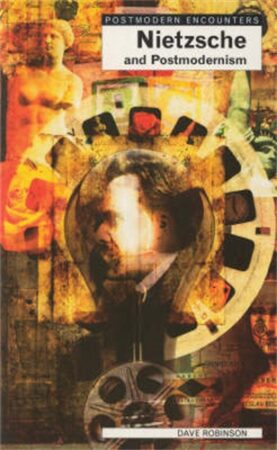
In the POSTMODERN ENCOUNTERS series, Dave Robinson explains the key ideas of this Anti-Christ philosopher and then provides a clear account of the central themes of postmodernist thought exemplified by such thinkers as Derrida, Foucault, Lyotard and Rorty.
Friedrich Nietzsche (1844-1900) has exerted a huge influence on 20th century philosophy and literature – an influence that looks set to continue into the 21st century. Nietzsche questioned what it means for us to live in our modern world. He was an 'anti-philosopher' who expressed grave reservations about the reliability and extent of human knowledge. His radical scepticism disturbs our deepest-held beliefs and values. For these reasons, Nietzsche casts a 'long shadow' on the complex cultural and philosophical phenomenon we now call 'postmodernism'. "Nietzsche and Postmodernism" explains the key ideas of this 'Anti-Christ' philosopher. It then provides a clear account of the central themes of postmodernist thought exemplified by such thinkers as Derrida, Foucault, Lyotard and Rorty, and concludes by asking if Nietzsche can justifiably be called the first great postmodernist.
Based on their Financial Times Weekend column, philosopher Julian Baggini and his psychotherapist partner Antonia Macaro offer intriguing answers to life's questions. Can infidelity be good for you? What does it mean to stay true to yourself? Must we fulfil our potential? Self-help with a distinctly cerebral edge, the shrink and the sage – aka Julian Baggini and Antonia Macaro – have been dispensing advice through their FT column since October 2010. Combining practical advice on personal dilemmas with meditations on the meaning of concepts like free will, spirituality and independence, this book – their first together – expands on these columns and adds much more. Through questions of existential unease, metaphysical trauma and – for instance – how much we should care about our appearance, intellectual agony uncle and aunt team Baggini and Macaro begin to piece together the answer that we'd all like to hear: what is the good life, and how we can live it?
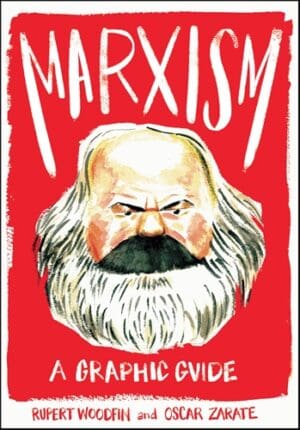
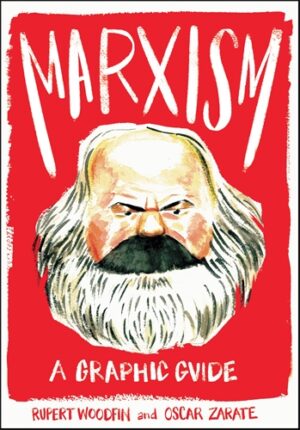
Beautiful new edition of a classic comic-book introduction to Marxist thought.
Karl Marx was one of the most influential thinkers of the late 19th century, inspiring revolutions and colossal political upheavals that have radically transformed the lives of millions of people and the geopolitical map of the entire world.
But was he a ‘Marxist’ himself? And how are his ideas still in play in today’s society?
Marxism: A Graphic Guide traces the story of Marx’s original philosophy, from its roots in 19th-century European thinkers like Hegel, to its influence on modern-day culture. It looks at Marxism’s Russian disciples, Lenin, Trotsky and Stalin, who forged a ruthless, dogmatic Communism, and the alternative Marxist approaches of Gramsci, the Frankfurt School of critical theory and the structuralist Marxism of Althusser in the 1960s.
Rupert Woodfin and Oscar Zarate’s classic book, updated by Alex Locascio, explores the life, history, philosophy and politics of this most divisive of thinkers, and argues that Marxism remains a powerful set of ideas even today.
Beautiful new edition of a classic comic-book introduction to Marxist thought.
Karl Marx was one of the most influential thinkers of the late 19th century, inspiring revolutions and colossal political upheavals that have radically transformed the lives of millions of people and the geopolitical map of the entire world.
But was he a ‘Marxist’ himself? And how are his ideas still in play in today’s society?
Marxism: A Graphic Guide traces the story of Marx’s original philosophy, from its roots in 19th-century European thinkers like Hegel, to its influence on modern-day culture. It looks at Marxism’s Russian disciples, Lenin, Trotsky and Stalin, who forged a ruthless, dogmatic Communism, and the alternative Marxist approaches of Gramsci, the Frankfurt School of critical theory and the structuralist Marxism of Althusser in the 1960s.
Rupert Woodfin and Oscar Zarate’s classic book, updated by Alex Locascio, explores the life, history, philosophy and politics of this most divisive of thinkers, and argues that Marxism remains a powerful set of ideas even today.