


ICON JAN-JUL 2022 CATALOGUE ()
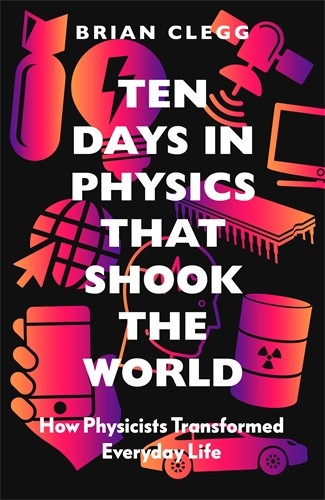
The breakthroughs that have had the most transformative practical impacts, from thermodynamics to the Internet.
Physics informs our understanding of how the world works – but more than that, key breakthroughs in physics have transformed everyday life. We journey back to ten separate days in history to understand how particular breakthroughs were achieved, meet the individuals responsible and see how each breakthrough has influenced our lives.
It is a unique selection. Focusing on practical impact means there is no room for Stephen Hawking’s work on black holes, or the discovery of the Higgs boson. Instead we have the relatively little-known Rudolf Clausius (thermodynamics) and Heike Kamerlingh Onnes (superconductivity), while Albert Einstein is included not for his theories of relativity but for the short paper that gave us E=mc2 (nuclear fission). Later chapters feature transistors, LEDs and the Internet.
'A stalwart anti-racist and anti-apartheid campaigner.' Doreen (Baroness) Lawrence
'From fighting for Nelson Mandela's freedom to exposing his betrayal under Jacob Zuma, a 50 year story of constant campaigning.' Sir Trevor McDonald, broadcaster
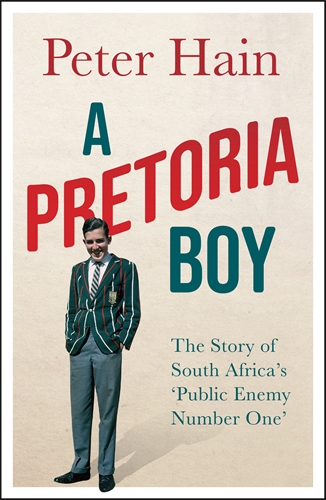
The powerful and timely story of Peter Hain's political life fighting South African apartheid and modern-day corruption.
Peter Hain has had a dramatic 50-year political career, in Britain and his native South Africa. This is the story of that extraordinary journey, from Pretoria to the House of Lords.
Hain vividly describes his anti-apartheid parents' arrest and harassment in the early 1960s, the hanging of a close white family friend, and enforced London exile in 1966. After organising militant anti-Springbok demonstrations he became 'Public Enemy Number One' in the South African media. Narrowly escaping jail for disrupting all-white South African sports tours, he was framed for bank robbery and nearly assassinated by a bomb.
He used British parliamentary privilege to expose looting and money laundering in President Jacob Zuma's administration, informed by his government 'deep throat', and likely influenced Zuma's resignation. Hain ends by exhorting South Africa to reincarnate Nelson Mandela's vision and integrity for the future.
Praise for A Pretoria Boy:
'Peter's gripping story and his passionate activism resonates with me over our common (African) childhood and exile in Britain.' Natasha Kaplinsky, broadcaster
'A tour de force over an extraordinary half century of campaigning for justice.' Helen Clark, former New Zealand Prime Minister and United Nations Development Chief
'Talk about courage and chutzpah – this young 'un helped topple apartheid!' Ronnie Kasrils, former ANC underground chief and Minister
Peter Hain was brought up in South Africa. Forced into exile, he became a British anti-apartheid leader. Labour MP for Neath 1991-2015, he served in Tony Blair and Gordon Brown's governments for twelve years, seven of those in the Cabinet, and joined the House of Lords in 2015.
A terrific read – a novel perspective with depth, empathy and moral objective in pursuit of the Common Good.
'Powerful, humane and deeply affecting, Lister's wise and truthful writing makes this essential reading for anyone touched, and utterly confused, by grief.' Sali Hughes
'The must-read memoir' Red
What does it mean to become a widow at 35?
In her mid-thirties Kat Lister lost her husband to brain cancer. After five years of being a wife and one of being a carer, in love and in and out of hospitals, she became a widow.
In the year following his death Kat seeks refuge in stories of grief and widowhood, but struggles to find a language that can make sense of her experience and the physicality of bereavement. Instead, she turns to the elements – fire, water, earth, air – on her quest to come to terms with her grief, to inhabit her body again, and to find out who she is now.
The Elements is a story of love, pain, hope and, ultimately, transformation.
Kat Lister is a writer and editor based in London. Beginning her career as a music journalist at the NME, she has gone on to write widely for publications including VICE, the Guardian, Marie Claire, Vogue and The Feminist Times, where she was appointed Contributing Editor. In 2017, she joined the editorial team at The Pool, becoming a freelance features and news editor until its demise in 2019. Since her husband's death in 2018, she has focused on investigating her experience of grief, writing widely circulated essays and features for the Sunday Times Magazine, Sunday Times Style and The Pool.
Dreams, schemes and opportunity as space opens for tourism and commerce.
Twentieth century space exploration may have belonged to state-funded giants such as NASA, but there is a parallel history which has set the template for the future.
Even before Apollo 11 landed on the Moon, private companies were exploiting space via communication satellites – a sector that is seeing exponential growth in the internet age. In human spaceflight, too, commercialisation is making itself felt. Billionaire entrepreneurs Elon Musk, Jeff Bezos and Richard Branson have long trumpeted plans to make space travel a possibility for ordinary people and those ideas are inching ever closer to reality. At the same time, other companies plan to mine the Moon for helium-3, or asteroids for precious metals.
Science writer Andrew May takes an entertaining, in-depth look at the triumphs and heroic failures of our quixotic quest to commercialise the final frontier.
A mind-warping excursion into the wildly improbable truths of science.
Echoing Sherlock Holmes’ famous dictum, John Gribbin tells us: ‘Once you have eliminated the impossible, whatever is left, however improbable, is certainly possible, in the light of present scientific knowledge.’ With that in mind, in his sequel to the hugely popular Six Impossible Things and Seven Pillars of Science, Gribbin turns his attention to some of the mind-bendingly improbable truths of science. For example:
We know that the Universe had a beginning, and when it was – and also that the expansion of the Universe is speeding up. We can detect ripples in space that are one ten-thousandth the width of a proton, made by colliding black holes billions of light years from Earth.
And, most importantly from our perspective, all complex life on Earth today is descended from a single cell – but without the stabilising influence of the Moon, life forms like us could never have evolved.
John Gribbin’s numerous bestselling books include In Search of Schrödinger’s Cat and Six Impossible Things, which was shortlisted for the 2019 Royal Society Science Book Prize. He has been described as ‘one of the finest and most prolific writers of popular science around’ by the Spectator.
'A dazzling illustrated edition of a 'hugely useful and fascinating resumé of rewilding' Isabella Tree, author of Wilding
'Compelling … succinct and objective' Financial Times
Rewilding reveals the ways in which ecologists are restoring the lost interactions between animals, plants, and natural disturbances that are the essence of thriving ecosystems. It looks into a past in which industrialization and globalization have downgraded our grasslands; at present projects restoring plants and animals to their natural, untamed state; and into the future, with ten predictions for a rewilded planet.
This illustrated edition combines beautiful natural history images with infographic flow-charts depicting the 'trophic cascades' of biodiverse ecosystems, to explore a brave new world repopulated with wild horses and cattle, beavers, rhinos, and wolves.
'A masterly job, explaining the science behind rewilding in an accessible, honest and compelling way. It deserves to be widely read and become a book of great influence.' Isabella Tree, author of Wilding.
Paul Jepson was until recently a director of Oxford University's MSc course in Biodiversity, Conservation and Management, and is a regular contributor to TV and radio.
Cain Blythe specialises in habitat restoration, nature recovery and the use of technology in conservation.
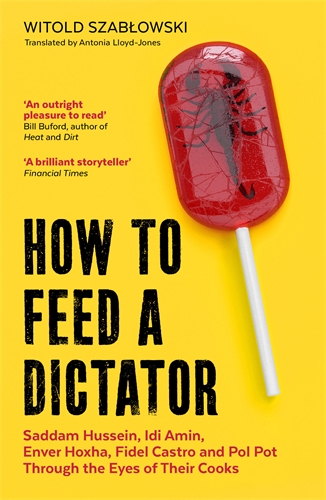
A devastatingly original look at the world's worst dictators, through the eyes of their personal chefs, by award-winning Polish author Witold Szablowski.
What is it like to cook for the most dangerous men in the world?
In this darkly funny and fascinating book, Witold Szablowski travels across four continents in search of the personal chefs of five dictators. From the savannahs of Kenya to the faded glamour of Havana, and the bombed-out streets of Baghdad, Szablowski finds the men and women who cooked fish soup for Saddam Hussein, roasted goat for Idi Amin and chopped papaya salad for Pol Pot. He reveals the strangeness of a job where a single culinary mistake could be fatal, but a well-seasoned dish could change your life. And in doing so, he lifts the veil on what life is like at the very heart of power.
A fascinating collection of essays – part oral history, part reportage – by Polish journalist Witold Szablowski… For some of these chefs, it was hard to see their employers as anything but ordinary human beings, however flawed, until it was too late. Maybe you can't see monstrosity in its full monstrousness when you're making breakfast for it every day

A NEW, BEAUTIFULLY ILLUSTRATED EDITION OF THE SUNDAY TIMES NUMBER ONE BESTSELLER, PUBLISHED ON ITS TENTH ANNIVERSARY.
'Witty and erudite … stuffed with the kind of arcane information that nobody strictly needs to know, but which is a pleasure to learn nonetheless.' Nick Duerden, Independent.
'Particularly good … Forsyth takes words and draws us into their, and our, murky history.' William Leith, Evening Standard.
The Etymologicon is an occasionally ribald, frequently witty and unerringly erudite guided tour of the secret labyrinth that lurks beneath the English language.
What is the actual connection between disgruntled and gruntled? What links church organs to organised crime, California to the Caliphate, or brackets to codpieces?
Mark Forsyth's riotous celebration of the idiosyncratic and sometimes absurd connections between words is a classic of its kind: a mine of fascinating information and a must-read for word-lovers everywhere.
'Highly recommended' Spectator
Mark Forsyth is a writer, journalist and blogger. His book The Etymologicon was a Sunday Times Number One Bestseller and his TED Talk 'What's a snollygoster?' has had more than half a million views. He is also the author of The Horologicon and The Elements of Eloquence, and wrote a specially commissioned essay The Unknown Unknown for Independent Booksellers Week. He lives in London with his dictionaries, and blogs at blog.inkyfool.com.
‘A thing to treasure and keep close at hand. I would prescribe it to the lost and the lonely, the busy and the overburdened, the heart-broken and the happy’ – Emily Haworth-Booth
A moving, funny exploration of life as the parent of a lockdown baby, by illustrator Pia Bramley.
Since March 2020, babies have been born into a world of masks, hand washing and social distancing. They met their grandparents on video calls. Their parents held them up to windows and took them for long walks in the rain.
Pia Bramley’s illustrations capture the intimacy of the small, strange world of the pandemic baby. She draws on her own experience as a new parent, telling the story of a child's first year against the backdrop of the pandemic: the quiet streets of the first lockdown, the relative freedom of summer, the long nights of autumn and winter and, finally, new hope as spring arrives and life begins to open up again. Moving, funny and deeply honest, this is a book for every parent, grandparent, aunt, uncle or friend who waited to hold their pandemic baby.
Pia Bramley studied at the Royal Drawing School and the University of Brighton. Pandemic Baby is her first book.
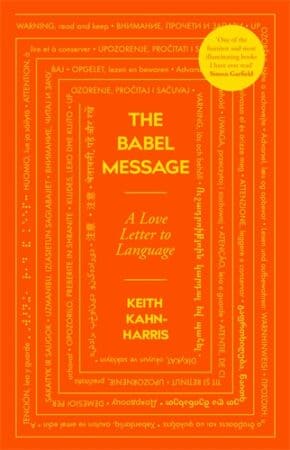
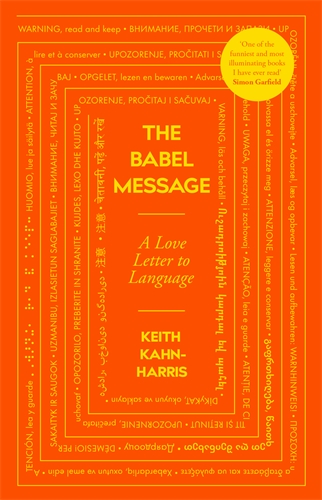
'Quite simply, and quite ridiculously, one of the funniest and most illuminating books I have ever read. I thought I was obsessive, but Keith Kahn-Harris is playing a very different sport. He really has discovered the whole world in an egg.' Simon Garfield
A thrilling journey deep into the heart of language, from a rather unexpected starting point.
Keith Kahn-Harris is a man obsessed with something seemingly trivial – the warning message found inside Kinder Surprise eggs:
WARNING, read and keep: Toy not suitable for children under 3 years. Small parts might be swallowed or inhaled.
On a tiny sheet of paper, this message is translated into dozens of languages – the world boiled down to a multilingual essence. Inspired by this, the author asks: what makes 'a language'? With the help of the international community of language geeks, he shows us what the message looks like in Ancient Sumerian, Zulu, Cornish, Klingon – and many more. Along the way he considers why Hungarian writing looks angry, how to make up your own language, and the meaning of the heavy metal umlaut.
Overturning the Babel myth, he argues that the messy diversity of language shouldn't be a source of conflict, but of collective wonder. This is a book about hope, a love letter to language.
'This is a wonderful book. A treasure trove of mind-expanding insights into language and humanity encased in a deliciously quirky, quixotic quest. I loved it. Warning: this will keep you reading.' – Ann Morgan, author of Reading the World: Confessions of a Literary Explorer
DR KEITH KAHN-HARRIS is a sociologist and author, based in London. He is a Senior Research Fellow at the Institute for Jewish Policy Research and a Senior Lecturer at Leo Baeck College. He also makes time for pursuing other interests outside the community, including extreme metal music and the warning messages in Kinder Surprise Eggs.
The author of nine books, his most recent publications are Strange Hate: Antisemitism, Racism and the Limits of Diversity, The Babel Message: A Love Letter to Language (Icon) and (co-authored with Rob Stothard) What Does A Jew Look Like? Find out more at kahn-harris.org.
**A REVISED AND SIGNIFICANTLY UPDATED EDITION OF ROB TANNER'S 5000-1- NOW COVERING THE FIVE YEARS SINCE LEICESTER CITY'S INCREDIBLE PREMIER LEAGUE TITLE WIN.**
On 2 May 2016, English football was spectacularly altered as 5000-1 longshots Leicester City were crowned Premier League champions. Their victory broke a long-standing monopoly at the top of the table, and propelled the club into the Champions League for the first time.
In The Leicester City Story: Five Years On, acclaimed Athletic Leicester City correspondent Rob Tanner relives City's title win, their summer of celebration and the highs and lows of the next five years that led to their first FA Cup win in 2021.
Detailing the dramatic changes in the club's management since 2016, and reflecting on the great legacy of the club's much-loved owner, Khun Vichai, Tanner tells the inside story of a remarkable team still on the rise.
Rob Tanner is The Athletic's Leicester City correspondent. He was the Leicester Mercury's chief football writer from 2009 until 2019. He lives in Tamworth, Staffordshire.
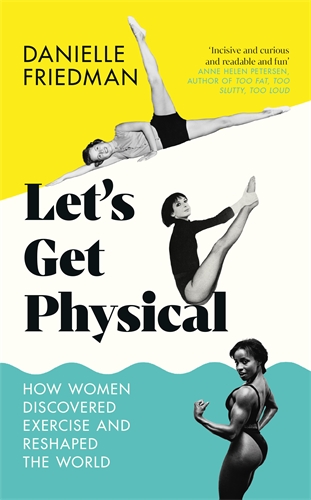
A NEW YORKER BEST BOOK OF 2022
'Well-researched and readable' – Financial Times
'An absorbing, pacy read' – New Statesman
'Canny and informative' – The New Yorker
The untold history of women's exercise culture, from jogging and Jazzercise to Jane Fonda.
Author of The Cut's viral article shared thousands of times unearthing the little-known origins of barre workouts, Danielle Friedman explores the history of women's exercise, and how physical strength has been converted into other forms of power.
Only in the 60s, thanks to a few forward-thinking fitness pioneers, did women begin to move en masse. In doing so, they were pursuing not only physical strength, but personal autonomy.
Exploring barre, jogging, aerobics, weight training and yoga, Danielle Friedman tells the story of how, with the rise of late-20th century feminism, women discovered the joy of physical competence – and how, going forward, we can work to transform fitness from a privilege into a right.
Danielle Friedman is an award-winning journalist whose writing has appeared in The New York Times, New York Magazine's The Cut, Vogue, Harper's Bazaar, Glamour, Health, and other publications. She has worked as a senior editor at NBC News Digital and The Daily Beast, and she began her career as a nonfiction book editor at the Penguin imprints Hudson Street Press and Plume. She lives in New York City with her husband and son.
Astute and entertaining … With an emphasis on barrier breakers, business dynamos, and exceptional athletes, Friedman explores how physical training can be a means of personal liberation … This zippy history is bursting with energy.
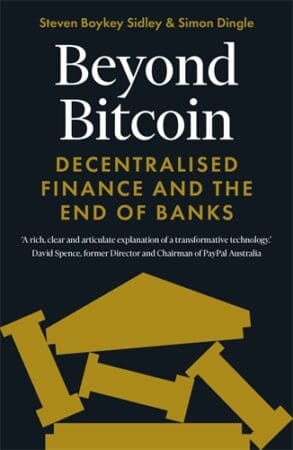
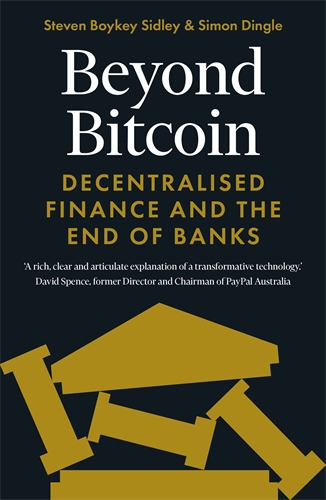
After over a decade of Bitcoin, which has now moved beyond lore and hype into an increasingly robust star in the firmament of global assets, a new and more important question has arisen. What happens beyond Bitcoin? The answer is decentralised finance – 'DeFi'.
Tech and finance experts Steven Boykey Sidley and Simon Dingle argue that DeFi – which enables all manner of financial transactions to take place directly, person to person, without the involvement of financial institutions – will redesign the cogs and wheels in the engines of trust, and make the remarkable rise of Bitcoin look quaint by comparison. It will disrupt and displace fine and respectable companies, if not entire industries.
Sidley and Dingle explain how DeFi works, introduce the organisations and individuals that comprise the new industry, and identify the likely winners and losers in the coming revolution.
STEVEN BOYKEY SIDLEY has worked extensively in technology and finance and is an award-winning novelist, playwright and columnist. An American citizen, he currently lives in Johannesburg with his wife and their two children.
SIMON DINGLE is an author, broadcaster and entrepreneur with extensive experience in cryptocurrency, including being on the founding teams of several fintech firms, including cryptocurrency exchange Luno and open banking provider Curve.
'Looking backward to move forward, this book is a masterclass on the evolution and expansion of the crypto world and its possible futures. Essential for those wanting to move beyond the headlines.'
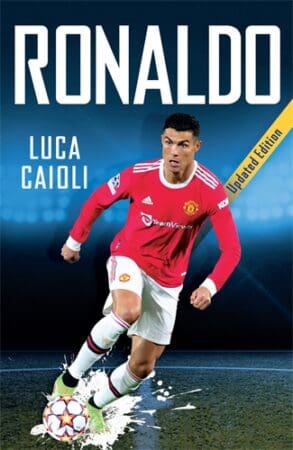
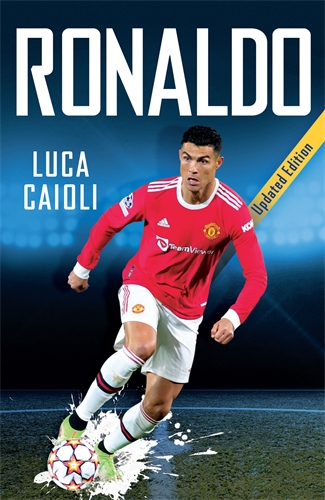
Strength, speed and dedication: Cristiano Ronaldo is known throughout the world as a colossus of the modern game.
But did you know that he underwent laser heart surgery aged just fifteen to enable him to continue playing the game he loved?
Or that Nacional, his first professional club, donated twenty balls and two sets of kits to his youth team in order to sign him?
Or how he came to be known as abelhinha -'little bee'- a name he would later pass on to his Yorkshire Terrier?
Find out all this and more in Luca Caioli's biography of the global superstar, featuring exclusive insights from those who know him best and even the man himself.
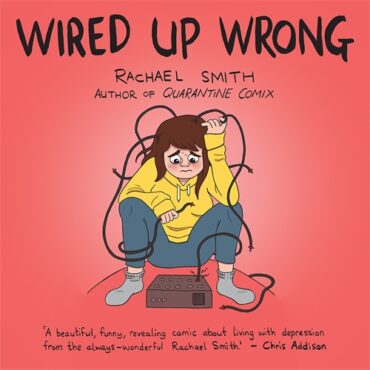
A new graphic memoir, from the award-winning author of Quarantine Comix.
Hoping to better understand her own brain, award-winning comic-creator Rachael Smith set about documenting her experiences and struggles with anxiety and depression through comic strips.
The resulting book, Wired Up Wrong, is both educating and entertaining, holding a mirror up to all the flattering and unflattering aspects of mental health.
Featuring Rufus the cat, Barky, a giant black dog who lives inside her head, and two tiny, imaginary game-show hosts, Comedy Women in Print-shortlisted Rachael Smith's work is at times light-hearted, others heart-breaking, but always brave and honest.
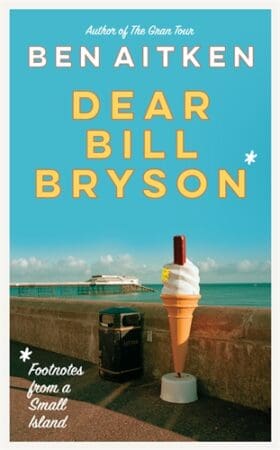
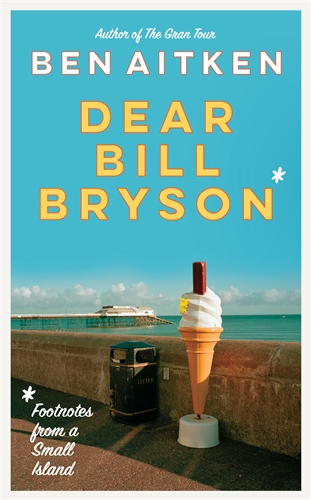
FROM THE AUTHOR OF THE ACCLAIMED THE GRAN TOUR AND THE MARMALADE DIARIES
An irreverent homage to the '95 travel classic.
'It would be wrong to view this book as just a highly accomplished homage to a personal hero. Aitken's politics, as much as his humour, are firmly in the spotlight, and Dear Bill Bryson achieves more than its title (possibly even its author) intended.' Manchester Review
In 2013, travel writer Ben Aitken decided to follow in the footsteps of his hero – literally – and started a journey around the UK, tracing the trip taken by Bill Bryson in his classic tribute to the British Isles, Notes from a Small Island.
Staying at the same hotels, ordering the same food, and even spending the same amount of time in the bath, Aitken's homage – updated and with a new preface for 2022 – is filled with wit, insight and humour.
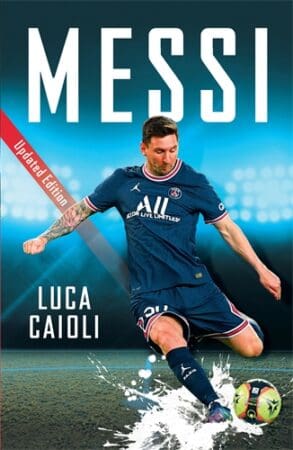
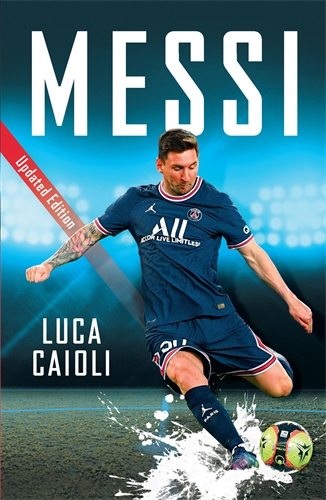
FROM THE BESTSELLING AUTHOR OF RONALDO AND NEYMAR.
Prolific, cool-headed and unerringly consistent, Lionel Messi is one of the most revered footballers in history.
But did you know that his transfer to Barcelona was first agreed on a paper napkin?
Or that an x-ray of his hand was to thank for identifying his growth hormone deficiency?
And do you know why he refused to collect his first ever Champions League winner's medal?
Find out all this and more in Luca Caioli's classic portrait of a footballing icon, featuring exclusive interviews with those who know him best and even Messi himself.
'An original, wide-ranging and carefully researched book … contains important lessons for humanity.' Mark Cocker, The Spectator
A fascinating insight into climate change biology around the globe, as well as in our own backyards.
Hurricane Lizards and Plastic Squid is the first major book by a biologist to focus on the fascinating story of how the natural world is adjusting, adapting, and sometimes measurably evolving in response to climate change. Lyrical and thought-provoking, this book broadens the climate focus from humans to the wider lattice of life.
Bestselling nature writer Thor Hanson – author of Buzz (a Radio 4 'Book of the Week') – shows us how Caribbean lizards have grown larger toe pads to grip trees more tightly during frequent hurricanes; and how the 'plasticity' of squid has allowed them to change their body size and breeding habits to cope with altered sea temperatures.
Plants and animals have a great deal to teach us about the nature of what comes next, because for many of them, and also for many of us, that world is already here.
'Nature-lovers … will marvel at the incredible ingenuity of creatures across the globe.'
**Longlisted for the Mountbatten Maritime Media Awards 2022**
A groundbreaking history of the Black Joke, the most famous member of the British Royal Navy's anti-slavery squadron, and the long fight to end the transatlantic slave trade.
Initially a slaving vessel itself, the Black Joke was captured in 1827 and repurposed by the Royal Navy to catch its former compatriots. Over the next five years, the vessel liberated more enslaved people than any other in Britain's West Africa Squadron.
As Britain attempted to snuff out the transatlantic slave trade by way of treaty and negotiation, enforcing these policies fell to ships such as the Black Joke as they battled slavers, weather disasters, and interpersonal drama among captains and crew that reverberated across oceans.
The Black Joke is a crucial and deeply compelling work of history, both as a reckoning with slavery and abolition and as a lesson about the power of political will – or the lack thereof.
