

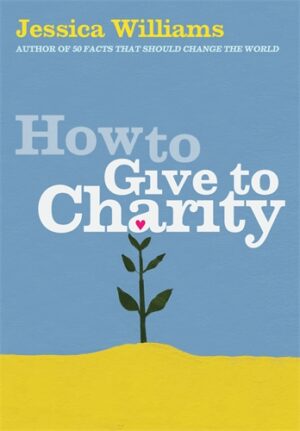
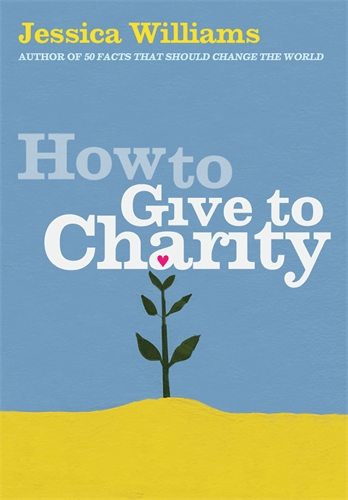
How to Give to Charity (Paperback)
Jessica Williams
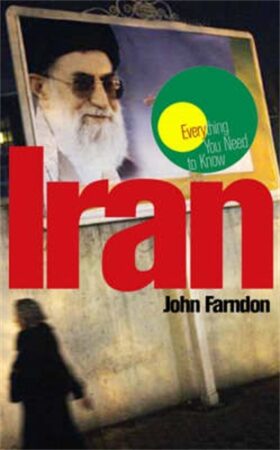
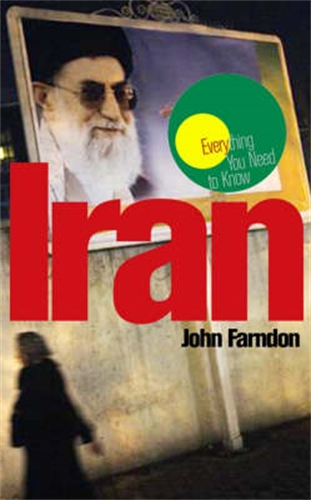
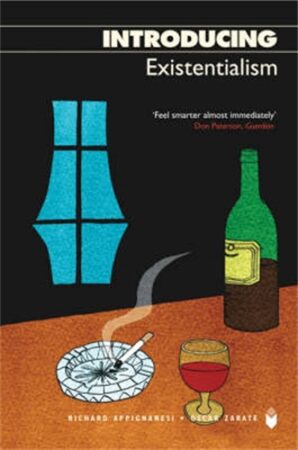
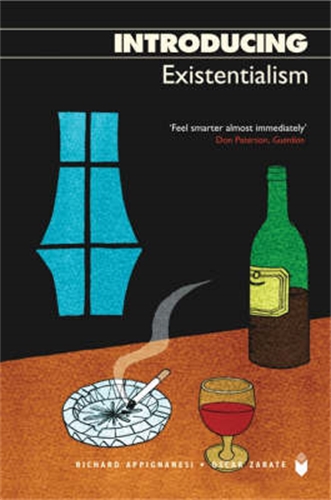
Richard Appignanesi goes on a personal quest of Existentialism in its original state. He begins with Camus' question of suicide: 'Must life have a meaning to be lived?' Is absurdity at the heart of Existentialism? Or is Sartre right: is Existentialism 'the least scandalous, most technically austere' of all teachings?
This brilliant Graphic Guide explores Existentialism in a unique comic book-style.
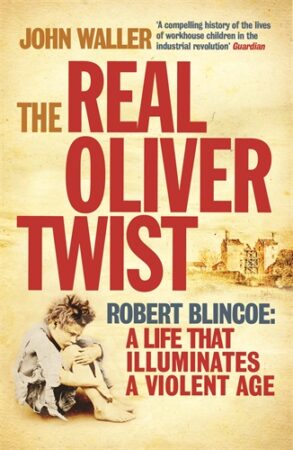
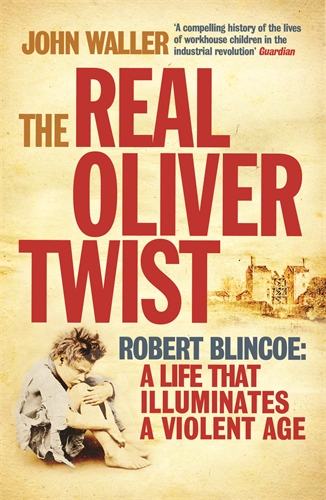
Robert Blincoe's political, personal and turbulent story illuminates the Dickensian age like never before. His life provides an outstanding example of courage and a refusal to be downtrodden.
With their characteristic panache and unrivalled clarity, world-renowned science authors Mary and John Gribbin take us on an incredible and thought-provoking illustrated tour of everything you ever wanted to know about science.
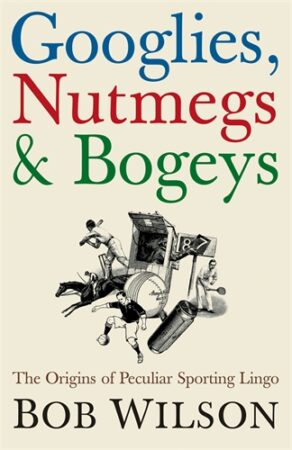
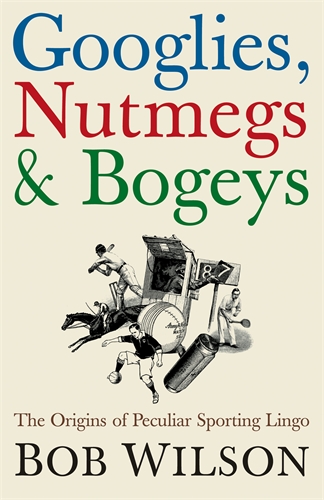
Have you ever flashed at a zooter in the corridor of uncertainty while on a sticky dog? Maybe you've seen someone hit a mulligan out of the screws to grab a birdie at Amen Corner?
The world of sport has its own language, wonderfully rich in strange words and phrases, whose origins often stretch back centuries. Veteran BBC presenter and football legend Bob Wilson has written this brilliant illustrated guide to the fascinating true meanings, heritage and evolution of the great sporting terms we use today.


Sometimes facing up to your problems is just not an option. Dixie Wills reveals the ultimate rural, coastal, urban and mountainous getaways for when life gets a bit too much…"Places to Hide" is the essential guide for anyone who needs to disappear for a bit. Containing tips on concealment, total identity change and crouching, up-to-date information on local terrain, and the experiences of famous hiders such as Lawrence of Arabia, "Places to Hide" is ideal for any aspiring hermit or professional dodger who needs to get away from it all.
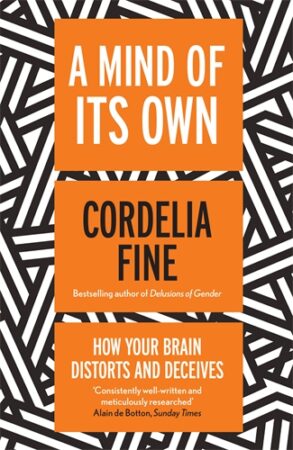
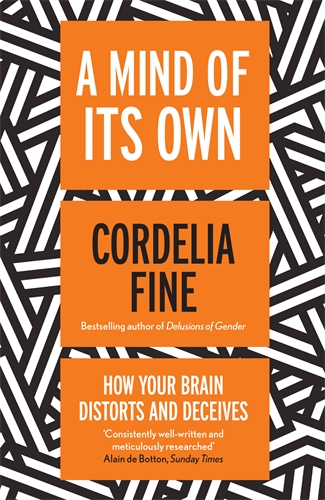
THE DAZZLING FIRST BOOK FROM THE WINNER OF THE 2017 ROYAL SOCIETY INSIGHT INVESTMENT SCIENCE BOOKS PRIZE
‘A fascinating, funny, disconcerting and lucid book.’ Helen Dunmore
‘Fine sets out to demonstrate that the human brain is vainglorious and stubborn. She succeeds brilliantly.’ Mail on Sunday
‘Fine is a cognitive neuroscientist with a sharp sense of humour and an intelligent sense of reality’ The Times
Perhaps your brain seems to stumble when faced with the 13 times table, or persistently fails to master parallel parking. But you’re in control of it, right?
Sorry. Think again.
Dotted with popular explanations of social psychology research and fascinating real-life examples, A Mind of Its Own tours the less salubrious side of human psychology. Psychologist Cordelia Fine shows that the human brain is in fact stubborn, emotional and deceitful, and teaches you everything you always wanted to know about the brain – and plenty you probably didn’t.
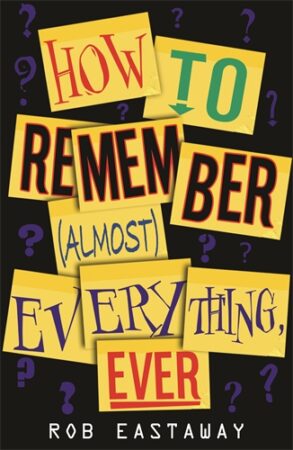
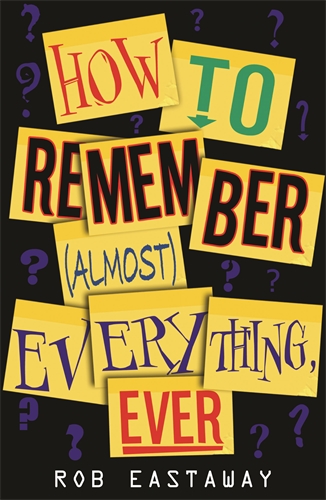
Crammed with do-anywhere tricks, puzzles and much more, this ultimate brain adventure will ensure you never forget anything ever again! Weird, isn't it? You can remember every person in your favourite team or pop group, but you forget what day it is. Why is that? How does memory work and how can you make yours be the best? Crammed with cool tricks, experiments and great mind games, this book can help you train your brain – amazing your friends and impressing your teachers! See the human mind take on the world's most powerful computer, discover how to make and break secret spy codes, and read incredible true-life memory stories about mighty Roman generals, daring prison escapes, and the amazing Russian man who could remember absolutely everything – ever!
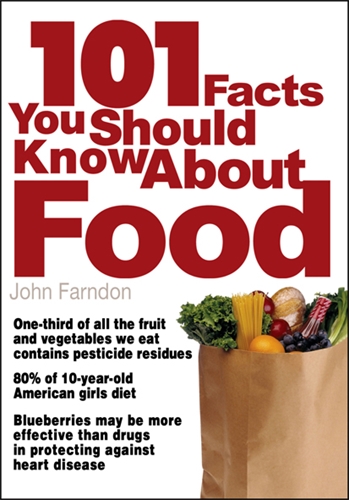
The author of the essential read "Everything You Need to Know: Bird Flu" presents 101 things you really should know about the food you eat…The way fast food changes brain chemistry can make it as addictive as heroin. Eating less could be the best way to stop growing old. 47 per cent of broiler chickens sold suffer from crippling bone disorders. A typical family throws away 30-50 kg of food packaging a month. From the extraordinary distance our food can travel to reach our tables to the remarkable benefits of eating avocados, John Farndon shows the amazing, often shocking, truth behind the food we eat. Covering everything from the big businesses that control food production around the world to the dangers of food dyes, this book reveals the complex facts behind the simplest of meals. Find out just what GM food is and why you may eat it unknowingly, how food gets its flavour, how some foods are not as nutritious as they should be, how bringing exotic foods to your table may literally cost the Earth, and much more. This is an essential guide to the facts behind food, the one vital thing in your life besides air and water – and the world's biggest business.
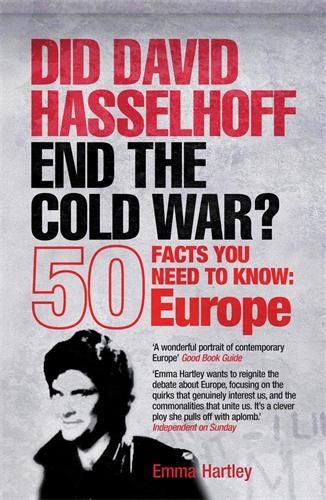
This book includes attention grabbing facts and punchy popular analysis. It is a sequel to the bestselling "50 Facts that Should Change the World". It includes facts such as: there are half a million machine guns in Swiss homes; without Islam Europe would not exist; Europeans are genetically modified to consume more alcohol than the rest of the world; Santa Claus lives in Greenland and he is broke; and Snails are fish according to the EU. This is a sometimes shocking, often surprising, and always enjoyable, guide to the Europe you thought you knew.
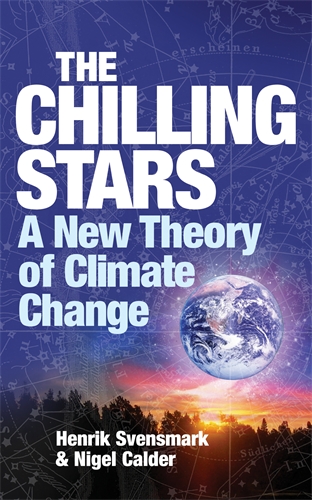
Scientists agree that over the last century the earth has become warmer. But do we really know why this has happened? A deftly written and enjoyable read, "The Chilling Stars" outlines a brilliant, daring and undoubtedly controversial new theory that will provoke fresh thinking about global warming. As prize-winning science writer, Nigel Calder and climate physicist Henrik Svensmark explain, an interplay of the clouds, the Sun and cosmic rays – sub-atomic particles from exploded stars – seems to have more effect on the climate than manmade carbon dioxide. This conclusion stems from Svensmark's research at the Danish National Space Center which has recently shown that cosmic rays play an unsuspected role in making our everyday clouds. And during the last 100 years cosmic rays became scarcer because unusually vigorous action by the Sun batted many of them away. Fewer cosmic rays meant fewer clouds and a warmer world. The theory, simply put here but explained in fascinating detail in the book, emerges at a time of intense public and political concern about climate change. Motivated only by their concern that science must be trustworthy, Svensmark and Calder invite their readers to put aside their preconceptions about manmade global warming and look afresh at the role of Nature in this hottest of world issues.
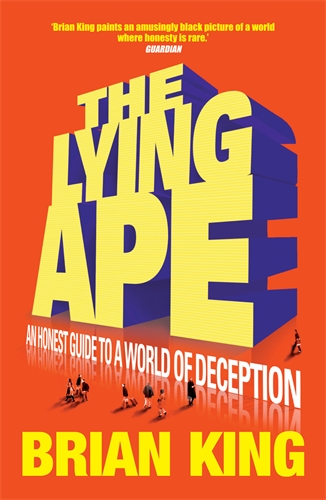
This book received phenomenal coverage in hardback, including an extended author interview by Philip Schofield and Fern Britton on "This Morning" and a feature by John Humphrys in the "Daily Mail". It is full of real life stories from real people. It is from the bestselling co-author of "Beyond Coincidence", called 'a first-rate book' by the "Observer". We tell an average of six lies a day, psychologists believe. In this witty and engaging book Brian King unravels the full extent of the deceit that surrounds us, from politicians, ad-men, journalists and salesmen to our partners and children – and the lies we tell ourselves to preserve our precious self-esteem. He looks at some of the great liars of history, reveals how scientists can observe the brain as it suppresses the awkward truth in favour of the convenient lie, and advises on the best techniques for spotting a lie through body language and verbal slips.
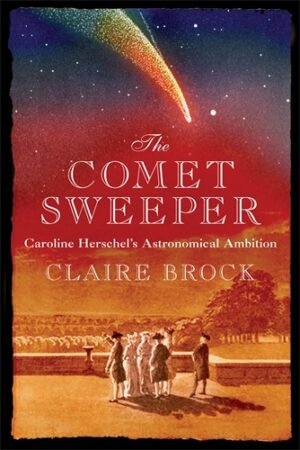
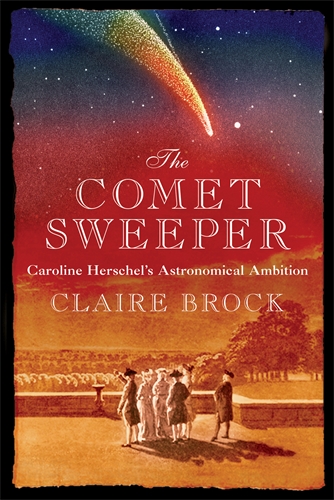
"The Comet Sweeper" is the incredible story of Britain's first female professional scientist, Caroline Herschel – a true Enlightenment celebrity whose rediscovery is long overdue. Such was Herschel's reputation that a congratulatory letter in 1790 from the director of the Paris Observatory was simply addressed to 'Mlle Caroline Herschel, Astronome Celebre, Slough.' Having escaped domestic servitude in Germany by teaching herself to sing and establishing a career in England, Herschel learned astronomy while helping her brother William, then Astronomer Royal. Soon she was making scientific discoveries in her own right, and she swept to international scientific and popular fame. She was awarded a salary by George III in 1787, becoming the first woman in Britain ever to make her living from science. But, as a woman in a male-dominated world, Herschel's great success was achieved despite constant frustration of her ambitions. Assisting her brother had to take priority over her own work, and his marriage separated her from the instruments of her trade, stalling her career. Drawing on original sources – including Herschel's diaries and her fiery letters – Claire Brock tells the story of a woman so determined to win independence and satisfy her ambition that she moved careers and countries while chasing success.
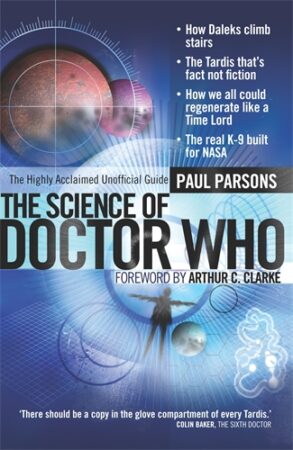
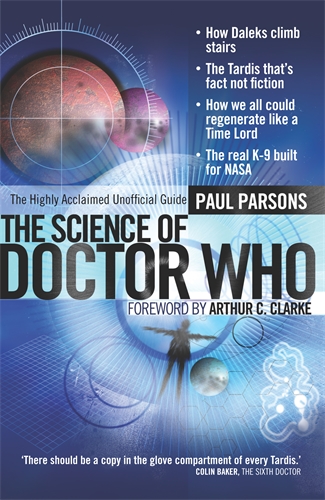
This is the cutting-edge science behind one of the most popular sci-fi series ever. New "Doctor Who" series starts in April 2007. Written by the editor of the popular BBC "Focus" magazine, it covers everything from how Daleks climb stairs to regenerating like the Time Lord. You can discover: why time travel isn't ruled out by the laws of physics; the real K-9 – the robot assistant for space travellers built by NASA; how Dalek-like designer lifeforms are being bred by genetic engineering; why before long we could all be regenerating like a Time Lord; and the medical truth about the Doctor's two hearts, and the real creature with five.
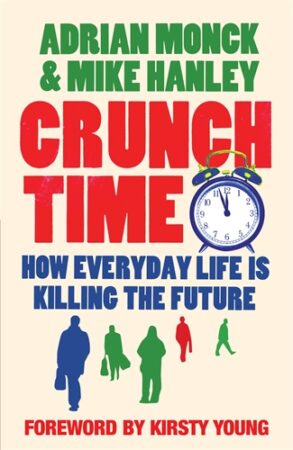
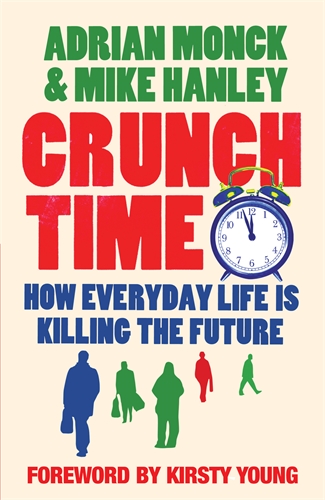
"Crunch Time" features two award-winning journalists arguing about the impact of our unthinking everyday actions on the future of our world. Every age and every generation thinks it's special, that it's on the cusp of something big. This time it's true – it's Crunch Time, and what we do now will make or break the future. The problem is that the things that we do every day – drive to work, buy toys for our kids, prepare our meals, have a cup of coffee – are conspiring to break it. Terrorism, poverty, ecological meltdown, climate change, pandemics – this is the background noise we have all learnt to live with. But what if all these things could be laid at our own feet? What if our civilisation is structurally, tragically flawed? What if we are using up tomorrow today? Our society is moving faster than ever, yet it's also increasingly fragile and filled with risk. In "Crunch Time", journalists Adrian Monck and Mike Hanley argue passionately with each other about the causes of these issues and what we can do about them. Believing that living in the 21st century means being answerable to the future, they help us to understand the critical decisions that we need to make now if we want to leave anything of value to future generations.
