


Marshall McLuhan and Virtuality (Paperback)
Christopher Horrocks
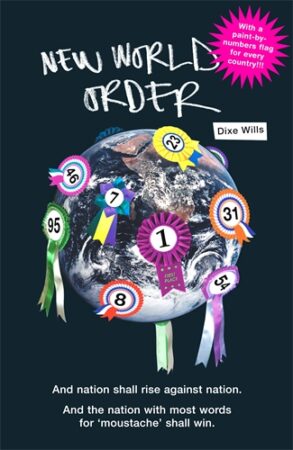
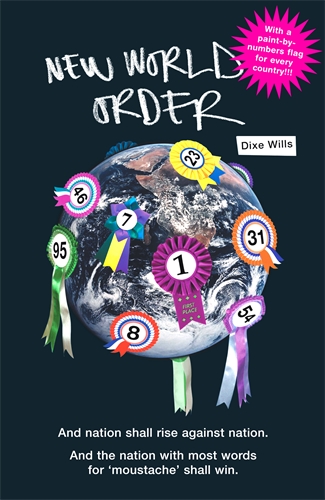
Offbeat travel writer Dixe Wills nails down the essence of every single country on the planet. Say goodbye to sleepless nights fretting over the average number of puls to the Afghani, or wondering what's in Bhutan today and whether it will still be fresh by the time you get it home. With a handy grading system to reveal who are the globe's real top nations and which ones are letting the side down on a monumental scale, it's no wonder that experts are declaring "New World Order" the most important book to be written in the last 500 years. Without it, all is chaos and anarchy. And that's a bad thing, apparently.
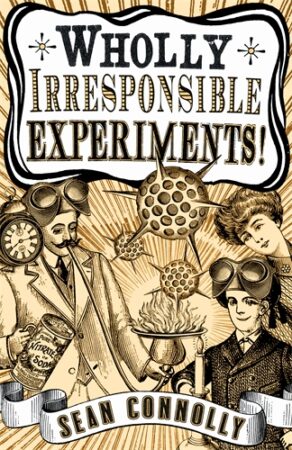
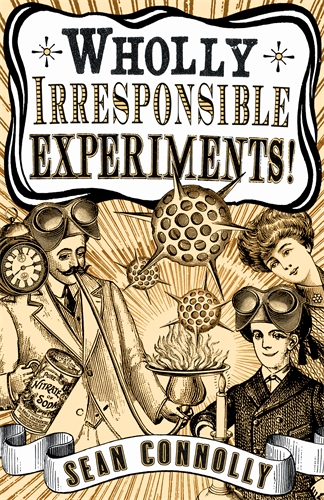
Do try these at home! Each experiment lists ingredients, methods, outcomes – and warnings…It is illustrated to show you the results. It includes scientific explanations (giving you a handy list of excuses!)."Wholly Irresponsible Experiments" offers a chance to remember the fun of being twelve. Scores of experiments show you how to create a dazzling array of explosions, geysers, fireballs and impacts. Amaze your friends with: an exploding jack o'lantern, the ultimate Halloween entertainment; a smoke bomb worthy of Harry Potter; a 15 metre high cola fountain, perfect for turning your enemies into a sticky mess; and, a dramatic fireball – from a very ordinary balloon. And if you feel a little guilty about all this mayhem, the book includes some handy scientific 'excuses'. The child screeching across the room propelled by a fire extinguisher is, after all, demonstrating Newton's Third Law of Motion. That bit of King Edward potato launched from a tube and ricocheting around the kitchen – simple: Boyle's Law! Irresponsible – maybe. Cracking fun – definitely!
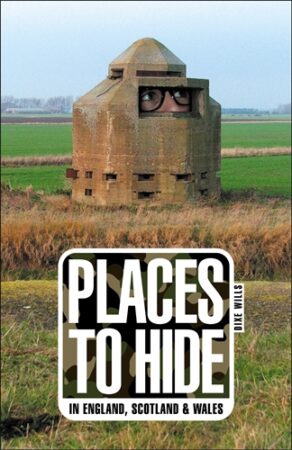
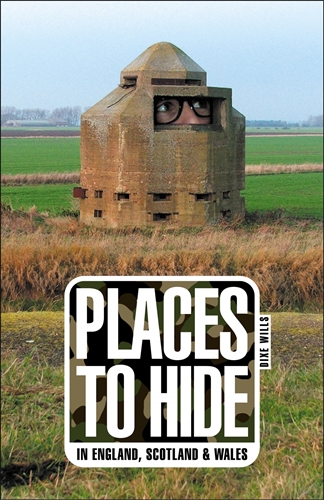
Sometimes facing up to your problems is just not an option. Dixe Wills reveals the ultimate rural, coastal, urban and mountainous getaways for when life gets a bit too much…"Places to Hide" offers a huge range of hiding places throughout Britain, from a discreet corner of the urban jungle of Birmingham to somewhere just off the coast between Talsarnau and Portmeirion. It gives helpful hints on concealment techniques, from crouching to total identity change, and includes up-to-date information on local sources of food, water and camouflage netting. To provide inspiration, Dixe also recounts the experiences of famous hiders such as King Charles II and Lawrence of Arabia, who have proved true the hider's maxim: 'You can run ? and now you can hide.'
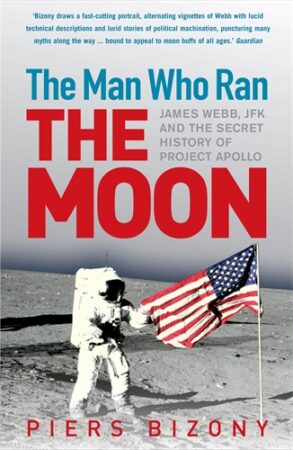
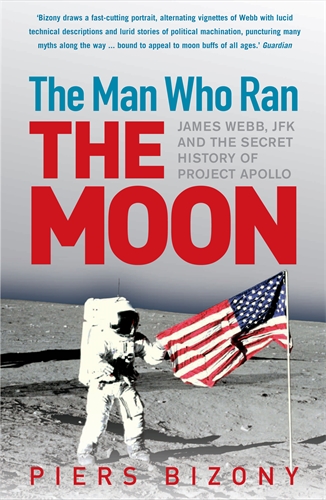
This is a brilliant popular history which will appeal to the huge audience of Andrew Smith's "Moondust." It is written by a rising popular science star – a journalist who writes widely. It is a well-reviewed on hardback publication. Space historian Piers Bizony explodes NASA's 1960s mythology and unveils the man who gave up everything to win the space race. Neil Armstrong will forever be the first man on the Moon. But the person most responsible for putting him there is, incredibly, unknown. In 1961 James Webb, a South Carolina lawyer, took charge of America's bid for the Moon. Persuading a reluctant JFK and gaining control of 5 per cent of the US budget, Webb's NASA supervised half a million workers building new machines, launch pads and control centres. But in 1967, a spacecraft fire killed three astronauts. The press exposed numerous failures and delays, as well as Webb's business partners' profiteering. Webb shouldered the blame and his sacrifice enabled the Moon landing in 1969, but his name was wiped from history. Conducting extensive interviews and drawing on recently released original sources, Bizony tells the fascinating hidden story of the unconventional, charismatic man who made one giant leap for mankind.
Since Einstein's time, a "theory of everything" – one coherent mathematical model that would encompass all the forces and particles of nature – has become the Holy Grail of physics, and its pursuit has resulted in some of the most extraordinary ideas in the history of science. One of the world's foremost popular science authors, John Gribbin provides a brief, succinct, accessible overview of the hundred-year saga of particle physics, explaining everything from the basics (how subatomic particles work) to the cutting edge research that has produced dazzling new models of the universe, among them the radical theories of "superstrings" – the hypothesis that particles are loops of vibrating "string" – and "supersymmetry."
This is a truly original blistering attack on the standard history of Britain and the origins of the English language. Think you know where the English language came from? Think again. In gloriously corrosive prose, M.J. Harper destroys the cherished national myths of the English, the Scots, the Welsh, the Irish and – to demonstrate his lack of national bias – the French. He shows that: most of the entries in the Oxford English Dictionary are wrong; the whole of British place-name theory is misconceived; Latin is not what it seems; the Anglo-Saxons played no major part in our history or language; and middle English is a wholly imaginary language created by well-meaning but deluded academics. Iconoclastic, unsentimental and truly original, "The History of Britain Revealed" will change the way you think about the history of the United Kingdom, the origin of the English language – and much else besides. It is an essential but rarely comforting read for anyone who believes that history matters.
All things are made of atoms, little particles that move around in perpetual motion, attracting each other when they are a little distance apart but repelling upon being squeezed into one another. This is the first popular account of the fascinating story of the atom. No one ever expected the atom to be as bizarre, as capricious, and as weird as it turned out to be. Its story is one riddled with jealousy, rivalry, missed opportunities and moments of genius. John Dalton gave us the first picture of the atom in the early 1800s. Almost 100 years later came one of the most important experiments in scientific history, by the young misfit New Zealander, Ernest Rutherford. He showed the atom consisted mostly of space, and in doing so turned 200 years of classical physics on its head. It was a brilliant Dane, Neils Bohr, who made the next great leap – into the incredible world of quantum theory. Yet, he and a handful of other revolutionary young scientists weren't prepared for the shocks Nature had up her sleeve. Mind-bending discoveries about the atom were destined to upset everything we thought we knew about reality. Even today as we peer deeper and deeper into the atom, it throws back as many questions at us as answers.
Veteran presenter and football legend Bob Wilson conducts another engaging romp through sport's more colourful terminology. Why is fighting in a square ring with strange gloves on called boxing? Why is it so difficult to stand up in the Pope's living room? And why does the Prince of Wales dislike buckets of nails and people with wet feet? "Rucks, Pucks & Sliders" reveals all as Bob Wilson explores the derivation of another collection of bizarre words and phrases from the wonderfully rich language of sport. Find out why, as a custodian, Bob has spent much of his life trying to keep bananas out of onion bags, why a submarine can often land you in a sin bin, who killed the Galacticos, why snooker balls wipe their feet, and why you'll never see a condor from the Crow's Nest. Laced with anecdotes from Wilson's own football and television careers, "Rucks, Pucks & Sliders" features one of sport's most enduring icons guiding us through the fascinating true meanings, heritage and evolution of great sporting terms we use today. As Kevin Keegan said of his previous book, 'It's a lesson in the language of sport from a man that should know.'
This is a timely, heartfelt and tough analysis of Britain's New Labour years from a hugely respected journalist and former politician. It is destined to become the definitive critique of the Blair years. Martin Bell dissects scandals from Bernie Ecclestone to David Blunkett; explores Labour's contempt for democracy, electoral reform and cash-for-peerages; attacks the illegal and utterly disastrous decision to go to war in Iraq, and questions the deployment in Afghanistan – he visited both countries in the course of writing the book. He berates the government for its neglect of the victims of its wars, and the faith-based foreign policy behind their deployment. He describes the politicization of the Foreign Office and asks how an ethical foreign policy can be consistent with the continued use of cluster bombs. Behind much of this lies the descent of New Labour's media management skills into the telling of bald untruths in the face of overwhelming evidence. Wide-ranging and pulling no punches, "The Truth that Sticks" is a crushing analysis of Labour's decade of deception, dishonesty and abuse of power, delivered with precision and great passion. "The Truth that Sticks" is a book that only Martin Bell could have written.

Quantum theory confronts us with bizarre paradoxes which contradict the logic of classical physics.
At the subatomic level, one particle seems to know what the others are doing, and according to Heisenberg's "uncertainty principle", there is a limit on how accurately nature can be observed. And yet the theory is amazingly accurate and widely applied, explaining all of chemistry and most of physics.
Introducing Quantum Theory takes us on a step-by-step tour with the key figures, including Planck, Einstein, Bohr, Heisenberg and Schrodinger. Each contributed at least one crucial concept to the theory. The puzzle of the wave-particle duality is here, along with descriptions of the two questions raised against Bohr's "Copenhagen Interpretation" – the famous "dead and alive cat" and the EPR paradox. Both remain unresolved.
J.P. McEvoy is a former research scientist and now a science journalist.
Oscar Zarate is a highly acclaimed graphic artist who has illustrated many Introducing titles. His prize-winning graphic novel A Small Killing is known throughout the world.
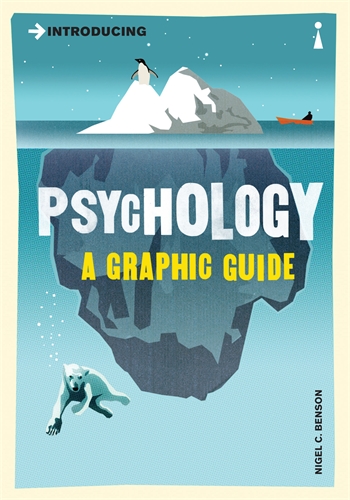
What is psychology? When did it begin? Where did it come from? How does psychology compare with related subjects such as psychiatry and psychotherapy? To what extent is it scientific?
Introducing Psychology answers all these questions and more, explaining what the subject has been in the past and what it is now. The main "schools" of thought and the sections within psychology are described, including Introspection, Biopsychology, Psychoanalysis, Behaviourism, Comparative (Animal) Psychology, Cognitive Approaches (including the Gestalt movement), Social Psychology, Developmental Psychology and Humanism. The key figures covered include: Freud, Pavlov, Skinner, Bandura, Piaget, Bowlby, Maslow and Rogers, as well as many lesser-known but important psychologists.
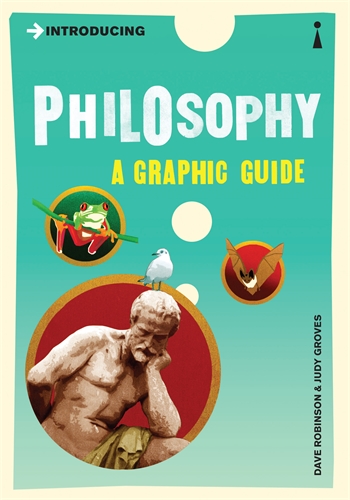
Philosophers have always enjoyed asking awkward and provocative questions, such as:
What is the nature of reality?
What are human beings really like?
What is special about the human mind and consciousness?
Are we free to choose who we are and what we do?
Can we prove that God exists?
Can we be certain about anything at all?
What is truth?
Does language provide us with a true picture of the world?
How should we behave towards each other?
Do computers think?
Introducing Philosophy is a comprehensive graphic guide to the thinking of all the significant philosophers of the Western world from Heraclitus to Derrida. It examines and explains their key arguments and ideas without being obscure or solemn. Lively and accessible, it is the perfect introduction to philosophers and philosophical ideas for anyone coming to the subject for the first time.
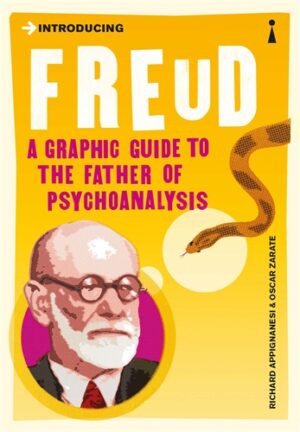
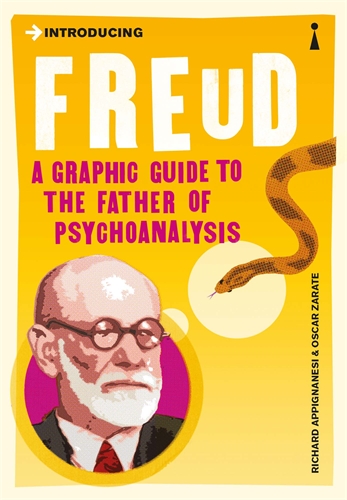
Freud revolutionized the way we think about ourselves. His psychoanalytic terms such as Id, Ego, libido, neurosis and Oedipus Complex have become a part of our everyday vocabulary.
But do we know what they really mean?
Introducing Freud successfully demystifies the facts of Freud's discovery of psychoanalysis. Irreverent and witty but never trivial, the book tells the story of Freud's life and ideas from his upbringing in 19th-century Vienna, his early medical career and his encounter with cocaine, to the gradual evolution of his theories on the unconscious, dreams and sexuality. With its combination of brilliantly clever artwork and incisive text, this book has achieved international success as one of the most entertaining and informative introductions to the father of psychoanalysis.
As the 2007 Nobel Prize for Literature is announced, Icon publish twenty years of powerful lectures from previous winners, introduced by former Booker Prize chairman-of-judges, critic and author John Sutherland. Here are Nobel lectures by the Literature Laureates from the past twenty years that together offer a glimpse into the inspirations, motivations and passionately-held beliefs of some of the greatest minds in the world of literature. Mediations on imagination and the process of writing intermingle with polemical discussions of global politics, cultural change and the ongoing influence of the past. All the writers demonstrate in their essays lyrical beauty and ethical depth; the result is an intelligent and humanistic integrity. From Harold Pinter, we hear about the nature of truth in art and politics. Toni Morrison explores the link between language and oppression. J.M. Coetzee takes an allegorical journey through the mysteries of the creative process, while Nadine Gordimer ponders the ways in which literature can shape the worlds of individual and collective being. Orhan Pamuk's touching 2006 lecture describes how his father inspired him to write. Nobel Lectures attests to the continuing power of literature to shape the world.
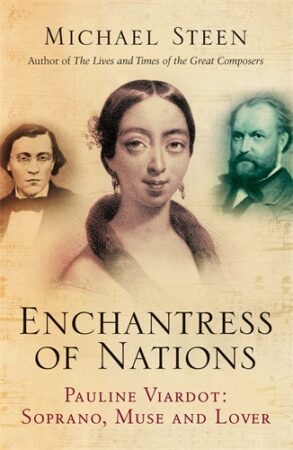
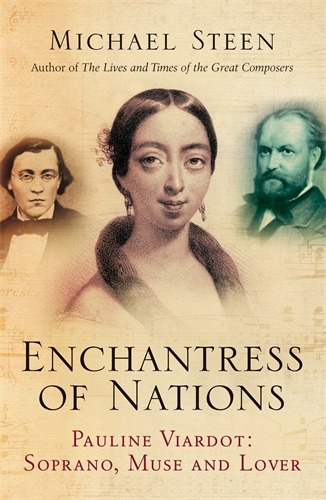
This is a picturesque but painstakingly researched biography of the life – and the times – of the nineteenth century's Maria Callas. She was among 'the most brilliant dramatic stars of our time', according to Franz Liszt, and billed as 'the most talked of opera singer in Europe'. Dickens – reduced to tears by her singing – regarded her as 'one of the greatest actresses of any time'. Liszt also declared that, with Pauline Viardot, the world had finally found a woman composer of genius. "Enchantress of Nations" is a lavish biography of this amazing woman whose life spanned most of the nineteenth century; and it also weaves a rich tapestry of music and literature in France, England and Russia. Michael Steen recounts the back-stage bitchiness, robbery, duels and violence, life in Russia before the emancipation of the serfs, appalling disease and shocking poverty, and the unhappiness experienced by children of successful parents. Luxuriously produced with a colour plate section, it opens a new vista on opera, nineteenth-century literature and history.
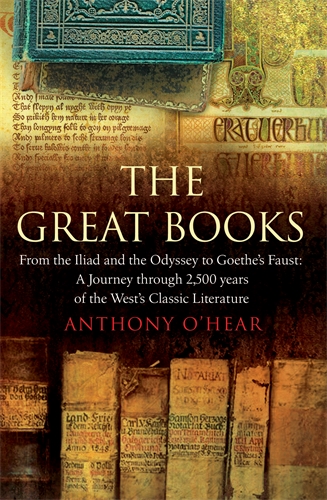
Anthony O'Hear presents a personal tour of the most impressive, influential and era-defining books mankind has ever produced. "Paradise Lost", "The Canterbury Tales", "Don Quixote": great literature can be read by anyone, with a little help. Anthony O'Hear leads the way with this captivating journey through two-and-a-half millennia of books as dark, powerful, erotic, thrilling, politically astute and awe-inspiring as any modern bestseller. We begin with Homer, whose poems of epic struggle have made him the father of Western literature. After Greek tragedy, Plato, and Virgil's "Aeneid" comes Ovid, whose encyclopaedic "Metamorphoses" is an inexhaustible source for European art and literature. Via St Augustine we reach Dante, the author of "The Divine Comedy", a sublime, terrifying tour through "Hell", "Purgatory" and an ecstatic vision of "Paradise". Chaucer, Shakespeare, Cervantes, Milton, Pascal, Racine and finally Goethe complete the cast list. In each case, O'Hear patiently draws out themes, focuses on key passages and explains why they are important. Personal, passionate, painstakingly researched and beautifully illustrated, this is a grand work of reference. But it is also a narrative history shot through with a love of literature, and a deeply-held belief in its power to shape everyone's world.
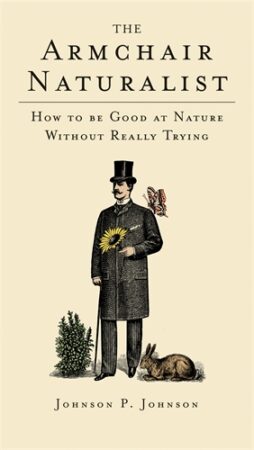
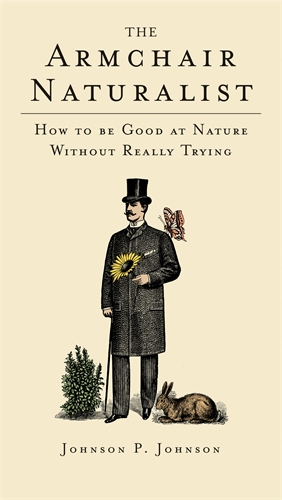
If only everything in the countryside came with helpful name tags and instructions attached, knowing stuff about nature would be child's play.
Until that day, "The Armchair Naturalist" is at hand to guide even the most urban of settlers in the ways of Britain's flora and fauna.
Teeming with illustrations, The Armchair Naturalist will transform you overnight into an expert on anything Mother Nature may throw at you, from funny animals to fir trees, cows to cowslips, blue tits to bluebells, toads to toadstools, and much more besides.Astonish your friends as you plunge your hands into nettles without being stung.
Be secretly amazed at your newfound talent for predicting the weather, befriending seabirds, and knocking up a nourishing breakfast from even the most unpromising undergrowth.


This work is about an often painful but always witty journey through the daily grind. From the agony of the away day via Hot Desking, office politics, romances and parties to the sheer terror of work reunions or 'teleconferencing', journalist and office escapee Malcolm Burgess exploits the deep vein of cynicism and rebelliousness that runs through every office. The book sprang from the author's weekly column in London's "Metro" newspaper and also includes a unique 'office buzzwords' section drawn from his "Times" column. Better than any stress-ball or executive toy, "I Hate the Office" is the essential weapon in the war against the angst of modern office life.
This is the unputdownable sequel to "365", with highly addictive, bite-size chunks of history. On Jan 16, 1920, prohibition is born. On Feb 14, 270: St Valentine's martyrdom gives birth to a romantic tradition. On Jul 5, 1946: The bikini swimsuit makes its debut at a Paris fashion show. On Dec 22, 1849: Dostoyevsky is led out for a pretend execution. Strange sometimes to think, even the biggest events of world history happened on a particular day – a rainy February 25th, a sweltering July 2nd, your father's birthday…W. B. Marsh and Bruce Carrick present a leap year of historical stories in turns amazing, horrifying, touching and tearful. Spanning the history of man's life on earth and every corner of the inhabited world, they paint a picture of infinite richness and minute, enthralling detail. Read about the first-ever tanks going into combat on the Somme, Pushkin's death in a duel, Nietzsche's dramatic breakdown in Turin, Jesse Owens humiliating the Nazis at the Olympic Games and much, much more. This is the ideal book for any history junkie.
