

Maths for Everyday Life (Paperback)
The Instant Guide
Instant Guides
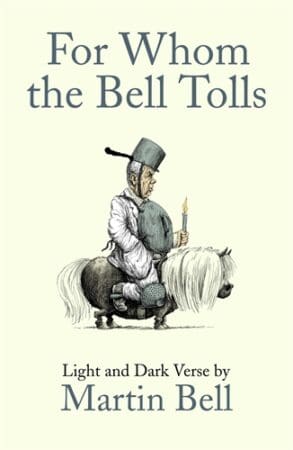
Martin Bell OBE has been many things – an icon of BBC war reporting, Britain’s first independent MP for 50 years, a UNICEF ambassador, and ‘the man in the white suit’ – a tireless campaigner for honesty and accountability in politics.
But as For Whom the Bell Tolls reveals, he’s also a poet of light verse, and here Bell’s poems continue his war by other means on duplicitous politicians, our all-consuming media, the venality of celebrity culture and much more.
Bell presents poems on Tony Blair and Iraq, on Serbian war criminal Radovan Karadzic, on his hero, Reuters reporter Kurt Schork, and colourful episodes from his work and life, from being starstruck by Angelina Jolie, to a mordant epitaph on Margaret Thatcher, to his being a guest at Idi Amin’s wedding:
‘… that by God / Was well worth doing, if distinctly odd.’
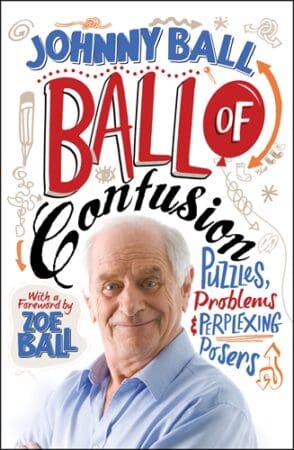
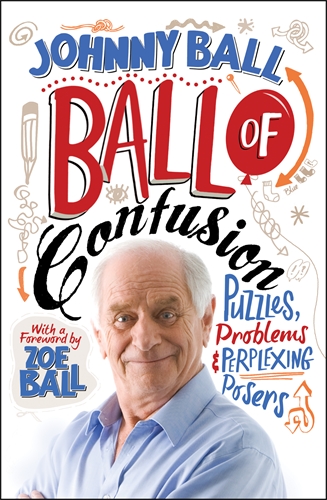
TV maths star Johnny Ball presents brain-teasers from his regular slot on his daughter Zoe's Radio 2 show. Ball of Confusion is designed to twist your brain into enjoyable knots of empuzzlement, from puzzles solved in a twinkling of an eye to some that will knit your brow for hours. From how to cheat in a coin toss to why it is that some parts of a high speed train travelling at 125mph are actually going backwards, Ball of Confusion will bend your mind in places it's never been bent before.
'This is a lovely compilation of puzzles including many classics, and Johnny Ball's legendary enthusiasm and humour jump out of every page.' Rob Eastaway, co-author Maths for Mums & Dads.
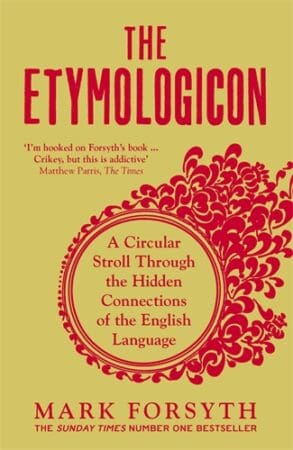
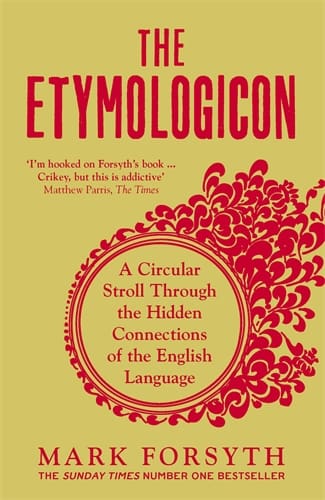
'Witty and erudite … stuffed with the kind of arcane information that nobody strictly needs to know, but which is a pleasure to learn nonetheless.' Nick Duerden, Independent.
'Particularly good … Forsyth takes words and draws us into their, and our, murky history.' William Leith, Evening Standard.
The Etymologicon is an occasionally ribald, frequently witty and unerringly erudite guided tour of the secret labyrinth that lurks beneath the English language.
What is the actual connection between disgruntled and gruntled? What links church organs to organised crime, California to the Caliphate, or brackets to codpieces?
Mark Forsyth's riotous celebration of the idiosyncratic and sometimes absurd connections between words is a classic of its kind: a mine of fascinating information and a must-read for word-lovers everywhere.
'Highly recommended' Spectator.
Mark Forsyth is a writer, journalist and blogger. His book The Etymologicon was a Sunday Times Number One Bestseller and his TED Talk 'What's a snollygoster?' has had more than half a million views. He is also the author of The Horologicon and The Elements of Eloquence, and wrote a specially commissioned essay The Unknown Unknown for Independent Booksellers Week. He lives in London with his dictionaries, and blogs at blog.inkyfool.com.
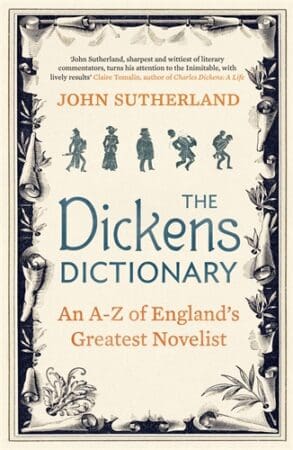
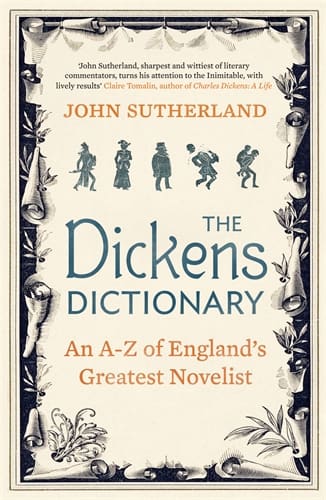
For fans new and old, an enjoyable tour through the world of Dickens in the hands of a master critic. Charles Dickens, the 'Great Inimitable', created a riotous fictional world that still lives and breathes for thousands of readers today. But how much do we really know about the dazzling imagination that brought all this into being?
For the bicentenary of Dickens' birth, Victorian literature expert John Sutherland has created a gloriously wide-ranging alphabetical companion to Dickens' work, excavating the hidden links between his characters, themes, and preoccupations, and the minutiae of his endlessly inventive wordplay.
Covering America, Bastards, Childhood, Christmas, Empire, Fog, Larks, London, Madness, Murder, Orphans, Pubs, Punishment, Smells, Spontaneous Combustion and Zoo to name but a few – John Sutherland gives us a uniquely personal guide to the great man's work.
Excerpt: HANDS; Every Dickens novel has a master image. In Our Mutual Friend it is the river. In Bleak House it is the fog. In Little Dorrit, it is the prison. In Great Expectations it is the hand. We often know much more about the principals' hands in that novel than their faces. Who, when the name Magwitch is mentioned, does not think of those murderous 'large brown veinous hands'? Jaggers? One's nose twitches—scented soap (the lawyer, like Pontius Pilate, is forever washing his hands). Miss Havisham? Withered claws. So it goes on…
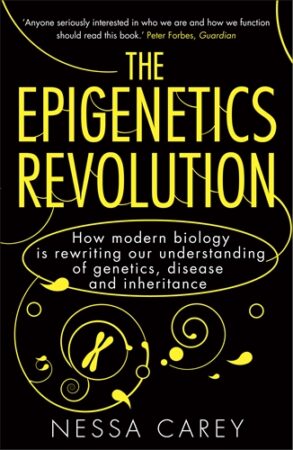
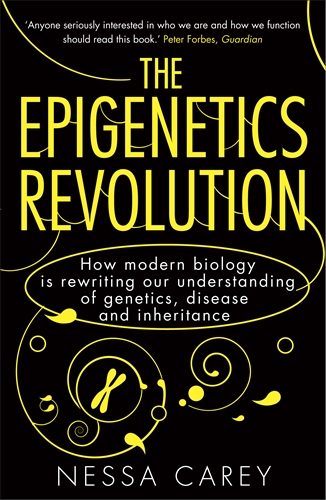
'A book that would have had Darwin swooning – anyone seriously interested in who we are and how we function should read this.' Guardian
At the beginning of this century enormous progress had been made in genetics. The Human Genome Project finished sequencing human DNA. It seemed it was only a matter of time until we had all the answers to the secrets of life on this planet.
The cutting-edge of biology, however, is telling us that we still don't even know all of the questions.
How is it that, despite each cell in your body carrying exactly the same DNA, you don't have teeth growing out of your eyeballs or toenails on your liver? How is it that identical twins share exactly the same DNA and yet can exhibit dramatic differences in the way that they live and grow?
It turns out that cells read the genetic code in DNA more like a script to be interpreted than a mould that replicates the same result each time. This is epigenetics and it's the fastest-moving field in biology today.
The Epigenetics Revolution traces the thrilling path this discipline has taken over the last twenty years. Biologist Nessa Carey deftly explains such diverse phenomena as how queen bees and ants control their colonies, why tortoiseshell cats are always female, why some plants need a period of cold before they can flower, why we age, develop disease and become addicted to drugs, and much more. Most excitingly, Carey reveals the amazing possibilities for humankind that epigenetics offers for us all – and in the surprisingly near future.
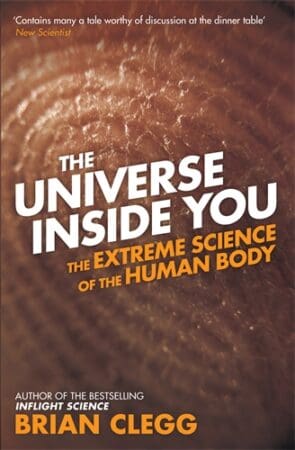
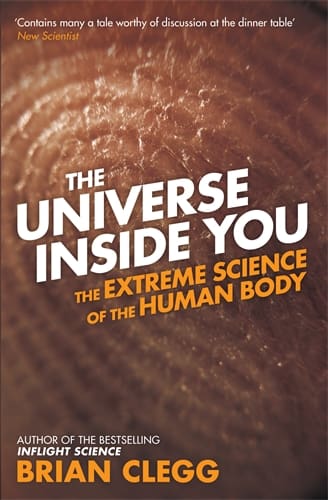
Built from the debris of exploding stars that floated through space for billions of years, home to a zoo of tiny aliens, and controlled by a brain with more possible connections than there are atoms in the universe, the human body is the most incredible thing in existence.
In the sequel to his bestselling Inflight Science, Brian Clegg explores mitochondria, in-cell powerhouses which are thought to have once been separate creatures; how your eyes are quantum traps, consuming photons of light from the night sky that have travelled for millions of years; your many senses, which include the ability to detect warps in space and time, and why meeting an attractive person can turn you into a gibbering idiot.
Read THE UNIVERSE INSIDE YOU and you'll never look at yourself the same way again.
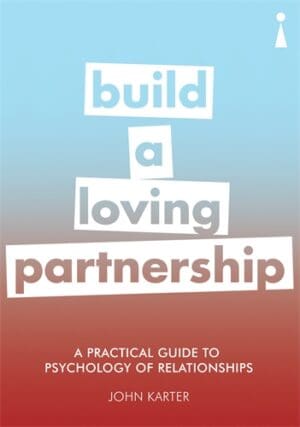
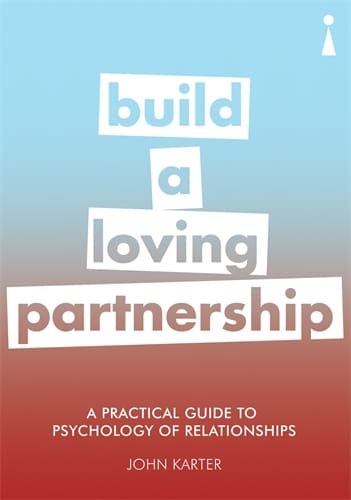
Understanding psychological techniques can help you make your relationships happier and more fulfilling. This Practical Guide will help you achieve new and healthier ways of relating by explaining some of the major underlying psychological ‘drivers’ that permeate relationships and identify and work on these unconscious motivating factors to eliminate ‘knee-jerk’ reactions. Filled with straightforward, practical advice, case studies and examples, Introducing Psychology of Relationships will help you understand your relationship and make it more loving and mutually supportive, as well as be better equipped for entering into a new relationship.
How can we apply philosophy to our everyday lives? Can philosophy affect the way we live? This book will show how philosophy can help to improve your thinking about everyday life. And how, by improving the quality of your thinking, you can improve the quality of your life. It will make you more aware of what you think and why, and how knowing this can help you can change the way you think about your life. Full of practical examples and straightforward advice, and written by an expert in the field, this guide can help you become calmer and happier, and make better decisions.
This Practical Guide shows you how raising your self-esteem can make you feel better about yourself; let you stop you worrying about whether you are doing the right thing or whether you are good enough; help you engage in relationships constructively without putting yourself down and allow you to assert yourself effectively in all situations. Self-esteem has been shown to be a key indicator of success in life and in the work place. Filled with straightforward, practical advice, this guide shows you how to improve your self-esteem and stop worrying about what other people think.
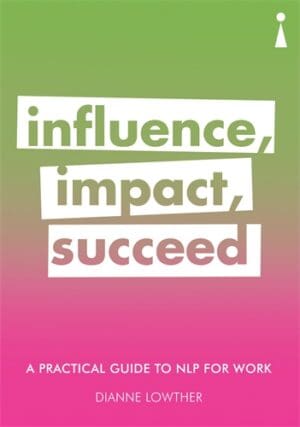
Neurolinguistic Programming is about helping you to identify and develop the patterns of thought and behaviour which are most beneficial to you.
Introducing NLP for Work teaches you how to build a successful rapport with your colleagues, enabling you to deal effectively with any problems and master any situation.
Dianne Lowther has been a Master Trainer of NLP (the top NLP qualification) since 2009. She has been teaching NLP for 20 years. In 2009 she won a National Training Award for her work with Schaeffler Ltd, a leading UK precision engineering company.
See Dianne talking about NLP here: http://www.youtube.com/watch?v=y6HtOUMOfGs
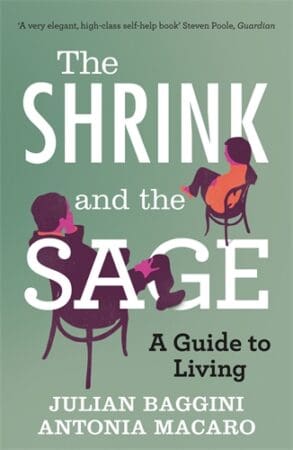
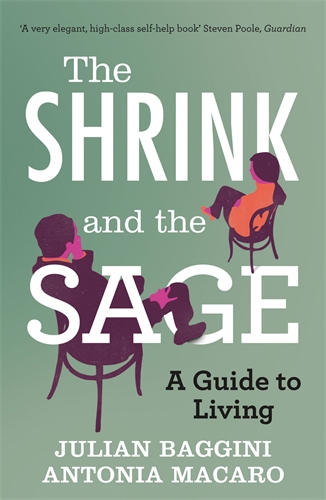
Based on their Financial Times Weekend column, philosopher Julian Baggini and his psychotherapist partner Antonia Macaro offer intriguing answers to life's questions. Can infidelity be good for you? What does it mean to stay true to yourself? Must we fulfil our potential? Self-help with a distinctly cerebral edge, the shrink and the sage – aka Julian Baggini and Antonia Macaro – have been dispensing advice through their FT column since October 2010. Combining practical advice on personal dilemmas with meditations on the meaning of concepts like free will, spirituality and independence, this book – their first together – expands on these columns and adds much more. Through questions of existential unease, metaphysical trauma and – for instance – how much we should care about our appearance, intellectual agony uncle and aunt team Baggini and Macaro begin to piece together the answer that we'd all like to hear: what is the good life, and how we can live it?

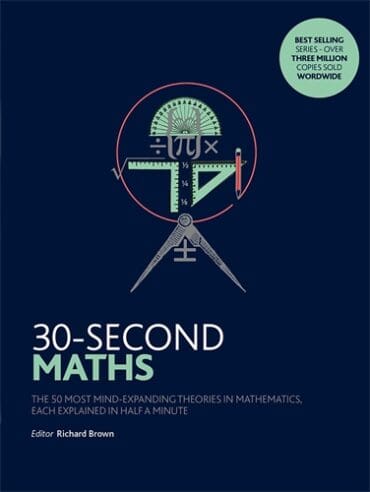
From Rubik's cubes to Godel's incompleteness theorem, everything mathematical explained, with colour illustrations, in half a minute. Maths is enjoying a resurgence in popularity. So how can you avoid being the only dinner guest who has no idea who Fermat was, or what he proved? The more you know about Maths, the less of a science it becomes. 30 Second Maths takes the top 50 most engaging mathematical theories, and explains them to the general reader in half a minute, using nothing more than two pages, 200 words and one picture. Read at your own pace, and discover that maths can be more fascinating than you ever imagined.
Puccini’s obsession with detail ensured the success of La Bohème, his opera about the impoverished ‘artistes’ in Paris in the 1830s. Soon after its première, people started calling their baby daughters Mimi. The story of this seamstress, her hectic but fraught love affair with the poet Rodolfo and her tragic death from consumption (tuberculosis), never fail to touch the audience. Che gelida manina, Mi chiamano Mimì …, and O soave fanciulla have become some of the most popular operatic excerpts, sung by stars ranging from Callas to Gheorghiu, Caruso to Pavarotti. Written by Michael Steen, author of the acclaimed The Lives and Times of the Great Composers, ‘Short Guides to Great Operas’ are concise, entertaining and easy to read books about opera. Each is an opera guide packed with useful information and informed opinion, helping to make you a truly knowledgeable opera-goer, and so maximising your enjoyment of a great musical experience. Other ‘Short Guides to Great Operas’ that you may enjoy include Madama Butterfly, Tosca and Turandot.
