

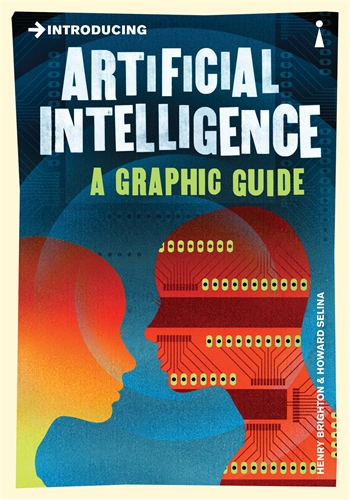
Introducing Artificial Intelligence (eBook)
A Graphic Guide
Henry Brighton Howard Selina
A unique graphic guide to the fascinating developments in AI and their philosophical implications.
A unique graphic guide to the fascinating developments in AI and their philosophical implications.
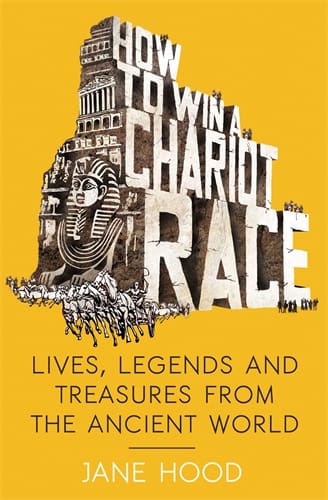
Who first thought of atoms? How much can you learn about archaeology from an oil lamp? Who came up with the theory of the ‘wandering womb’?
Oxford Classicist Jane Hood delves into the history, culture, literature, mythology and philosophy of ancient Greece, Rome and Egypt, using her expert eye to unearth unexpected gems, glittering fragments and quotable nuggets from a lost world.
From ancient cosmetics to the earliest known computer, from the deciphering of ancient languages to the amazing things the Romans did with concrete, this is the essential miscellany for all curious minds, whether you learned the Classics at school or not.
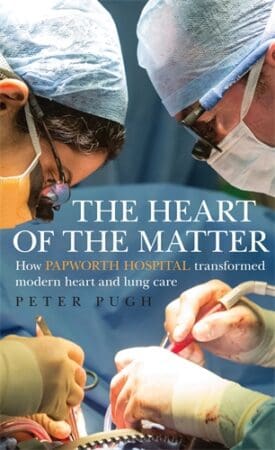
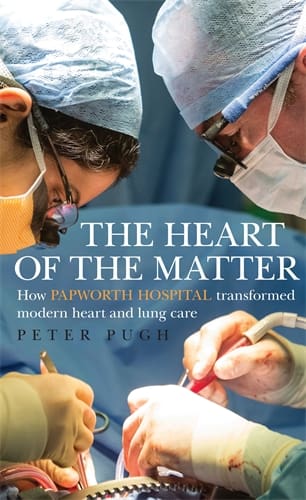
Papworth Hospital in Cambridgeshire, founded in 1916 to tackle the great killer disease of tuberculosis, is famous for carrying out the UK’s first heart transplant operation in 1979. It followed this up not only with many other heart transplants but also with the UK’s first heart and lung operation in 1984 and the world’s first heart, lung and liver transplant in 1986.
With unique access to Papworth’s archives, historian Peter Pugh here tells the story of this ground-breaking hospital for the first time. Alongside the background to that first UK heart transplant – and the ethical controversies that surrounded it – Pugh explores the opposition to heart operations in general, Papworth's difficulties dealing with NHS authorities especially over funding, and the discussions for over 50 years as to whether the hospital should move alongside Addenbrooke's hospital in Cambridge.
As an insight into the history of medicine and surgery in the UK, as well as a story literally of life and death, The Heart of the Matter will be compelling reading.
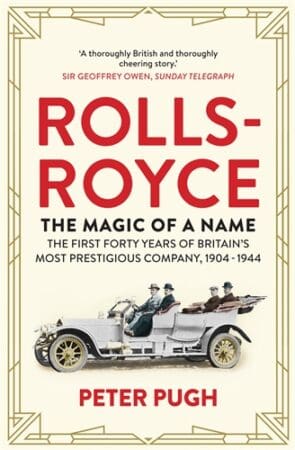
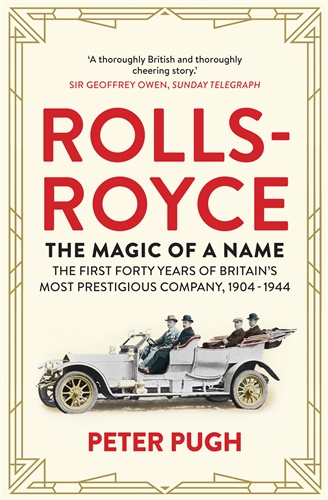
The acclaimed history of the birth and growth of Britain’s most famous luxury brand.
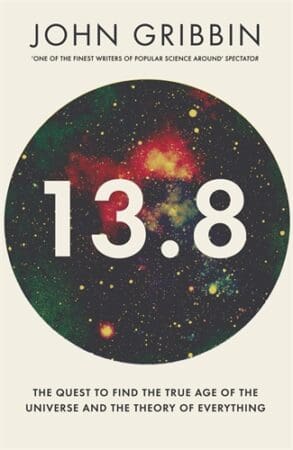
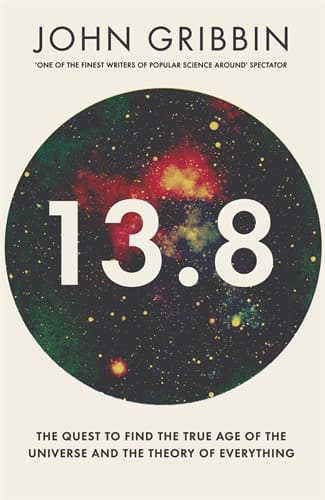
The 20th century gave us two great theories of physics: the general theory of relativity, which describes the behaviour of things on a very large scale, including the entire Universe; and quantum theory, which describes the behaviour of things on a very small scale, the sub-atomic world. The refusal of the Universe to reveal an equation that combines these two great ideas has caused some people to doubt our whole understanding of physics.
In this landmark new book, popular science master John Gribbin tells the dramatic story of the quest that has led us to discover the true age of the Universe (13.8 billion years) and the stars (just a little bit younger). This discovery, Gribbin argues, is one of humankind’s greatest achievements and shows us that physics is on the right track to finding the ‘Theory of Everything’.
13.8 provides an eye-opening look at this cutting-edge area of modern cosmology and physics, and tells the compelling story of what modern science has achieved – and what it can still achieve.
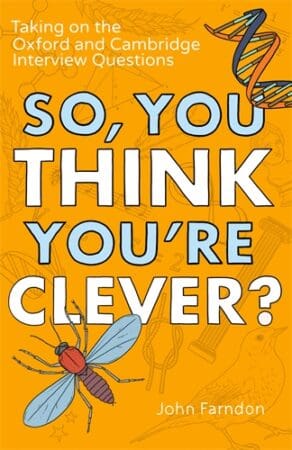
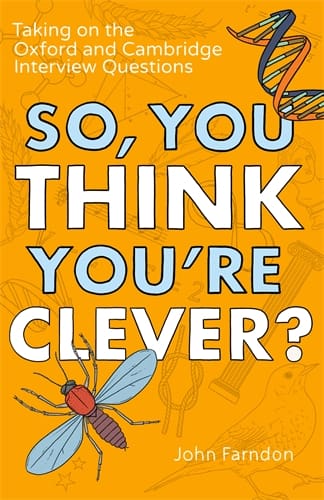
From the ever-curious mind that brought you the bestselling Do You Think You’re Clever? comes a brand-new trip to the far reaches of the intellectual universe, courtesy of even more notoriously provocative Oxbridge interview questions.
How would you poison someone without the police finding out? (Medicine, Cambridge)
What makes a strong woman? (Theology, Oxford)
Instead of politicians, why don’t we let the managers of IKEA run the country? (Social and Political Sciences, Cambridge)
How do you organise a successful revolution? (History, Oxford)
Whether you’re interested in going to Oxbridge or just want to give your brain a workout, join polymath John Farndon on another exhilarating journey through the twists and turns of thought, and explore just what it means to be genuinely clever – rather than just smart.
John Farndon is the author of numerous bestsellers on science, ideas and the natural environment, as well as being a playwright, composer and poet.
He has been shortlisted a record five times for the Royal Society Junior Science Book Prize. Do You Think You’re Clever? was shortlisted for the Society of Authors Education Award. Canada’s Globe and Mail named his Atlas of Oceans as a 2011 top ten science book. He is currently writing The Omnipaedia for Square Peg.
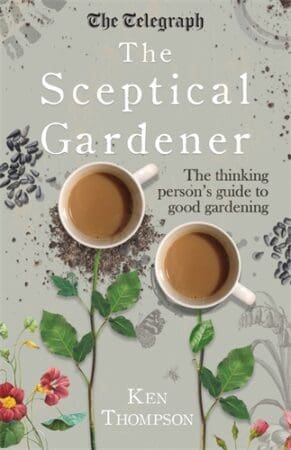
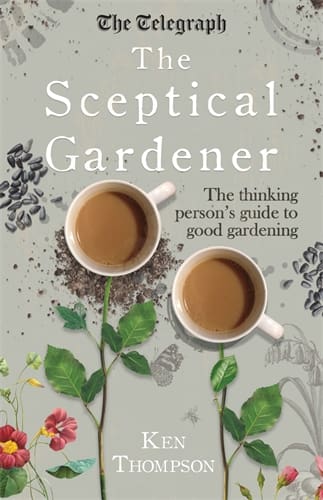
How are birds linked to house prices?
How can a gardener improve the
flavour of their vegetables?
Do wildflowers really thrive in poor soil?
In this collection of articles from The Telegraph, biologist and gardening columnist Ken Thompson takes a scientific look at some of the greater – and lesser – questions faced by gardeners everywhere in a bid to sort the genuine wisdom from the hokum.
What is the ideal temperature for a compost heap? What do bees do that improves strawberries? Why are gardeners in literature always such dummies? This is an expert’s gardening miscellany, aimed at making you not necessarily a better gardener, but probably a far more thoughtful one.
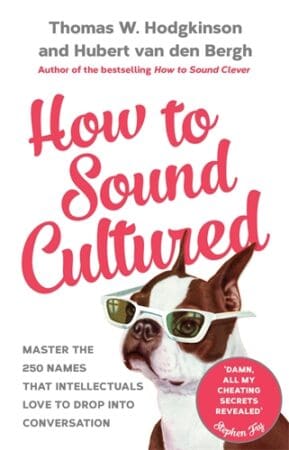
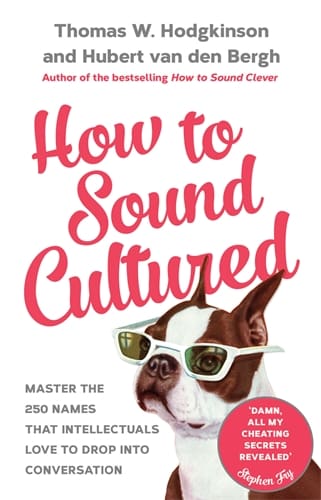
'Damn, all my cheating secrets revealed. In book form' Stephen Fry
Which philosopher had the maddest hairstyle? Which novelist drank 50 cups of black coffee every day? What on earth did Simone de Beauvoir see in Jean-Paul Sartre?
How to Sound Cultured offers a wry and yet profoundly useful look inside the mirrored palaces of high culture. Covering such inscrutable characters as Heidegger, Montaigne, Kahlo and Lévi-Strauss (apparently not just a designer of jeans), inscrutable polymaths Thomas W. Hodgkinson and Hubert van den Bergh – the author of the acclaimed How to Sound Clever – have done the hard work of sorting the cultural wheat from the chaff.
Read this book and you’ll never again mistake Rimbaud for Rambo or Georg Lukacs for George Lucas, you’ll know precisely when to drop Foucault’s name into a conversation and how to pronounce ‘Borgesian’, and you’ll learn many more essential pointers for the intellectual life.
Hubert van den Bergh is the author of How to Sound Clever (Bloomsbury, 2010). He has written for The Daily Telegraph and The Guardian and appeared on Vanessa Feltz’s BBC Radio 2 show.
Thomas W. Hodgkinson is the author of the novel Memoirs of a Stalker (Silvertail, 2015). He writes regularly for The Spectator and the Daily Mail, and is a contributing editor at The Week.
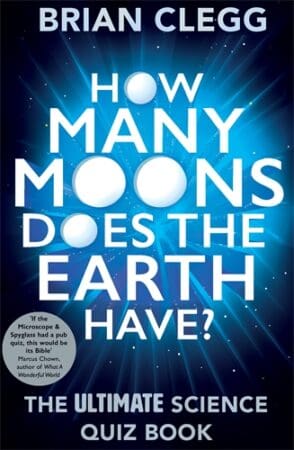
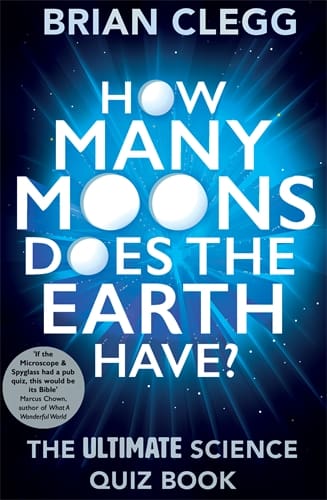
Why did Uuq become Fl?
Why is the sky blue? Why is the sky black?
What is spaghettification?
There’s a problem with the typical quiz. It always features far too much sport, 1980s pop and celebrity gossip – and not nearly enough science.
How Many Moons Does the Earth Have? is the ultimate solution. Test your knowledge to the limit with a sizzling collection of brain-stretching, science-based questions in two eight-round quizzes.
Turn the page to get the answer immediately – and as each answer page explores the subject in more depth, this the only quiz that’s just as entertaining to read from beginning to end as it is to play competitively.
Where was the Big Bang? What links the elephant Tusko and Timothy Leary? What is the significance of 6EQUJ5? Science explainer extraordinaire Brian Clegg tells all…
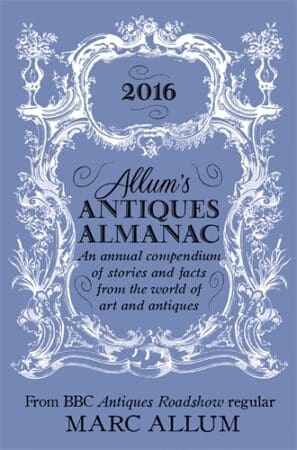
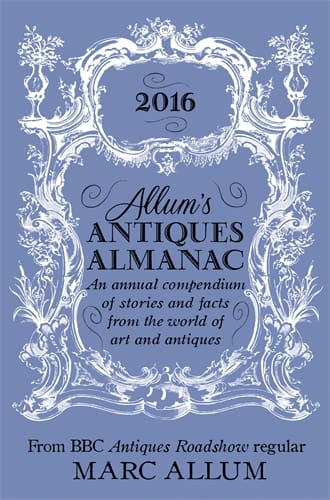
From BBC Antiques Roadshow specialist and author Marc Allum comes the second instalment of his annual almanac, revealing the current news, tall tales and tasty titbits from the year in art, antiques and collectables:
What do London Bridge and a £40,000 corkscrew have in common?
Which famous pop star depicted by Andy Warhol realised £51.6 million at a recent auction?
How much did Oliver Cromwell’s coffin plate sell for, and what happened to his famous wart?
Which Hollywood film led to the recovery of a Hungarian avant garde masterpiece?
What would a collector pay for the real Batmobile?
Why did a tiny portrait of Mozart – only four centimetres high – sell for £218,500?
Answers to these and many other fascinating questions make this the essential guide this autumn for all ardent fans of art, antiques and collectables.
Mindfulness is the popular practice that helps you to appreciate your life, and to live with more joy and less stress.
By bringing mindfulness into everyday actions – by listening to your body, becoming more aware of what’s happening in the present moment and letting go of negativity – you can reduce stress and anxiety, focus better at work, find your own source of calm and discover genuine contentment.
Mindfulness introduces you to new techniques with straightforward advice, case studies and lots of practical exercises for newcomers to get their teeth into right away. It also gives a sense of the depth of mindfulness practice for those who wish to take it further.
Every human body carries a secret cargo: a huge population of microorganisms living in the mouth, on the skin, in the gut. They help digest our food. They make essential vitamins. They break down toxins and metabolise drugs. They exert an invisible influence on our hormones, our immune systems, perhaps even our brains.
This is the human microbiome – a living, shifting system of previously unimagined importance and complexity.
In this first book-length account of this new realm of human biology, award-winning science writer Jon Turney explores the microbiome in detail, charting its birth and development, investigating how it works, and assessing its many implications for our health, including its potential to shed new light on conditions such as bowel diseases, cancer, allergies and asthma. He considers the potential impacts of our modern disinfectant and antibiotic obsessions, and ponders a future of designer microbiomes and mood-altering probiotics.
This book will make you think again about your relationship with your body, your habits – even your sense of who and what you are – as it reveals what it means to be a 21st century superorganism.

Is your inbox overloaded? Feel like your email is controlling your life?
You need the ninja way of email management!
In this short ebook, an edited extract from Graham Allcott’s acclaimed How to be a Productivity Ninja, you’ll learn the simple skills to get your inbox down to zero – and keep it there, day after day.
Following Allcott’s straightforward advice, anyone – from a student to a Chief Executive – can keep on top of their messages and feel in command, calm and up to date. You’ll learn to be ruthless, to separate thinking from doing, and how to make your email inbox work for you – and not the other way around!
'A work of engaging pop philosophy and accessible social science [and] a boisterous dissection of the forces jellifying our minds' Sunday Times
Includes brand new material covering the US election and Brexit
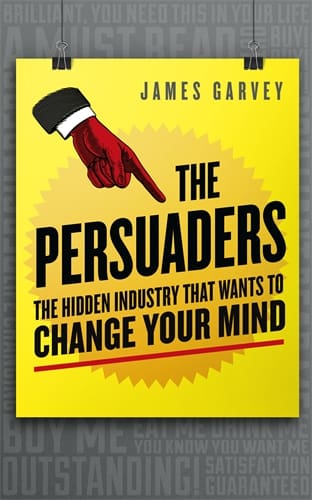
Every day, many people will try to change your mind, but they won’t reason with you. Instead, you’ll be nudged, anchored, incentivised and manipulated in barely noticeable ways. It’s a profound shift in the way we interact with one another.
Philosopher James Garvey explores the hidden story of persuasion and the men and women in the business of changing our minds. From the covert PR used to start the first Gulf War to the neuromarketing of products to appeal to our unconscious minds, he reveals the dark arts practised by professional persuaders.
How did we end up with a world where beliefs are mass-produced by lobbyists and PR firms? Could Google or Facebook swing elections? Are new kinds of persuasion making us less likely to live happy, decent lives in an open, peaceful world?
Is it too late, or can we learn to listen to reason again? The Persuaders is a call to think again about how we think now.
SHORTLISTED FOR 'BEST COMMUTER READ', CMI MANAGEMENT BOOK OF THE YEAR 2017
How do you ask for a promotion, deliver tough news to clients, or secure investment for your new business?
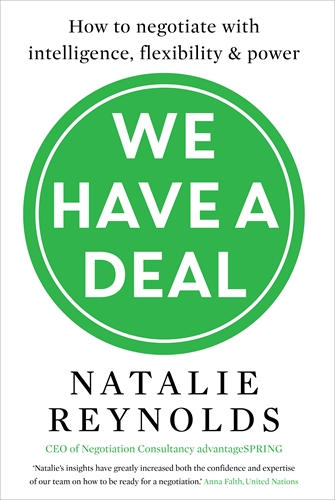
The answer is negotiation. It is the most important skill you can develop to get what you want in business and life. No matter how much experience you’ve got, We Have a Deal can help you to improve your negotiation skill – developing an awareness of your habits and abilities, recognising what’s really going on in a deal, and building a flexible approach that is confident and appropriate to each situation.
Negotiation expert Natalie Reynolds moves beyond the old-fashioned rules of deal making to explore why people react the way they do in certain situations and how can we use that knowledge to get a good deal. Her five-step DEALS method has helped individuals and organisations to excel at all kinds of negotiation, from clinching a pay rise to resolving disputes, from developing partnerships to shaking hands on multi-million dollar deals.
We Have a Deal will help you to overcome obstacles, work with different personalities and in varied cultures, and develop an intelligent and flexible approach will empower you to get the best deal, every time.
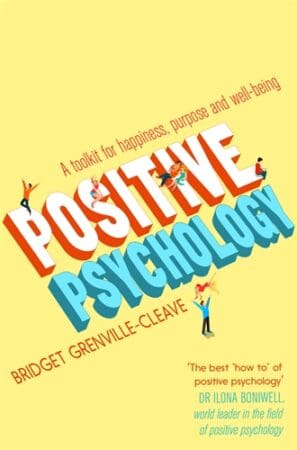
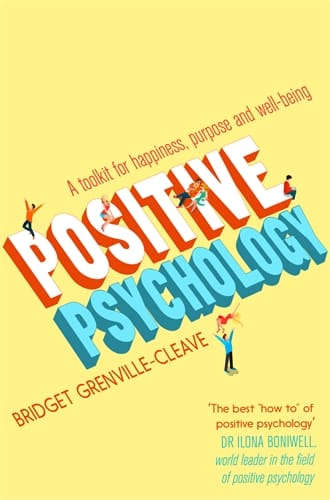
Positive Psychology will help you to look on the bright side and to find your place in the world around you.
With expert encouragement and guidance, you will set out your own positive psychology project to discover your strengths, overcome negative attitudes, focus on what gives you purpose, and take control of your life choices.
From savouring positive emotions to building better relationships and developing resilience, you will gain the tools to boost your mental and physical well-being and to find fulfilment in everyday life. This is the perfect concise start to making your life better.
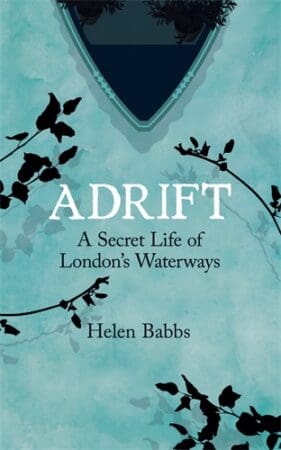
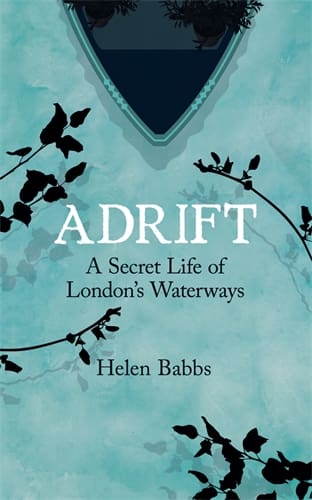
Journeying along London’s waterways on a canal boat called Pike, Helen Babbs puts down roots for two weeks at a time before moving on. From Walthamstow Marsh in the east to Uxbridge in the west, she explores the landscape in all its guises: marshland, wasteland, city centre and suburb.
From deep winter to late autumn, Babbs explores the people, politics, history and wildlife of the canals and rivers, to reveal an intimate and unusual portrait of London – and of life.
Peter Pugh presents his selection of – not the best, fastest, most successful or richest – but the 50 most influential British men and women of the modern world – for good or ill.
Pugh discusses and ranks the influence of scientists and inventors such as Francis Crick, John Logie Baird and Alan Turing; lawmakers and leaders like prime ministers Attlee, Churchill and Thatcher; entrepreneurs including James Dyson, Mary Quant and Terence Conran; and cultural icons like J.K. Rowling, who, in the words of Lisa Simpson no less, ‘turned a generation of kids onto reading’.
One of the most influential Britons in Pugh’s book achieved influence by saying nothing for over 60 years, and the top three places are held by an economist, a scientist and a civil servant …
In what amounts to a whistle-stop tour through recent British history, this undoubtedly contentious and wholly enjoyable book will spark countless debates across our sceptred isle.
In Sensation, leading psychologist Thalma Lobel takes us on a
trip around the senses, revealing the amazing extent to which our external
environment profoundly shapes our thoughts, emotions and decisions about everything
from the people we like to the way we work.
She reveals how holding something warm can make us friendlier;
how we perceive people as nicer if we know they like sweet foods; how we
unconsciously equate height with power, weight with importance, cleanliness
with morality. Drawing on evidence from her own studies and those of other
leading researchers, Lobel reveals the psychology behind these remarkable findings for the first time to a general readership.
She looks in particular at how abstract and physical concepts
are linked in the brain, and asks: how can we use this information to our
advantage? The answer: we can change people’s perceptions of us, disarm aggressive
negotiators, boost our creativity and much more, all by
harnessing the untapped power of our physical intelligence.
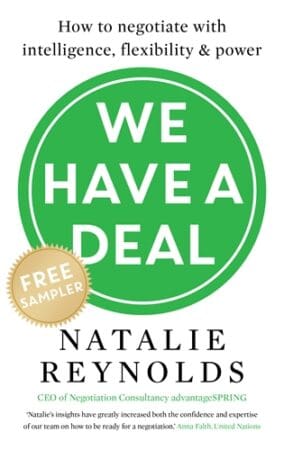
THIS IS A FREE EBOOK SAMPLER. IT INCLUDES THE FIRST 30 PAGES
OF THE FULL BOOK. If you would like to purchase Natalie Reynolds’ We Have a Deal in full, you can do so
with all good ebook retailers.
In this sampler,
you’ll develop an understanding of why negotiation matters, types of
negotiation, and key mistakes to watch out for when making deals.
We Have a Deal goes beyond negotiation theory, exploring the
unwritten rules of deal-making and influencing. Not only will you master the
practical skills of negotiating like a pro, you’ll also develop an appreciation
of why it matters, and why others react the way they do in certain negotiating
situations. From developing a flexible approach, to overcoming obstructive
behaviour and other obstacles, this book will help you to understand the
underlying motivations and get the best out of every deal.
If you enjoy this free sampler, why not check out the
complete book and master the skills of negotiation?
