

Greek Gods and Monsters (Paperback)
The Instant Guide
Instant Guides
De La Rue, a company celebrating its 200th anniversary in 2013, and Portals, which will be 300 years old in 2012, both have magnificent histories of which they can be proud. Very few large firms have lived and thrived for so long.
De La Rue is the largest commercial currency printer and papermaker in the world, involved in the production of more than 150 currencies as well as a wide range of security documents such as passports and fiscal stamps. De La Rue is also a leading provider of cash-sorting equipment and software solutions to central banks, helping them to reduce the cost of handling cash.
Portals can trace its history back to Henri Portal, a refugee from France who settled at Bere Mill on the River Test in Hampshire in 1712 with a number of other Huguenot papermakers. He founded the company, and through hard work, skill and the shrewd move of tying itself to the Bank of England, Portals thrived and grew through the 18th and 19th centuries, continuing to prosper in the 20th century. It was acquired by De La Rue in the 1990s.
Thomas de la Rue had a very humble start in life. Born in Guernsey in 1793, he worked as a printer and eventually moved to London as a straw hat manufacturer. By 1830 he was convinced that he was not going to make his fortune in hats, and he moved into the stationery business and playing cards.
From cards Thomas progressed to postage stamps and then in the 1850s to banknotes. Thomas had two very talented sons, Warren and William Frederick. They took the company forward and, by the end of the 19th century, De La Rue was printing stamps and banknotes for countries throughout the world. The fourth generation of de la Rues were not as successful as their predecessors, and in the early 1920s the company had to be rescued by a financier, Sidney Lamert, and a very able businessman, Bernard Westall. These two stabilised the situation and took the company forward until it grew again under the guidance of Arthur (known as Gerry) Norman. In the years since the end of the Second World War, De La Rue has grown steadily into the worldwide operation it is today.
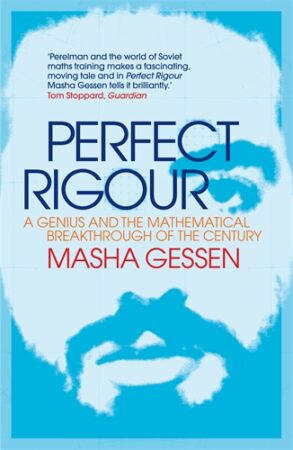
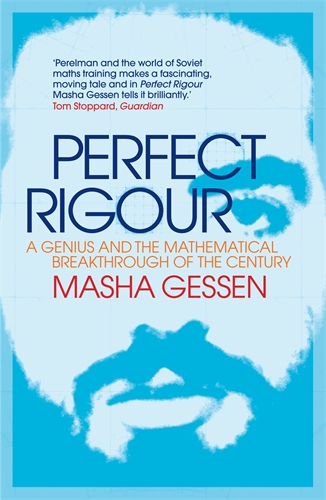
In 2006, an eccentric Russian mathematician named Grigori Perelman solved one of the world's greatest intellectual puzzles. The Poincare conjecture is an extremely complex topological problem that had eluded the best minds for over a century. In 2000, the Clay Institute in Boston named it one of seven great unsolved mathematical problems, and promised a million dollars to anyone who could find a solution. Perelman was awarded the prize this year – and declined the money. Journalist Masha Gessen was determined to find out why. Drawing on interviews with Perelman's teachers, classmates, coaches, teammates, and colleagues in Russia and the US – and informed by her own background as a math whiz raised in Russia – she set out to uncover the nature of Perelman's astonishing abilities. In telling his story, Masha Gessen has constructed a gripping and tragic tale that sheds rare light on the unique burden of genius.
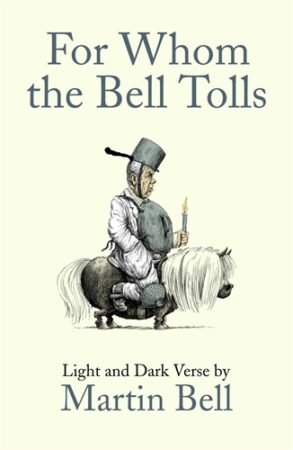
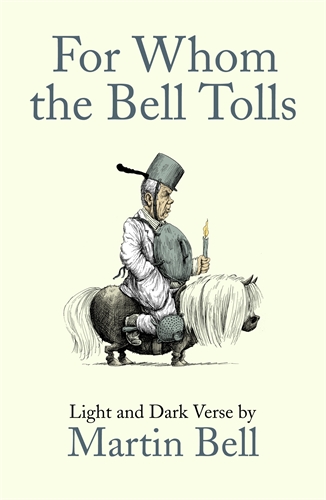
Martin Bell OBE has been many things – an icon of BBC war reporting, Britain’s first independent MP for 50 years, a UNICEF ambassador, and ‘the man in the white suit’ – a tireless campaigner for honesty and accountability in politics.
But as For Whom the Bell Tolls reveals, he’s also a poet of light verse, and here Bell’s poems continue his war by other means on duplicitous politicians, our all-consuming media, the venality of celebrity culture and much more.
Bell presents poems on Tony Blair and Iraq, on Serbian war criminal Radovan Karadzic, on his hero, Reuters reporter Kurt Schork, and colourful episodes from his work and life, from being starstruck by Angelina Jolie, to a mordant epitaph on Margaret Thatcher, to his being a guest at Idi Amin’s wedding:
‘… that by God / Was well worth doing, if distinctly odd.’
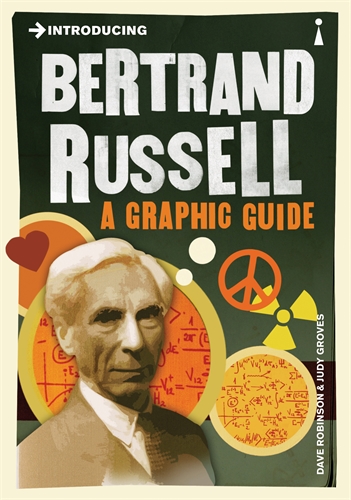
Unique graphic introductions to big ideas and thinkers, written by experts in the field.
'Witty and erudite … stuffed with the kind of arcane information that nobody strictly needs to know, but which is a pleasure to learn nonetheless.' Nick Duerden, Independent.
'Particularly good … Forsyth takes words and draws us into their, and our, murky history.' William Leith, Evening Standard.
The Etymologicon is an occasionally ribald, frequently witty and unerringly erudite guided tour of the secret labyrinth that lurks beneath the English language.
What is the actual connection between disgruntled and gruntled? What links church organs to organised crime, California to the Caliphate, or brackets to codpieces?
Mark Forsyth's riotous celebration of the idiosyncratic and sometimes absurd connections between words is a classic of its kind: a mine of fascinating information and a must-read for word-lovers everywhere.
'Highly recommended' Spectator.
Mark Forsyth is a writer, journalist and blogger. His book The Etymologicon was a Sunday Times Number One Bestseller and his TED Talk 'What's a snollygoster?' has had more than half a million views. He is also the author of The Horologicon and The Elements of Eloquence, and wrote a specially commissioned essay The Unknown Unknown for Independent Booksellers Week. He lives in London with his dictionaries, and blogs at blog.inkyfool.com.
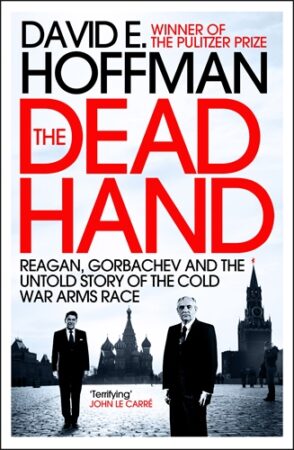
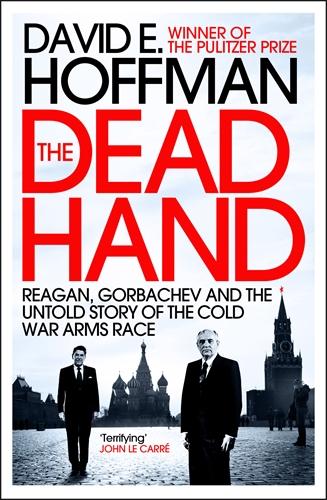
WINNER OF THE PULITZER PRIZE
The Dead Hand is a Pulitzer Prize-winning investigative history of Reagan, Gorbachev and the final decade of the Cold War. Washington Post journalist David E. Hoffman draws on exclusive interviews in both Russia and the US, as well as classified documents from deep inside the Kremlin, piecing together the first full – and intensely dramatic – account of how the US/Soviet arms race came to a close, and revealing the previously unheralded collection of scientists, soldiers, diplomats and spies that made it happen.
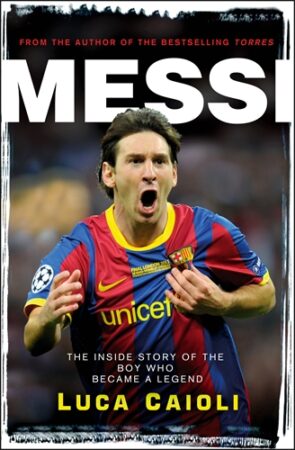
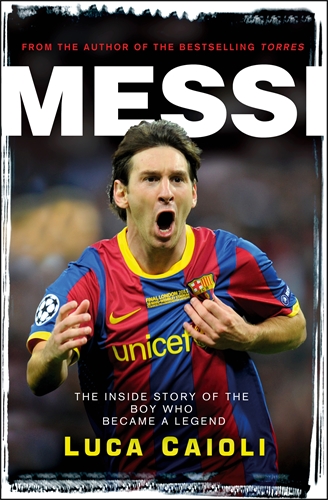
El Pibe de Oro. The Golden Boy. Diego Maradona’s unwaning shadow looms large over world football. In 2007 the brilliant Argentine chose Lionel Messi as his successor to the famous No. 10 shirt. But you can never be sure that potential will be fulfilled.
Three years later, Messi – El Pulga, the Flea – is a European Champion, Olympic Gold Medallist, the most naturally gifted footballer on the planet and a hero to millions of fans across the globe. Champions, reporters and coaches blunder time and time again in their haste to find superstars. This time they got it right.
Aged only 22, he shows a degree of maturity rarely seen on the soccer pitch. Yet underneath the layers of footballing brilliance, he is still the shy boy who describes his Maradona moment with disarming simplicity: ‘I saw the gap and I went for it.’ Transcending both club and country, he is a sporting god who prefers homemade cookies to brand name perfumes.
Author Luca Caioli draws on exceptional testimonies. Messi’s parents, Celia and Jorge, his bother Rodrigo and his uncles and aunts; his coaches at Grandoli and Newell’s Old Boys; Charly Rexach, Alex García, Frank Rjikaard, Gianluca Zambrotta from Barcelona; Hugo Tocalli, Pancho Ferrero, el Coco Basile, Roberto Perfumo from Argentina. And to conclude, Leo Messi himself sizes up his life so far.
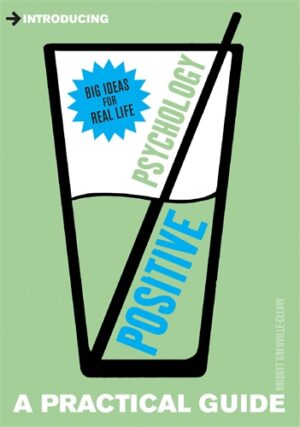
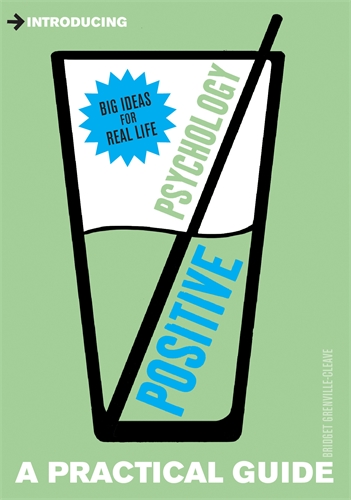
An INTRODUCING PRACTICAL GUIDE to improving your outlook on life
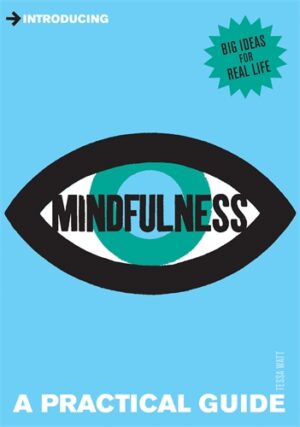
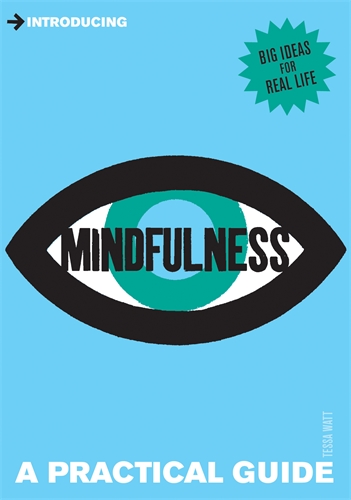
Appreciate your life- right here, right now.
Learn how to use mindfulness every day, by listening to your body, becoming more aware of the present and letting go of negative thoughts.
Mindfulness teacher and consultant Tessa Watt introduces simple techniques with lots of examples and exercises for newcomers to begin right away, as well as outlining deeper mindfulness practice for those who wish to take it further.
Reduce anxiety and handle your emotions more effectively, enjoy the moment and recover from bad moods more quickly, and slow down and find your own source of calm.
Apply the wisdom of philosophers to become a happier person.
What is happiness? What makes you happy?Is there more to life than happiness?
Learn to cultivate your taste for pleasure, free yourself from the various disturbances of life, and overcome irrational expectations that cause distress. Go with the flow and rediscover the joy of existence.
Filled with exercises, tips and case studies, this Practical Guide will enable you to see happiness in a new light, with the help of the world’s greatest minds
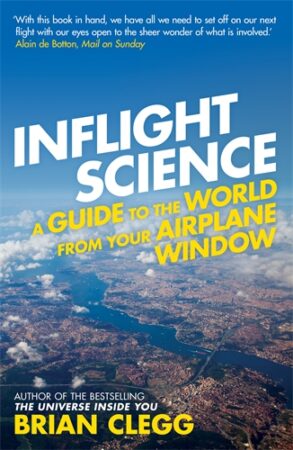
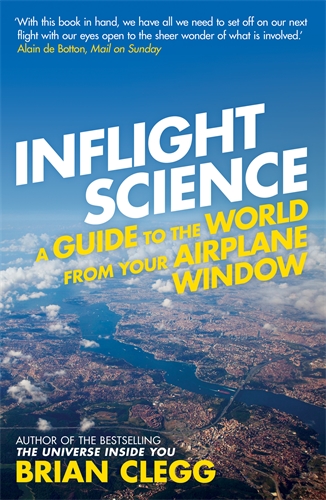
The perfect companion to any flight – a guide to the science on view from your window seat. There are few times when science is so immediate as when you're in a plane. Your life is in the hands of the scientists and engineers who enable tons of metal and plastic to hurtle through the sky at hundreds of miles an hour. Inflight Science shows how you stay alive up there – but that's only the beginning.
Brian Clegg explains the ever changing view, whether it's crop circles or clouds, mountains or river deltas, and describes simple experiments to show how a wing provides lift, or what happens if you try to open a door in midair (don't!). On a plane you'll experience the impact of relativity, the power of natural radiation and the effect of altitude on the boiling point of tea. Among the many things you'll learn is why the sky is blue, the cause of thunderstorms and the impact of volcanic ash in an enjoyable tour of mid-air science. Every moment of your journey is an opportunity to experience science in action: Inflight Science will be your guide.
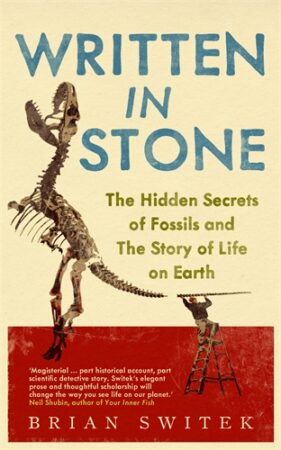
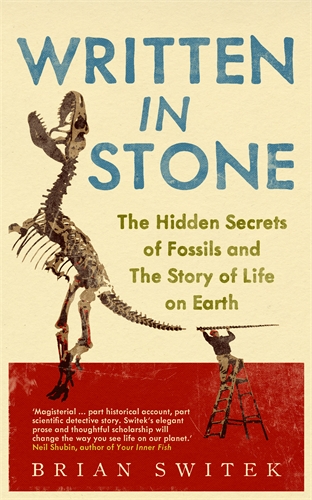
The first book on the hunt for evolution’s ‘missing links’ over the last three decades – and what palaeontologists’ findings mean for our place on earth.
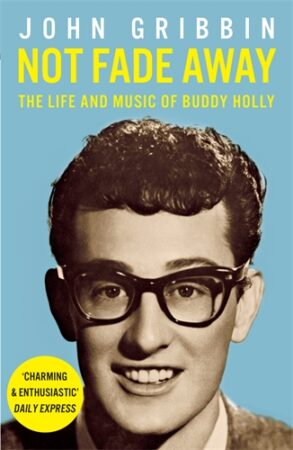
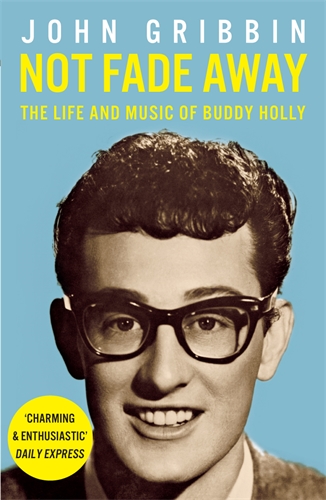
Buddy Holly was killed at 22 when the plane he was travelling in crashed on 3 February 1959. Although this was less than two years after Holly's first hit record, Don McLean described this as 'the day the music died.' But Sonny Curtis, Holly's friend and musical colleague, told us that the music didn't die, because 'Buddy Holly lives every time you play rock'n'roll.' Fifty years after Holly's death, his lasting influence is clear; a musical based on his life seems set to run for longer than his lifetime and artists as diverse as Blink 182 and Bob Dylan call him an inspiration.The Beatles chose That'll Be the Day by Buddy's group The Crickets as their first attempt at recording, as well as taking the idea for their name. Clearly, the music didn't die!John Gribbin, an ardent fan since he was twelve, presents this labour of love written in the spirit of Sonny Curtis' lyric, as a celebration of Holly's all too brief life, and as an introduction,for all those not around in 1959, to the man and his astonishing musical legacy. "Not Fade Away" also includes – uniquely – a full and detailed account of every Holly recording session, which any Buddy fan will devour.
In the style of Nudge or The Spirit Level – a groundbreaking book that will change the way you look at the world. This is the story of a new kind of social revolution which has transformed the lives of millions. It has drawn oppressed Indian women out of misery and passivity, persuaded teenagers to demand safe sex and to rebel against smoking; helped cure tuberculosis; enabled soldiers to have the confidence to face enemy fire and organized the nonviolent overthrow of a brutal dictator. Radical, optimistic and cogently argued, Join the Club will make you appreciate the power of one of humanity's most abundant resources: our connections with each other.
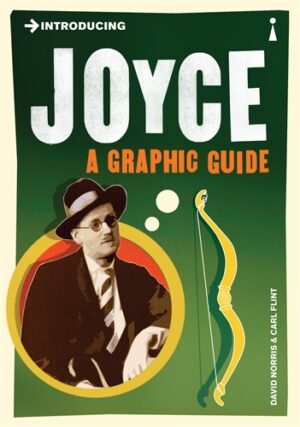
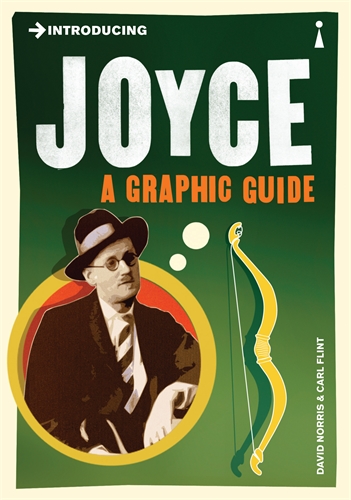
Introducing Joyce provides an introduction to the life and work of the great pioneer of modernism.
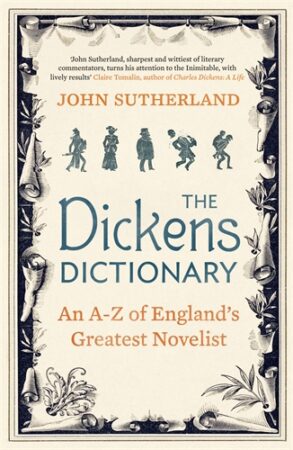
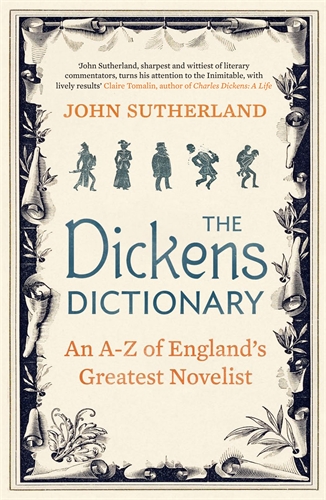
For fans new and old, an enjoyable tour through the world of Dickens in the hands of a master critic. Charles Dickens, the 'Great Inimitable', created a riotous fictional world that still lives and breathes for thousands of readers today. But how much do we really know about the dazzling imagination that brought all this into being?
For the bicentenary of Dickens' birth, Victorian literature expert John Sutherland has created a gloriously wide-ranging alphabetical companion to Dickens' work, excavating the hidden links between his characters, themes, and preoccupations, and the minutiae of his endlessly inventive wordplay.
Covering America, Bastards, Childhood, Christmas, Empire, Fog, Larks, London, Madness, Murder, Orphans, Pubs, Punishment, Smells, Spontaneous Combustion and Zoo to name but a few – John Sutherland gives us a uniquely personal guide to the great man's work.
Excerpt: HANDS; Every Dickens novel has a master image. In Our Mutual Friend it is the river. In Bleak House it is the fog. In Little Dorrit, it is the prison. In Great Expectations it is the hand. We often know much more about the principals' hands in that novel than their faces. Who, when the name Magwitch is mentioned, does not think of those murderous 'large brown veinous hands'? Jaggers? One's nose twitches—scented soap (the lawyer, like Pontius Pilate, is forever washing his hands). Miss Havisham? Withered claws. So it goes on…
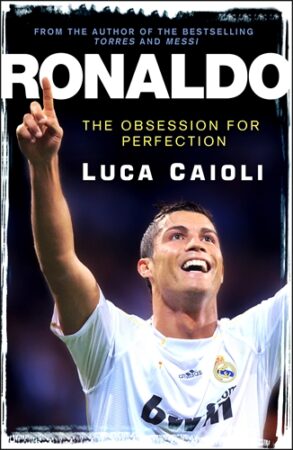
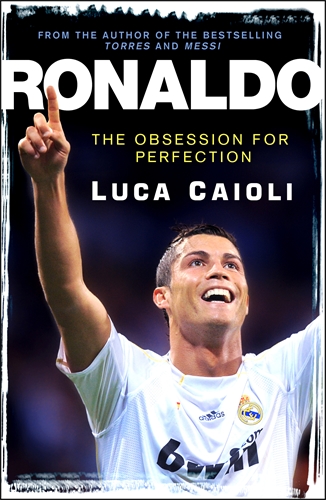
From the author of the bestselling Torres and Messi, a revealing new biography of Real Madrid's Cristiano Ronaldo. When a young Portuguese player with sublime abilities arrived at Manchester United in 2003, Alex Ferguson put the no. 7 shirt – once worn by Best, Cantona and Beckham – on his back without hesitation. The expectation was clear, and Cristiano Ronaldo didn't disappoint. Ronaldo won the FIFA World Footballer of the Year in 2008, the first Premier League player ever to do so. Since his record-breaking GBP80m move to Real Madrid, his goal-scoring flair has continued and made his on-going rivalry with Barcelona's Lionel Messi even more intense. Luca Caioli tells the inside story of this global superstar both on and off the pitch, unveiling the life of one of modern football's great players as never before.
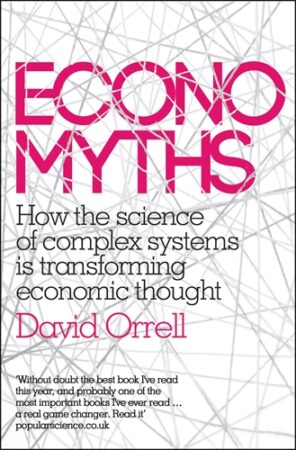

From the inability of wealth to make us happier, to our catastrophic blindness to the credit crunch, "Economyths" reveals ten ways in which economics has failed us all. Forecasters predicted a prosperous year in 2008 for financial markets – in one influential survey the average prediction was for an eleven per cent gain. But by the end of the year, the Standard and Poor's 500 index – a key economic barometer – was down 38 per cent, and major economies were plunging into recession. Even the Queen asked – Why did no one see it coming? An even bigger casualty was the credibility of economics, which for decades has claimed that the economy is a rational, stable, efficient machine, governed by well-understood laws. Mathematician David Orrell traces the history of this idea from its roots in ancient Greece to the financial centres of London and New York, shows how it is mistaken, and proposes new alternatives. "Economyths" explains how the economy is the result of complex and unpredictable processes; how risk models go astray; why the economy is not rational or fair; why no woman (until 2009) had ever won the Nobel Prize for economics; why financial crashes are less Black Swans than part of the landscape; and, finally, how new ideas in mathematics, psychology, and environmentalism are helping to reinvent economics.
