


Dawkins and the Selfish Gene (Paperback)
Oliver Curry
The 'selfish gene' is one of the most controversial subjects in modern genetics, and one with a major bearing on the nature vs. nurture debate – the chief subject of the so-called 'Darwin wars'.
The 'selfish gene' is one of the most controversial subjects in modern genetics, and one with a major bearing on the nature vs. nurture debate – the chief subject of the so-called 'Darwin wars'.


This book summarises Chomsky's recently published views on Globalisation and the New World Order. His position is an unusual one.
Freud mapped the superego as the introjection of infantile parental authority, the adult manifestation of the sublimated Oedipus complex. The Superego examines recent historical and media events from Freud's perspective, making us aware of the dynamic but tenuous associations between ourselves and our surroundings.
This book illuminates the individual and social nightmare world of phobic phenomena. Jargon-free and wriiten by an expert in the field, it unravels the recognisable but enigmatic language of psychoanalysis.
Traces the manifestation of this universal psychological phenomenon from Ted Hughes' OVID to Freud. Jagon-free and written by a leading figure in the field, it unravels the recognisable but enigmatic language of psychoanalysis.
Jargon-free and written by an expert in the field, this fascinating book unravels the recognisable but enigmatic language of psychoanalysis.
The history of the computer is entwined with that of the modern world and most famously with the life of one man, Alan Turing. How did this device, which first appeared a mere 50 years ago, come to structure and dominate our lives so totally? An enlightening mini-biography of a brilliant but troubled man.
Affect refers to the strange emotions we often centre on external objects, and the corresponding system of values we create by these attachments. Through consideration of the media spectacle and mass emotion of events like Princess Diana's death, Affect challenges the view that emotion is a private affair, distinct from our public personas.
Copernicus sowed the seed from which science has grown to be a dominant aspect of modern culture, fundamental in shaping our understanding of the workings of the cosmos. John Henry reveals why Copernicus was led to such a seemingly outrageous and inplausible idea as a swiftly moving Earth.
The tale of William Harvey's momentous discovery – that the blood vessels form a closed system, carrying blood pumped rapidly around the body by the heart – is one of ingenuity, imagination and perseverence, and remarkable use of experiment, observation and skill.
For Thomas Sebeok, semiotics not only addresses human verbal communication but embraces the study of all sign activity – which is indeed, Sebeok argues, the very definition of life in the universe. What does Sebeok's vision say, though, about ethics or the arts?


Said famously argued in 'Orientalism' that the West developed, at the peak of colonial expansion, a body of knowledge that imperialists could use to gain power. Walia investigates the need for alternative 'subaltern' histories and the influences – Foucault, Gramsci – that inspire them.
Psychoanalysis has become in the West the dominant paradigm for understanding our emotional lives. But do we know what it's all about? Using examples from popular culture and everyday experience, each book in the series explains a psychoanalytical concept and its ability to illuminate the nature of human society and culture.
Psychoanalysis has become in the West the dominant paradigm for understanding our emotional lives. But do we know what it's all about? Using examples from popular culture and everyday experience, each book in the series explains a psychoanalytical concept and its ability to illuminate the nature of human society and culture.
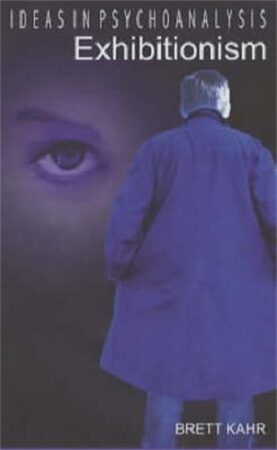
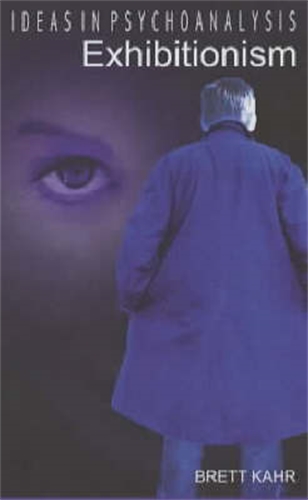
Everybody wants to be famous for fifteen minutes.
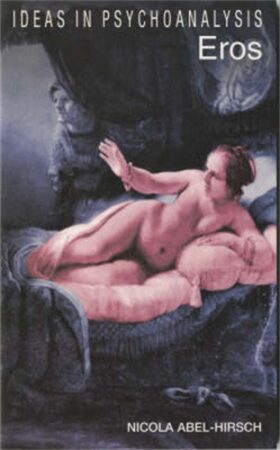
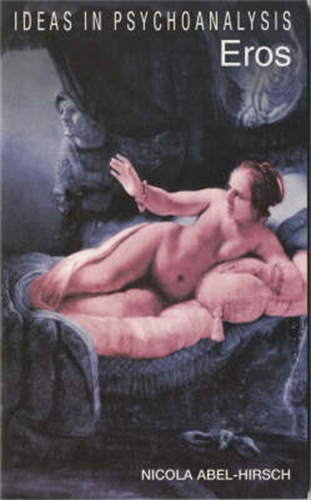
This title explores the concept of Eros through three main questions: What is sexuality? What is love? What is imagination? As the author explores the Eros concept – life instinct – developed by Freud which he considerd to be the drive to endure and procreate.
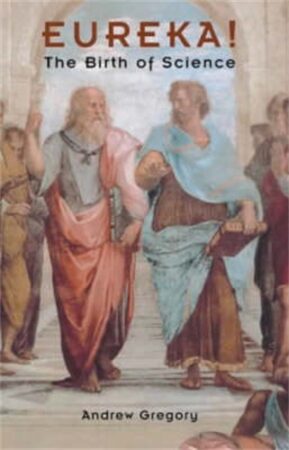
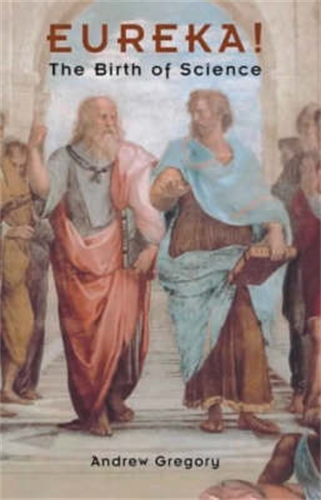
That man ever managed to develop a 'scientific' attitude to the natural world is one of the true wonders of human thought. And answering the question of where and how this attitude began can help us better understand the world we live in and the science that governs it. Eureka! shows that science began with the Greeks. Disciplines as diverse as Medicine, Biology, Engineering, Mathematics and Cosmology all have their roots in the Ancient Greeks. Plato, Aristotle, Pythagoras, Archimedes and Hippocrates were amongst its stars, master architects all of modern science as well as the ancient. What lay behind this colossal eruption of scientific activity? Free from intellectual and religious dogma, the Greeks rejected explanation in terms of myths and capricious gods and, in distinguishing between the natural and supernatural, they effectively discovered nature. Theories began to be tested, leading to a rapid increase in their sophistication with new and better ones being developed. Furthermore, the Greeks came to be conscious of the distinction between science and technology. Andrew Gregory unravels the genesis of science in this fascinating exploration of the origins of Western civilisation, and our desire for a rational, legitimating system of the world.


Want information, but don't know where to start? There are millions of Internet Websites of varying quality and value. How do you know which are worthwhile and which don't bear a second look? Search engines only cover a small proportion of the Web. So, how do you ensure you are not missing the best and most useful Websites? And how do you know which Websites you need, when you don't know what's out there? Websites from A to Z will help. By highlighting tried and tested sites from a range of useful categories, Websites from A to Z will save you time, effort and energy, to ensure you get the most from the Internet.
The last 100 years has seen science deal with issues outside itself, communicate with the public and try to answer questions long considered the province of religion. A collection of accessible essays exploring the big questions of contemporary science.
We live in a knowledge economy. Competition now straddles the world, and competitive advantage will be produced from now on by knowledge and creativity. Acquiring and managing knowledge better has become a political imperative. And yet – what is knowledge? The arguments have changed little since Plato. Arguing against sceptics who claim we have no knowledge at all, philosophers have focused on knowledge of facts, on how to distinguish true knowledge from mere belief. But the knowledge economy is less interested in knowledge about facts as in know-how – the Internet provides anyone with a PC and a phone line with access to billions of documents. We are drowning in information, while being starved of knowledge. What we really want is to get clever things done, in smarter ways. Plato and the Internet argues that what is important is not 'what facts you know', but 'what you know how to do', and that the essential contrast is not between knowledge and belief, but between knowledge and information. Is the Internet really something new – or a continuation of the past by other means?
