



Watt's Perfect Engine (Hardback)
Steam and the Age of Invention
Ben Marsden


Icon's intriguing series of small books on the key ideas of psychoanalysis grows apace with three brand new titles, all by hugely respected authors. Depression is now recognised by the World Health Organisation as the world-wide commonest cause of disability and death of any disease. How can we understand and begin to treat this epidemic of human misery?


First published in 1970, The Pendulum Years argues that many of the striking features of the preceding decade stemmed from an underlying tension between the pull of the past and the pull of the future. Coruscating and often hilarious, it is an unparalled examination of epochal times.
Icon's intriguing series of small books on the key ideas of psychoanalysis grows apace with three brand new titles, all by hugely respected authors. David Bell traces the history of understanding paranoia from Freud to the practise of analysis today. Broaching such topics as racism and religion, he explains that paranoia is not simply an individualised neurosis but a social phenomenon that touches us all.
Sren Kierkegaard is now regarded as the founder of Existentialism and the first moder theologian. Philosphy, in his radical view, was of no use unless it permanently changed people's lives. This is an account of the strange life and ideas of a being tortured by his attempts to change the priorities of Western thought.
A collection of five vibrant essays on key thinkers of the 'posthuman': Haraway, McLuhan, Lyotard, Heidegger and Habermas – and Plato. It is introduced by Will Self, pre-eminent critic and author of a distinctly unsettling vision of posthumanity, Great Apes.
Big Numbers is a brilliant and imaginative book for 10 to 12 year olds which paints a fascinating picture of the comparative scale of phenomena in our world, from the vast to the infinitesimal. The reader is taken on a roller-coaster ride through maths, physics, chemistry, biology and technology: from zero to infinity in maths and time; from subatomic particles to galaxies; from the speed and size of the Big Bang to the size and age of the universe; from the speed of light to the power of gravity; from the size of a White Dwarf to that of a Black Hole; from a strand of DNA to the evolution of life on Earth; from the Hubble telescope to nanotechnology; Combining words and pictures in the way that has made Icon's highly acclaimed Introducing books famous, Big Numbers will fire the imagination of any bright youngster.
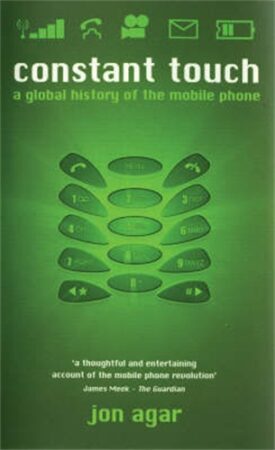
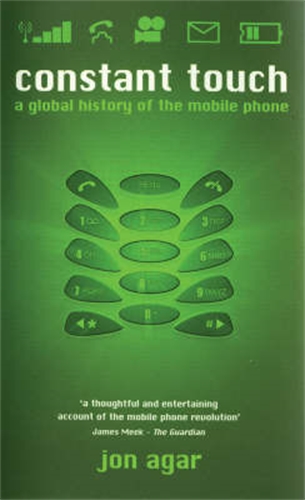
From nowhere, it is the land of the Finns, not the land of the free, that is setting the technological pace. The device that keeps us in constant touch has shifted how we live, work and play. Constant Touch tells the historical story of the mobile phone, what happened and why. The next generation of mobile phones is one of the greatest gambles in history, with the existence of major companies riding on the outcome. But are historical lessons being learnt?
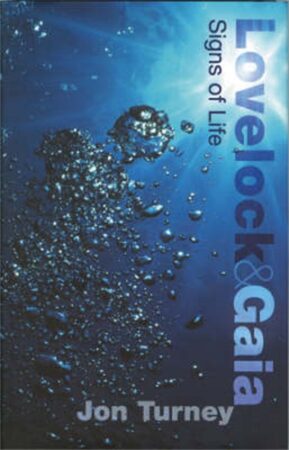
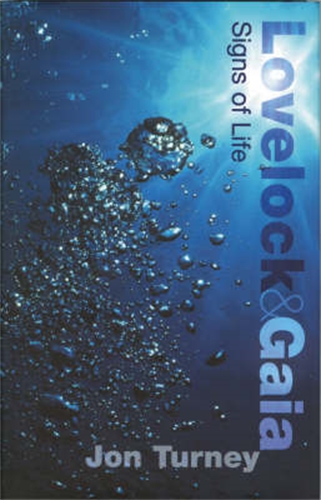
Gaia is a theory of the Earth that has revolutionised how we see this 'pale blue dot': all living things are part of one great organism and life as a whole shapes the planetary environment. Lovelock and Gaia tells how that came about including the theory's long struggle to gain respectability. Opponents dubbed it mere metaphor or myth, suggested that it was either irrefutable or unnecessary, or argued that it was impossible on Darwinian grounds for life to affect environment on a global scale in any way which could be fruitfully coupled with natural selection. It is not yet clear where it will lead but its impact compares with the greatest of scientific revolutions.
From fashion to football, in our dreams and epiphanies, through jealous rages and moments of genius, the effects of castration anxiety, so claims Ivan Ward, are ever-present. Freud's famous 'castration complex' is met with continually in analytic experience. Yet it seems an unbelievable idea. Taking his evidence from myth, clinical practice and the sexual theories of children, Freud established the castration complex as one of the determining factors of human sexual desire and personality development. Ideas in Psychoanalysis continues to go where no other books dare Expertly written by the series editor, Ivan Ward Ask your Faber rep about extra discounts for bulk buys with Ideas series

The Sex Book: A no-nonsense guide for teenagers
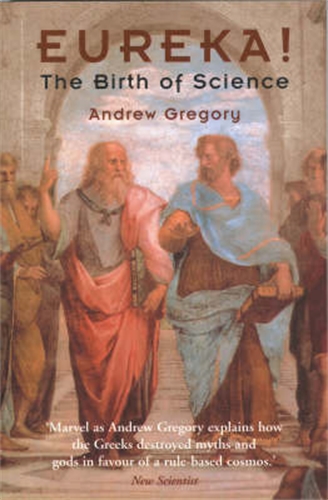
That man ever managed to develop to 'scientific' attitude to the natural world is one of true wonders of human thought. And answering the question of where and how this attitude began can help us understand the world we live in and the science that governs it. Science began with the Greeks. But is Greek science something we would recognise today? This superbly approachable book has won many plaudits since publication late in 2001.
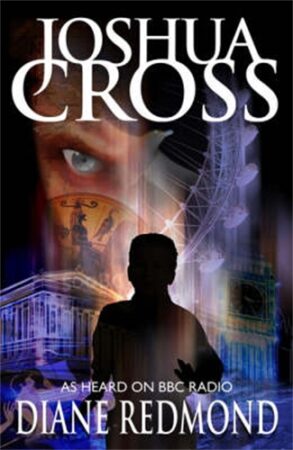

When Joshua Cross is ten it is the startling appearance of a monstrous Centaur chasing him along the Thames Embankment that first alerts him to the danger in which he and his friends are caught up. On the London Eye they avoid a near-death confrontation with the Centaur's master, Leirtod. Ages 10-15.
In 1965 Thomas Kuhn and Karl Popper met at the University of London to stage what has turned out to be the most momentous philosophical debate of the 20th century. At stake was no less than the soul of science itself…No discipline remained untouched by the consequences of this exchange. Was it really such a good thing that Kuhn's 'postmodernism' triumphed over Popper's 'positivism'? Kuhn vs. Popper is a provocative account of a landmark confrontation in which 'the wrong guy' won. A fantastically regarded author whom Icon are proud to have on board Touches upon every aspect of thinking about science in the 20th century Pacey, provocative and sure to receive media coverage
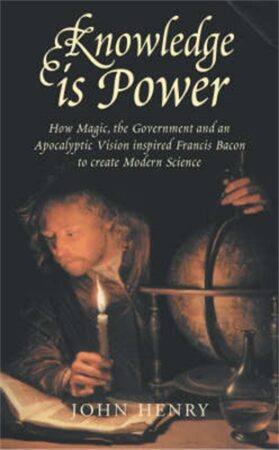
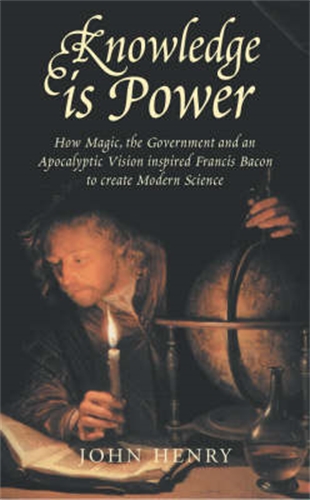
Francis Bacon – a leading figure in the history of science – never made a major discovery, provided a lasting explanation of any physical phenomena or revealed any hidden laws of nature. How then can he rank as he does alongside Newton? Bacon was the first major thinker to describe how science should be done, and to explain why. Scientific knowledge should not be gathered for its own sake but for practical benefit to mankind. And Bacon promoted experimentation, coming to outline and define the rigorous procedures of the 'scientific method' that today from the very bedrock of modern scientific progress. John Henry gives a dramatic account of the background to Bacon's innovations and the sometimes unconventional sources for his ideas. Why was he was so concerned to revolutionize the attitude to scientific knowledge – and why do his ideas for reform still resonate today?
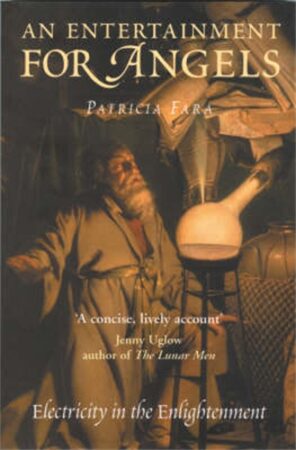
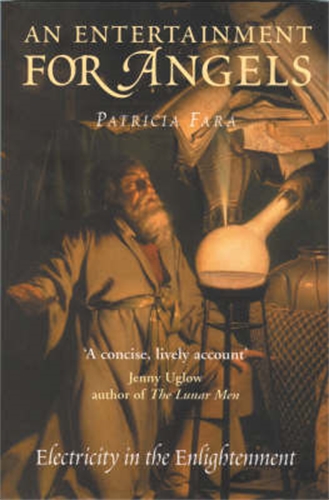
Electricity was the scientific fashion of the Enlightenment, 'an Entertainment for Angels, rather than for Men'. Lecturers attracted huge audiences to marvel at sparkling fountains, flaming drinks, pirouetting dancers and electrified boys. Enlightenment optimists predicted that this new-found power of nature would cure illnesses, improve crop production, even bring the dead back to life.
Benjamin Franklin, better known as one of America's founding fathers, played a key role in developing the new instruments and theories of electricity during the eighteenth century. Celebrated for drawing lightning down from the sky with a kite, Franklin was an Enlightenment expert on electricity, developing one of the most successful explanations of this mysterious phenomenon.
But Patricia Fara, Senior Tutor of Clare College Cambridge, reveals how the study of electricity became intertwined with Enlightenment politics. By demonstrating their control of the natural world, Enlightenment philosophers hoped to gain authority over society. And their stunning electrical performances provided dramatic evidence of their special powers.
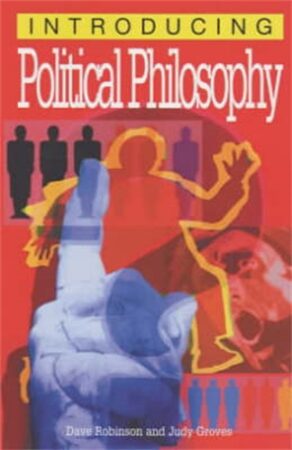
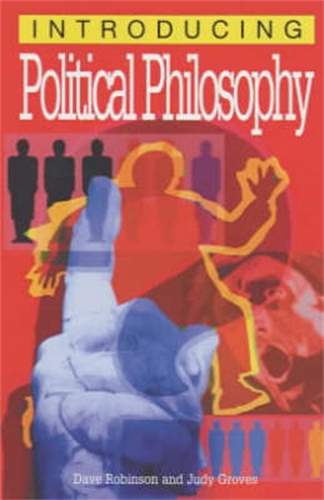
Philosophers have always asked fundamental and disturbing about human beings and politics. This account of this huge subject is always clear and informative and is accompanied throughout by the inventive and entertaining illustrations of Judy Groves.


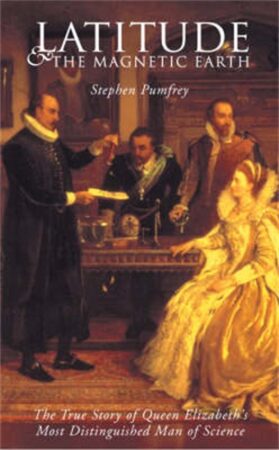
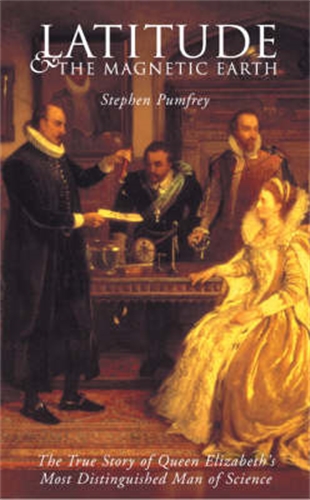
Unfolding the drama of Gilbert's discoveries, this book climaxes with an exploration of geomagnetism, via the story of the logitude schemes so crucial today's seafarers.
