


Get Fit by Walking (Paperback)
The Instant Guide
Instant Guides




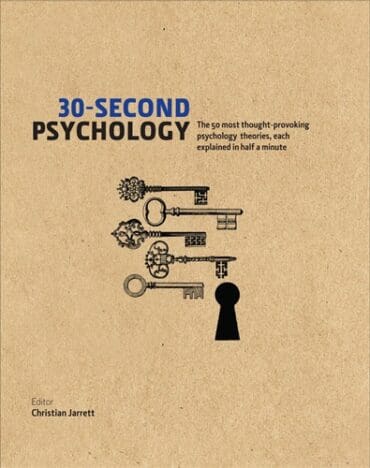
The key ideas in Psychology explained, with colour illustrations, in half a minute. Pavlov's Dogs, Psychoanalysis, Milgram's Obedience Study, and Beck's Cognitive Therapy? Sure, you know what they all mean. That is, you've certainly heard of them. But do you know enough about these psychology theories to join a dinner party debate or dazzle the bar with your knowledge? 30-Second Psychology takes the top 50 strands of thinking in this fascinating field, and explains them to the general reader in half a minute, using nothing more than two pages, 300 words, and one picture. The inner workings of the human mind will suddenly seem a lot more fun, and along the way we meet many of the luminaries in the field, including William James, Aaron Beck, and (of course) Sigmund Freud. From Behaviorism to Cognitivism, what better way to get a handle on your inner demons?
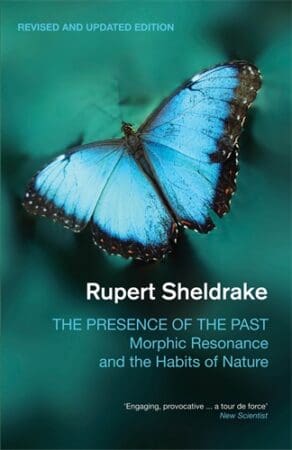
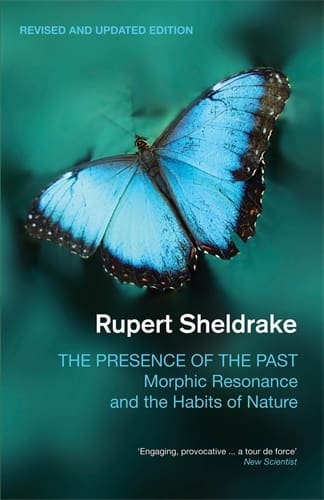
Rupert Sheldrake's theory of morphic resonance challenges the fundamental assumptions of modern science. A world-famous biologist, Sheldrake proposes that all self-organizing systems, from crystals to human societies, inherit a collective memory that influences their form and behaviour. Rather than being ruled by fixed laws, nature is essentially habitual. All human beings draw upon a collective human memory, and in turn contribute to it. Even individual memory depends on morphic resonance rather than on physical memory traces stored within the brain. Morphic resonance works through morphic fields, which organize the bodies of plants and animals, coordinate the activities of brains, and underlie mental activity. Minds are extended beyond brains both in space and time. This fully-revised and updated edition of The Presence of the Past summarizes the evidence for Dr Sheldrake's controversial theory, reviews new research, and explores its implications for biology, chemistry, physics, psychology and sociology. In place of the mechanistic worldview that has dominated biology since the nineteenth century, this book offers a revolutionary alternative, and opens up a new understanding of life, minds and evolution.
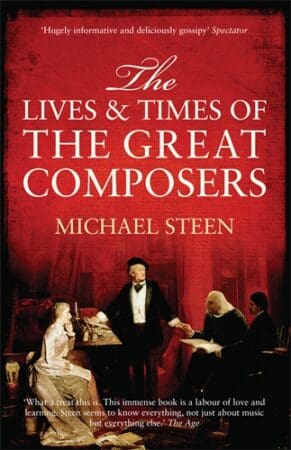
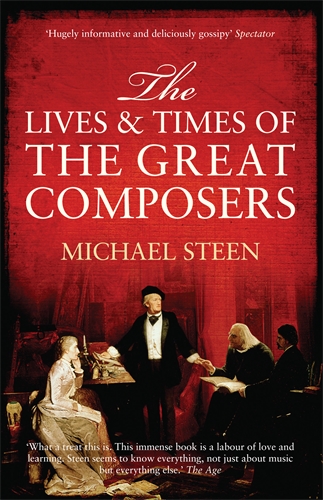
'A glorious plum-pudding of a book, to be consulted, with pleasure and profit, over and over again' Sir Jeremy Isaacs
Michael Steen's 'Great Composers' was originally published in 2003. A lifetime's work and almost 1000 pages long, it has since become 'the' reference point and key read on the biographical backgrounds to classical music's biggest names.
Authoritative and hugely detailed – but nonetheless a joy to read – this new edition will expand its readership further and capitalise on a newfound popular interest in classical music.
Steen's book helps you explore the story of Bach, the respectable burgher much of whose vast output was composed amidst petty turf disputes in Lutheran Leipzig; or the ugly, argumentative Beethoven in French-occupied Vienna, obsessed by his laundry; or Mozart, the over-exploited infant prodigy whose untimely death was shrouded in rumour.
Read about Verdi, who composed against the background of the Italian Risorgimento; or about the family life of the Wagners; and, Brahms, who rose from the slums of Hamburg to become a devotee of beer and coffee in fin-de-siecle Vienna, a cultural capital bent on destroying Mahler … and much, much more.
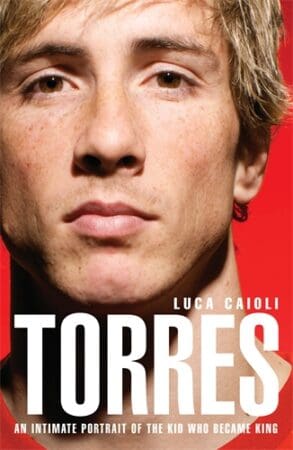
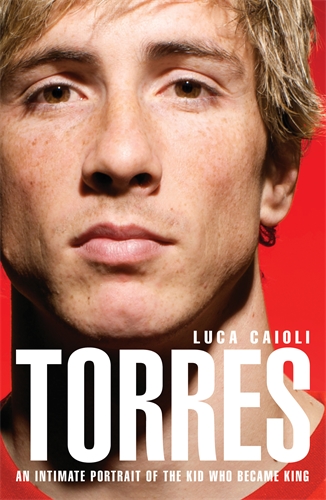
A brand new biography of Liverpool and Premier League superstar, Fernando Torres, based on one-of-a-kind insider interviews with those closest to him … and the player himself. This is the story of a kid who wanted to be a rock star but who turned into a football god, the idolised and adopted son of 42 million Liverpool fans across the world. From his birth in Madrid through to his winning goal in Euro 2008 and beyond, the book goes ehind the scenes of Torres' life and career to examine what makes the golden boy of football tick as well as kick. Renowned sports journalist Luca Caioli has exclusively interviewed figures from fans to his father, Rafa Benítez to Luís Aragones, Steven Gerrard to Kenny Dalglish, Fabio Capello, and Fernando Torres himself. This unrivalled material will give the real untold story of how The Kid became the King of Europe…
'A book that would have had Darwin swooning – anyone seriously interested in who we are and how we function should read this.' Guardian
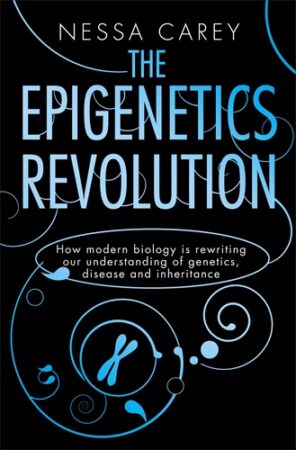
At the beginning of this century enormous progress had been made in genetics. The Human Genome Project finished sequencing human DNA. It seemed it was only a matter of time until we had all the answers to the secrets of life on this planet.
The cutting-edge of biology, however, is telling us that we still don't even know all of the questions.
How is it that, despite each cell in your body carrying exactly the same DNA, you don't have teeth growing out of your eyeballs or toenails on your liver? How is it that identical twins share exactly the same DNA and yet can exhibit dramatic differences in the way that they live and grow?
It turns out that cells read the genetic code in DNA more like a script to be interpreted than a mould that replicates the same result each time. This is epigenetics and it's the fastest-moving field in biology today.
The Epigenetics Revolution traces the thrilling path this discipline has taken over the last twenty years. Biologist Nessa Carey deftly explains such diverse phenomena as how queen bees and ants control their colonies, why tortoiseshell cats are always female, why some plants need a period of cold before they can flower, why we age, develop disease and become addicted to drugs, and much more. Most excitingly, Carey reveals the amazing possibilities for humankind that epigenetics offers for us all – and in the surprisingly near future.
'A book that would have had Darwin swooning – anyone seriously interested in who we are and how we function should read this.' Guardian
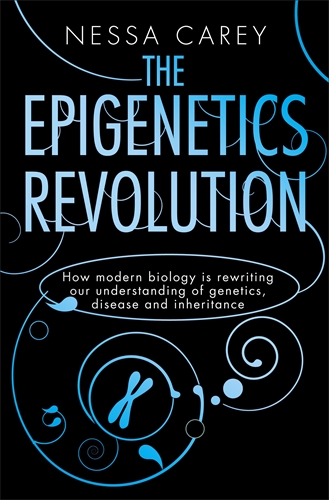
At the beginning of this century enormous progress had been made in genetics. The Human Genome Project finished sequencing human DNA. It seemed it was only a matter of time until we had all the answers to the secrets of life on this planet.
The cutting-edge of biology, however, is telling us that we still don't even know all of the questions.
How is it that, despite each cell in your body carrying exactly the same DNA, you don't have teeth growing out of your eyeballs or toenails on your liver? How is it that identical twins share exactly the same DNA and yet can exhibit dramatic differences in the way that they live and grow?
It turns out that cells read the genetic code in DNA more like a script to be interpreted than a mould that replicates the same result each time. This is epigenetics and it's the fastest-moving field in biology today.
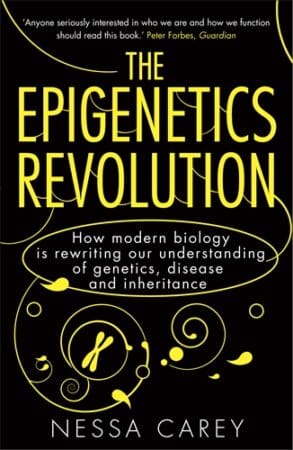
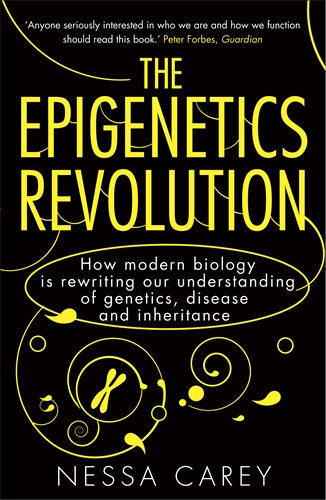
The Epigenetics Revolution traces the thrilling path this discipline has taken over the last twenty years. Biologist Nessa Carey deftly explains such diverse phenomena as how queen bees and ants control their colonies, why tortoiseshell cats are always female, why some plants need a period of cold before they can flower, why we age, develop disease and become addicted to drugs, and much more. Most excitingly, Carey reveals the amazing possibilities for humankind that epigenetics offers for us all – and in the surprisingly near future.







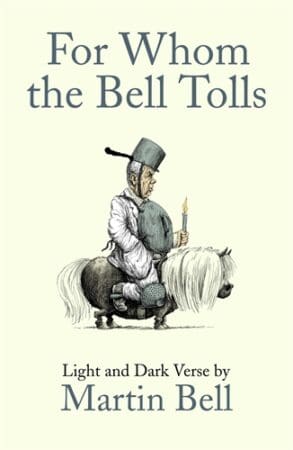
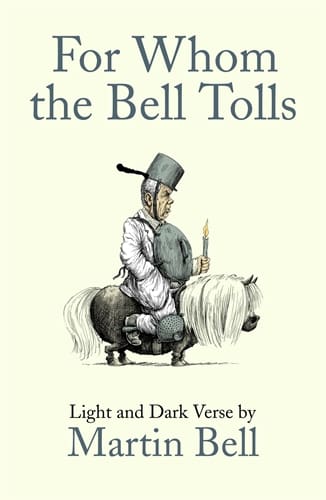
Martin Bell OBE has been many things – an icon of BBC war reporting, Britain’s first independent MP for 50 years, a UNICEF ambassador, and ‘the man in the white suit’ – a tireless campaigner for honesty and accountability in politics.
But as For Whom the Bell Tolls reveals, he’s also a poet of light verse, and here Bell’s poems continue his war by other means on duplicitous politicians, our all-consuming media, the venality of celebrity culture and much more.
Bell presents poems on Tony Blair and Iraq, on Serbian war criminal Radovan Karadzic, on his hero, Reuters reporter Kurt Schork, and colourful episodes from his work and life, from being starstruck by Angelina Jolie, to a mordant epitaph on Margaret Thatcher, to his being a guest at Idi Amin’s wedding:
‘… that by God / Was well worth doing, if distinctly odd.’
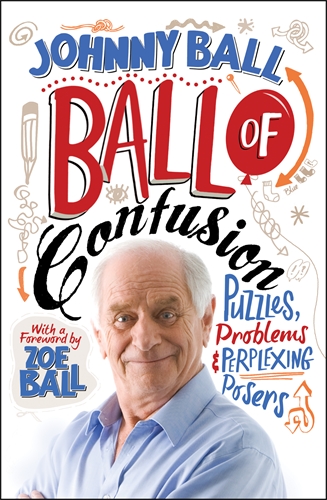
TV maths star Johnny Ball presents brain-teasers from his regular slot on his daughter Zoe's Radio 2 show. Ball of Confusion is designed to twist your brain into enjoyable knots of empuzzlement, from puzzles solved in a twinkling of an eye to some that will knit your brow for hours. From how to cheat in a coin toss to why it is that some parts of a high speed train travelling at 125mph are actually going backwards, Ball of Confusion will bend your mind in places it's never been bent before.
'This is a lovely compilation of puzzles including many classics, and Johnny Ball's legendary enthusiasm and humour jump out of every page.' Rob Eastaway, co-author Maths for Mums & Dads.
